
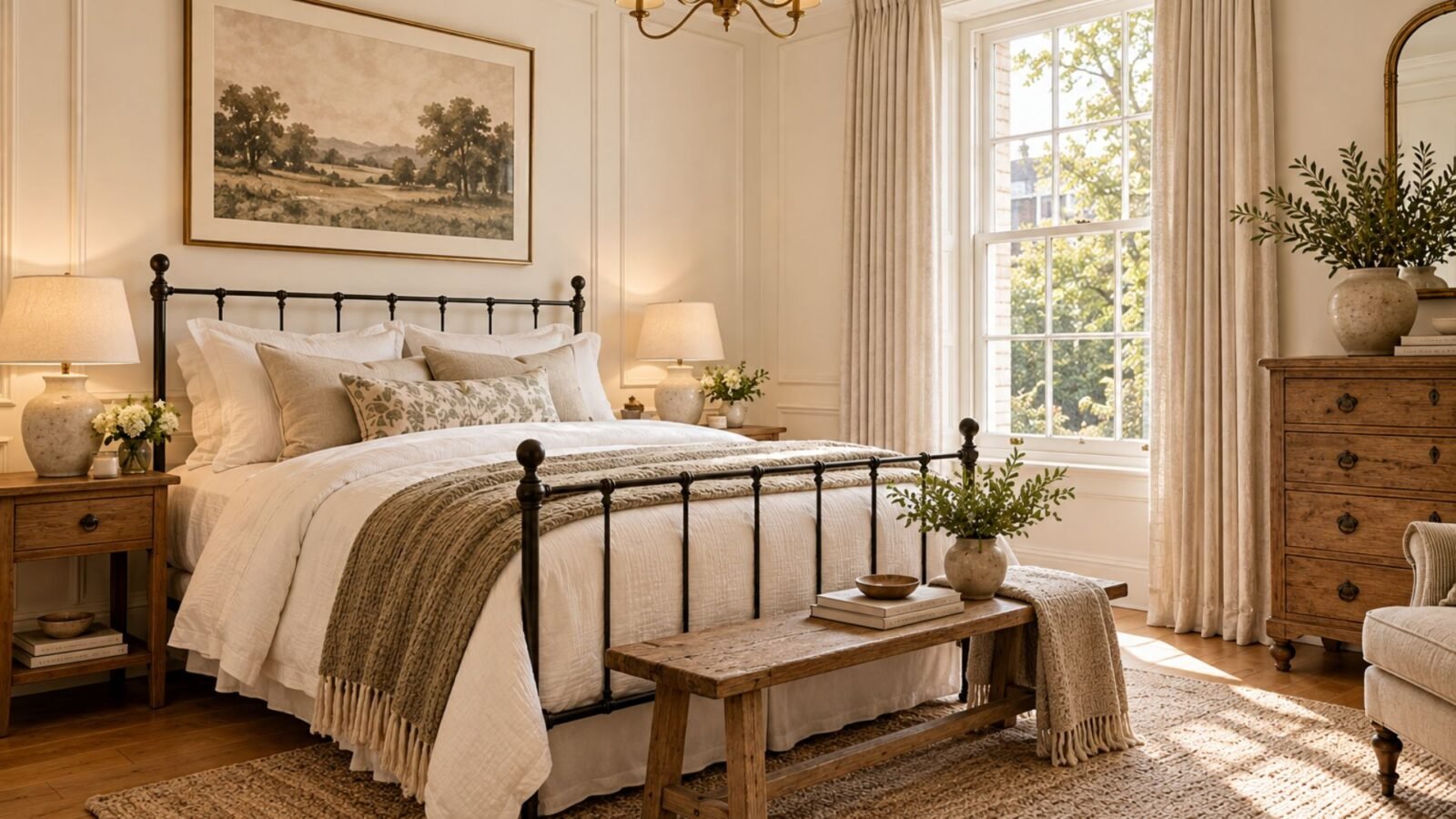

From warm whites to smoky charcoal, explore beautiful neutral bedroom designs with practical ways to recreate each look in your own home.
Neutral bedroom ideas go far beyond beige walls and white bedding. A carefully chosen neutral palette can feel warm, airy, sophisticated, dramatic or beautifully understated, depending on the colors, textures and materials you combine.
The secret is creating contrast without overwhelming the space. Soft ivory and natural oak bring a different atmosphere from charcoal walls and dark walnut furniture, even though both rooms use neutral colors.
Whether you prefer a modern neutral bedroom, a relaxed Scandinavian retreat or a more traditional look, these 12 ideas offer distinct design directions and practical ways to make them work.
What makes a neutral bedroom feel beautiful?
A neutral bedroom feels balanced when color, texture, lighting and furniture work together rather than competing for attention.
One of the biggest mistakes is assuming that neutral means using the same pale shade everywhere. When walls, bedding, furniture and rugs are almost identical, a room can lose its definition.
A well-designed neutral bedroom usually combines three important elements: a consistent color direction, enough tonal contrast to define the furniture, and materials that introduce visual texture.
Natural wood, linen, wool, stone, cotton and upholstered surfaces can make a restrained palette feel interesting without adding bright colors or excessive decoration.
The following ideas demonstrate how different architectural styles and decorating choices can produce entirely different neutral bedrooms.
12 neutral bedroom ideas with distinct personalities
1. Create a warm white bedroom with natural character
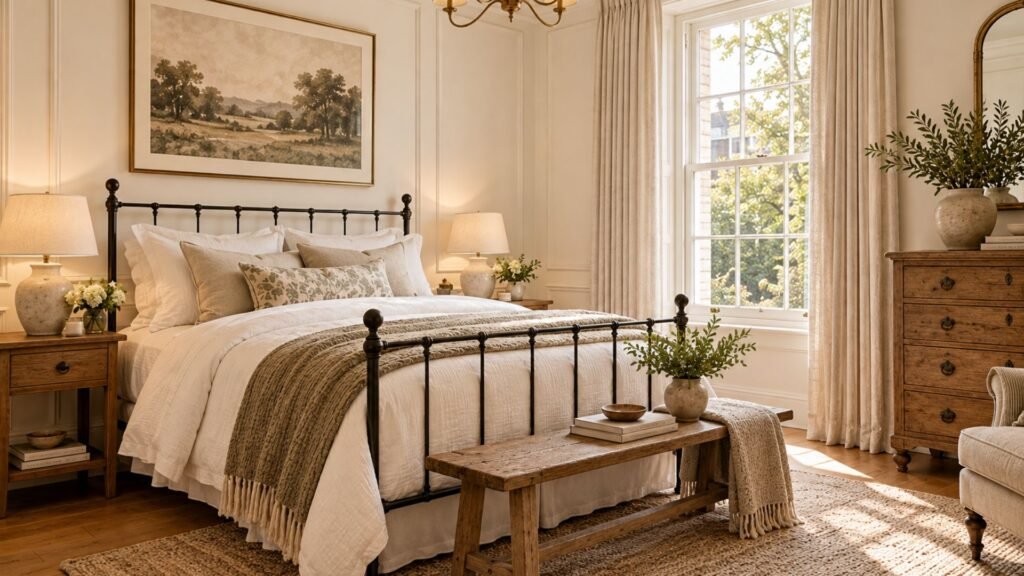
Warm white walls create a bright, welcoming foundation without the stark appearance of pure white. This approach works particularly well in traditional bedrooms with decorative trim, tall windows or beautiful wooden floors.
Pair soft white walls with an antique oak chest, a slender black iron bed and relaxed cotton bedding. The contrast between pale surfaces, warm timber and dark metal gives the bedroom character without introducing strong colors.
Rather than decorating with numerous accessories, allow the furniture and architectural details to become the room’s main features.
A lightly textured rug, simple ceramic lamp and natural linen curtains can add enough softness to keep the space inviting.
Recreate the look: Choose a warm white paint with a subtle cream undertone. Introduce one substantial natural wood piece, keep the bedding mostly ivory and use black sparingly to define the furniture.
2. Design a modern neutral bedroom with sophisticated greige
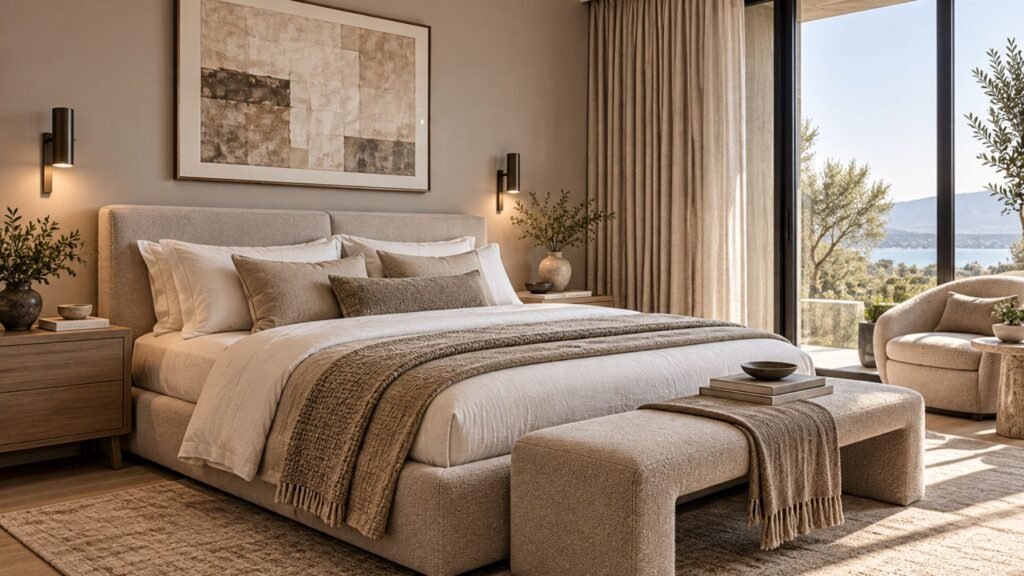
Greige combines elements of gray and beige, making it a versatile choice for contemporary neutral bedroom ideas. Depending on its undertone, it can appear warm and earthy or more restrained and architectural.
For a modern interpretation, pair greige walls with a low upholstered platform bed, streamlined ash furniture and slim graphite bedside lighting.
Simple furniture silhouettes give the room structure, while subtle differences between bedding, walls and flooring provide depth.
Avoid filling the bed with decorative cushions or adding several competing statement pieces. In this setting, clean proportions and carefully selected materials create the strongest impression.
Recreate the look: Choose a medium-light greige for the walls, add a slightly darker upholstered headboard and introduce one contrasting finish, such as graphite metal or smoked oak.
For more contemporary styling approaches, explore our modern bedroom ideas.
3. Make a charcoal bedroom feel dramatic but comfortable
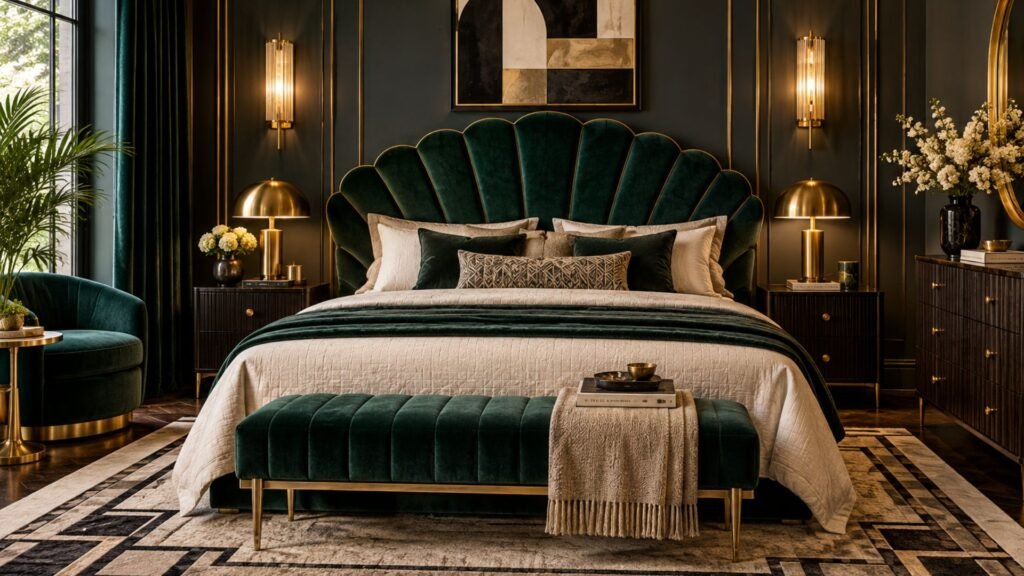
Neutral bedrooms do not have to be light. Deep charcoal, graphite and smoky gray can create a sophisticated atmosphere that feels intimate without relying on bright accent colors.
The key is balancing darker surfaces with enough contrast.
Charcoal walls can look striking behind a gray upholstered bed dressed in warm white bedding. A pale rug helps define the sleeping area, while restrained bedside lighting adds another layer of interest.
This approach works especially well when the room has a clear architectural focal point and relatively simple furniture.
Avoid using identical dark finishes for every surface. The bedroom needs variation between walls, furniture, bedding and flooring to maintain visual definition.
Recreate the look: Start with a charcoal wall color, introduce lighter bedding and use directed bedside lighting. Test the paint in daylight and after sunset before committing.
4. Try mushroom color drenching for an enveloping look
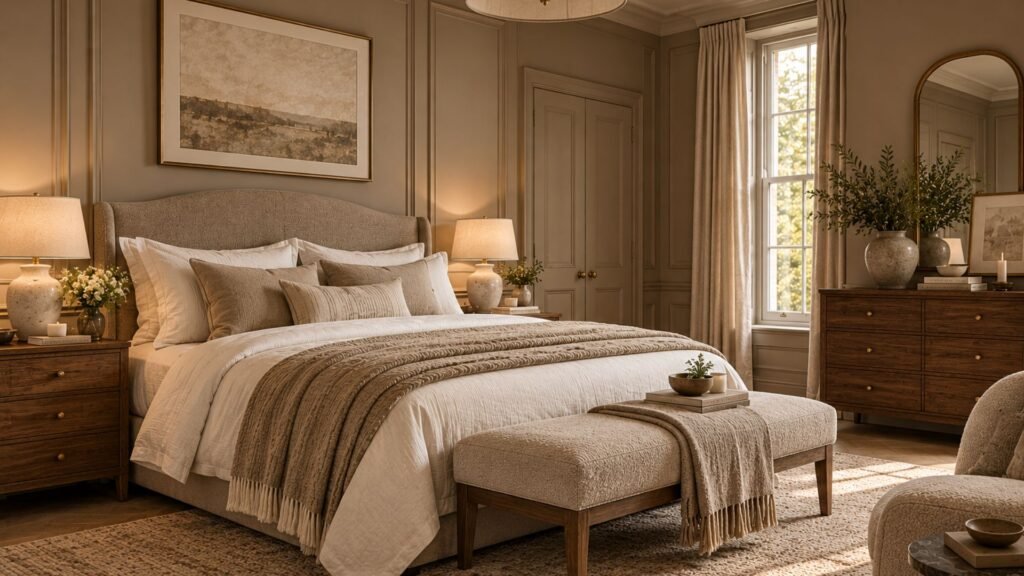
Mushroom is a muted brown-gray that offers more warmth than many conventional grays without becoming an obvious beige.
One interesting way to use it is through color drenching, where walls, doors and architectural trim share the same or closely related paint color.
This creates a continuous appearance that can make a bedroom feel calm and visually cohesive. Decorative molding becomes noticeable through shadows and texture rather than contrasting paint.
Pair mushroom walls with ivory bedding, a walnut dresser and understated lighting.
For additional softness, introduce linen curtains or a textured wool rug in a slightly lighter neutral.
Recreate the look: Paint the walls and trim in a coordinated mushroom tone, then establish contrast with pale bedding and medium-to-dark wood furniture.
If the room is small or receives limited daylight, consider retaining a lighter ceiling and testing the overall effect before painting every surface.
5. Bring Scandinavian simplicity into a neutral bedroom
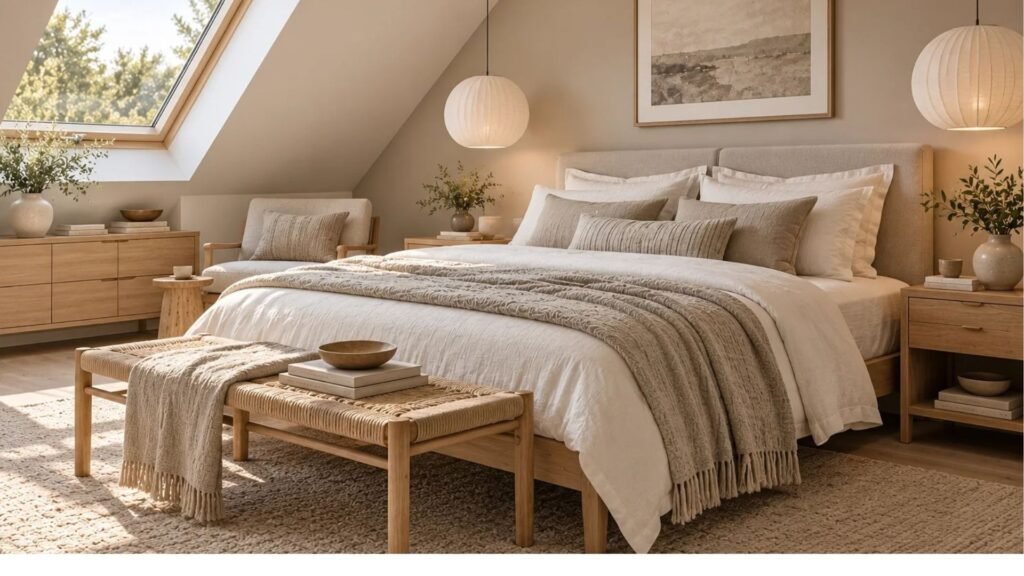
Scandinavian-inspired neutral bedrooms combine practical furniture, natural materials and an uncluttered appearance.
Instead of decorative abundance, this style emphasizes useful objects and simple silhouettes.
Imagine an attic bedroom with pale ash furniture, oatmeal linen bedding, white walls and daylight filtering through a roof window.
The timber grain, fabric texture and changing daylight provide visual interest without needing patterned wallpaper or elaborate accessories.
A simple pendant light, one comfortable chair and a compact wooden nightstand may be enough to complete the room.
Recreate the look: Choose pale wood furniture, soft oat and ivory textiles, and simple lighting. Keep storage functional and avoid filling every available surface with decorative objects.
This approach is particularly useful for bedrooms where architectural features, such as a sloped ceiling or exposed beam, can become part of the design.
6. Use stone and mineral textures for an earthy neutral bedroom
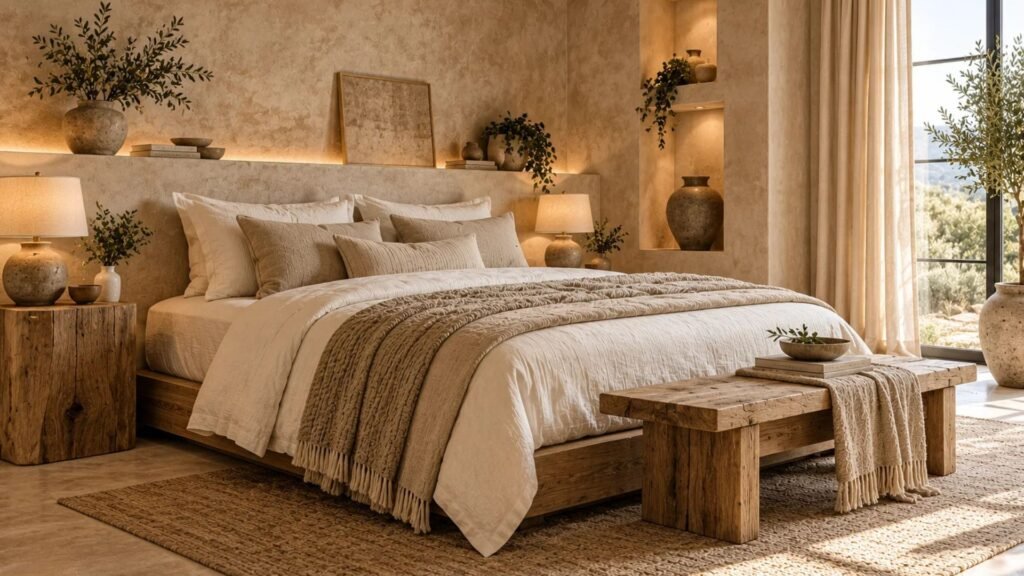
Stone-inspired neutral bedrooms emphasize architectural texture rather than conventional soft furnishings.
Warm mineral plaster, sand-colored flooring, natural timber and limestone-like finishes can create a grounded, understated interior.
A low wooden bed works especially well against a textured wall because the furniture remains simple while the surface behind it introduces depth.
Built-in ledges or niches can replace unnecessary decorative furniture and help maintain the room’s architectural character.
The result feels different from a typical beige bedroom because the emphasis is on materials, not matching accessories.
Recreate the look: Use a matte stone-colored wall finish, natural timber furniture and restrained linen bedding. Introduce one handmade ceramic piece or textured lamp rather than several decorative objects.
Real stone is not essential. Carefully selected paint and textured finishes can achieve a similar visual direction with less structural work.
7. Combine walnut and ivory for mid-century warmth
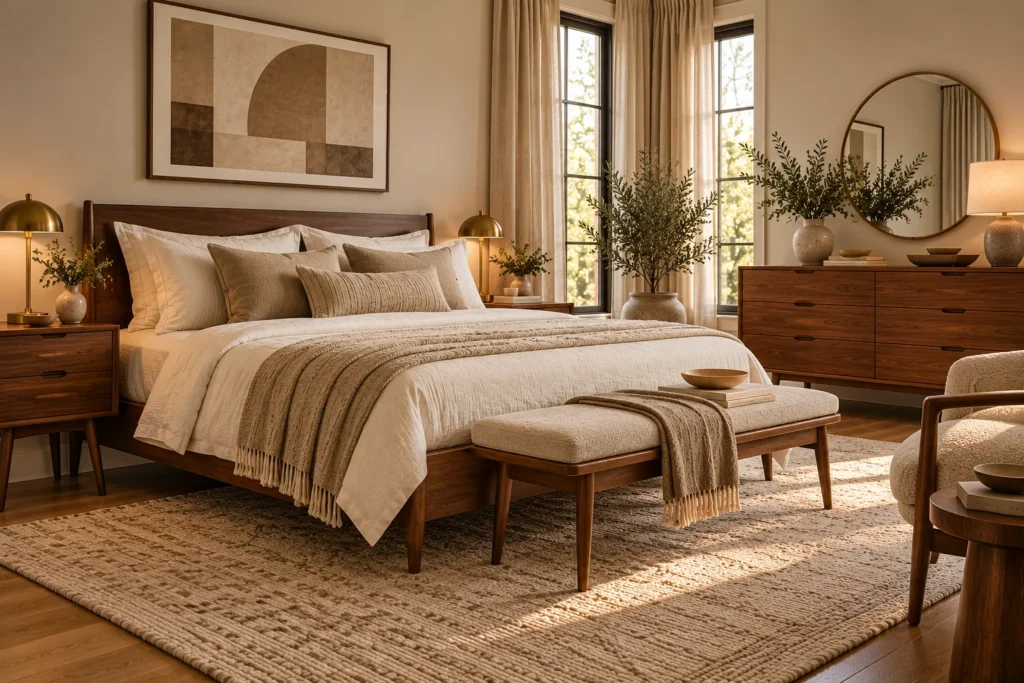
Mid-century-inspired neutral bedrooms rely on furniture design as much as color.
Warm walnut, tapered legs, low-profile furniture and understated geometric details create a recognizable look that feels stylish without being overly decorative.
A walnut platform bed paired with ivory bedding gives the room a strong focal point. Add a vintage-style dresser and a restrained geometric rug to reinforce the design.
Instead of matching every piece of furniture, combine wood with one contrasting finish, such as black metal, ceramic or stone.
This helps the space feel collected rather than purchased as a complete furniture set.
Recreate the look: Start with one well-proportioned walnut furniture piece. Keep walls and bedding relatively light, then introduce a mid-century lamp or geometric rug.
Leave some floor visible beneath furniture with raised legs to emphasize the clean lines associated with the style.
8. Create a refined bedroom with cool gray and alabaster
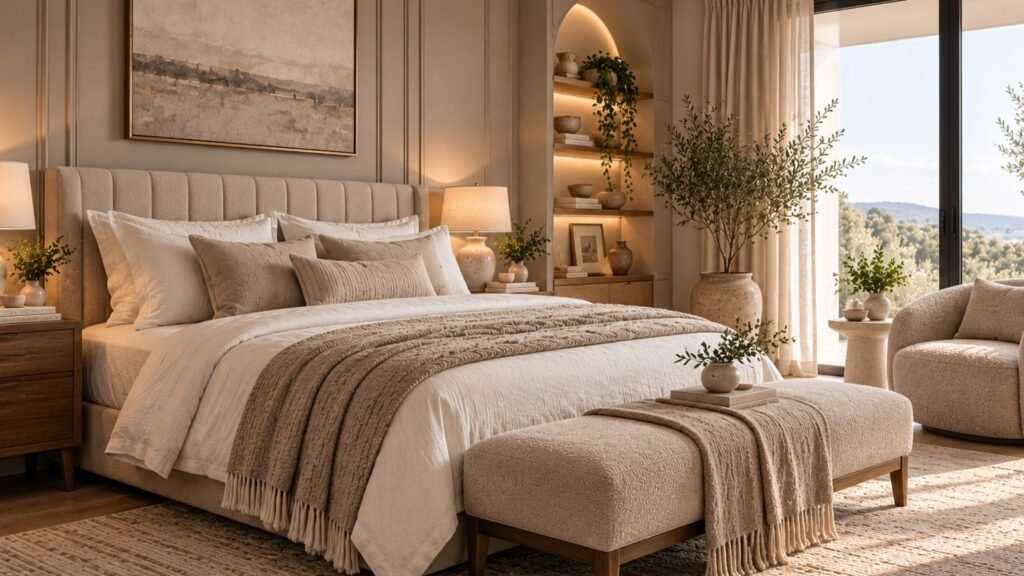
While warm neutrals are popular, cool gray can create an equally beautiful bedroom when handled intentionally.
Soft gray walls, alabaster bedding, pewter upholstery and brushed-steel lighting offer a crisp, tailored appearance.
This palette can work particularly well in bedrooms with gray stone flooring, cool natural daylight or contemporary architectural finishes.
The challenge is preventing the space from feeling flat or overly cold.
Introduce different fabric textures, subtle tonal variations and a defined focal point. An upholstered headboard or softly woven rug can balance the harder appearance of metal and stone.
Recreate the look: Select a gray with an undertone that complements your existing flooring. Pair it with warmer white bedding and one medium-dark element for contrast.
If the room feels too stark, try natural textile textures before introducing an entirely new accent color.
9. Add subtle pattern with neutral stripes
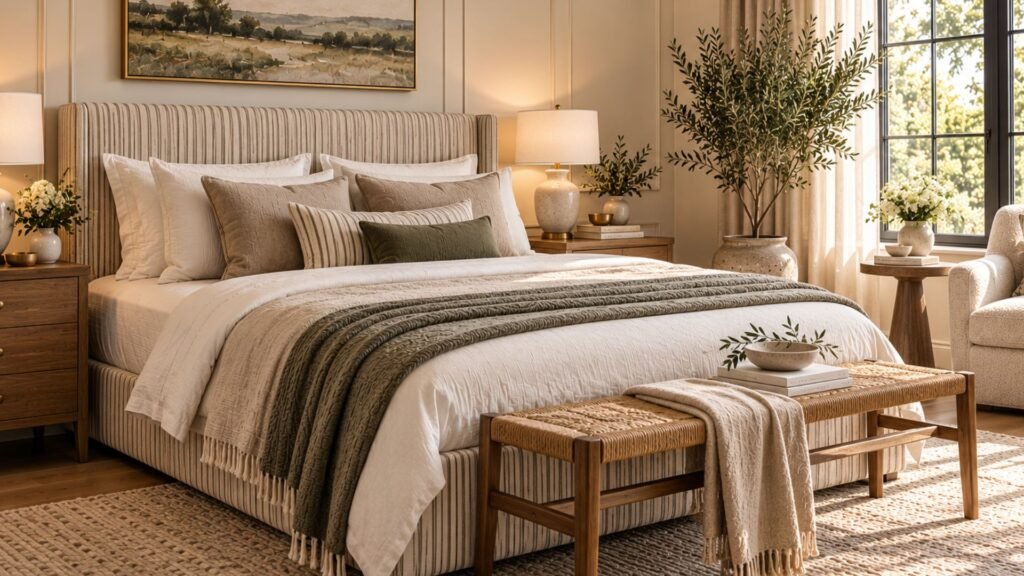
A neutral palette does not require every surface to be plain.
Stripes, checks and subtle geometric patterns can add personality while keeping the overall bedroom calm and coordinated.
A taupe ticking-stripe upholstered headboard, for example, creates a gentle focal point against ivory walls.
Pair it with traditional wooden furniture, simple cotton bedding and understated curtains.
The pattern introduces visual rhythm without making the room feel busy.
The key is choosing one dominant pattern rather than spreading several competing designs across bedding, curtains, wallpaper and rugs.
Recreate the look: Introduce neutral stripes through a headboard, curtain fabric or duvet cover. Keep the surrounding textiles mostly solid and repeat one of the pattern’s colors elsewhere in the room.
This works particularly well for classic, cottage-inspired and transitional bedroom designs.
10. Make neutral botanical wallpaper the focal point
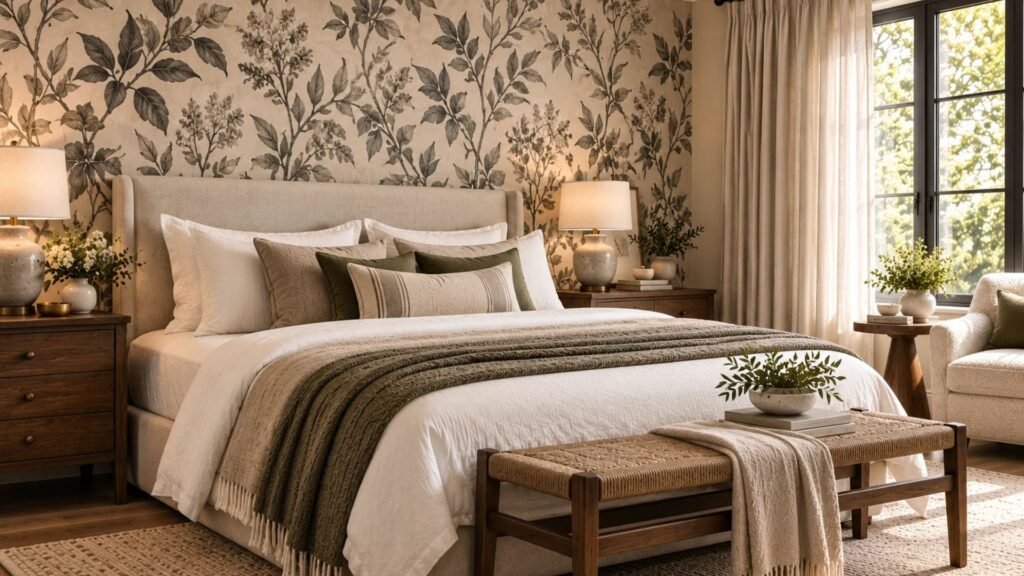
Wallpaper can add character to a neutral bedroom without introducing a colorful palette.
Botanical patterns in charcoal, stone, taupe or faded gray create movement and visual depth while maintaining an understated appearance.
A large-scale botanical wallpaper behind the bed can become the main decorative feature of the room.
Keep the furniture comparatively simple, with plain linen bedding, dark oak nightstands and restrained lighting.
This contrast between detailed walls and uncomplicated furnishings allows the wallpaper to stand out without overwhelming the bedroom.
Recreate the look: Choose wallpaper with a low-contrast pattern and an undertone that complements the flooring. Use it on the bed wall rather than automatically covering every surface.
Before purchasing, order a sample and check how the pattern looks both close up and from the bedroom doorway.
11. Make a small neutral bedroom feel organized and beautiful
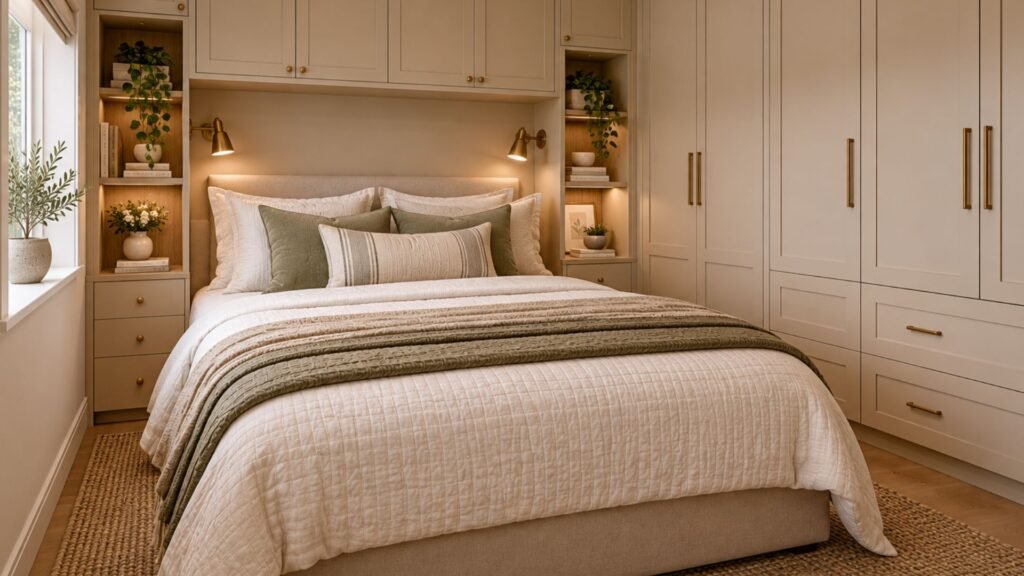
A neutral color palette is particularly useful in a small bedroom because it can help large furniture pieces feel visually connected.
Instead of introducing several separate finishes, consider coordinating wardrobes, walls and built-in storage.
A compact upholstered bed, pale painted cabinetry and slim bedside lighting can create a cohesive appearance without sacrificing function.
The goal is not to make the room look empty. It is to reduce visual interruptions while maintaining comfortable access to everything you use.
Wall-mounted reading lights and integrated bedside shelves can be especially effective when traditional nightstands occupy too much space.
Recreate the look: Begin with the bed layout and storage requirements. Use a limited palette of warm white, pale oak and soft gray, then introduce one contrasting textile.
For more detailed layout and storage guidance, see our small bedroom ideas.
12. Create an edited rustic bedroom with natural timber
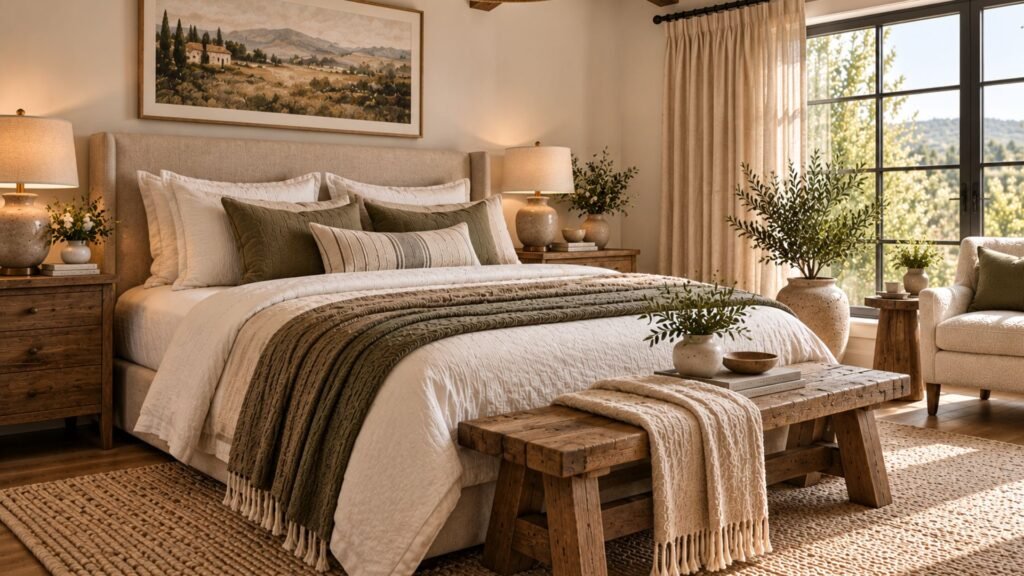
Rustic neutral bedrooms work best when natural materials provide the personality.
Exposed timber beams, weathered furniture, chalk-colored walls and relaxed linen bedding can create a room that feels authentic without relying on farmhouse-themed decorations.
Unlike modern minimalist interiors, rustic rooms often benefit from visible imperfections and variations in material finishes.
A weathered wooden bed, antique bedside chest or naturally textured rug can become a defining feature.
Keep decorative accessories selective. The wood grain, plaster and textiles should remain the main attractions.
Recreate the look: Choose a simple timber bed, warm off-white walls and natural fabric. Add one characterful vintage piece rather than buying an entire matching rustic furniture collection.
Avoid overcrowding the room with baskets, signs and decorative items that compete with the existing architecture.
The Wallsaide Neutral Palette Stress Test
A beautiful neutral bedroom starts with more than choosing a paint color.
Before purchasing furniture, bedding or wall finishes, test the proposed palette against four important considerations.
This Wallsaide decorating framework helps you evaluate whether the colors and materials will work together in your actual bedroom.
1. Check the undertones
Neutral colors frequently contain subtle warm or cool undertones.
A gray may lean blue, green or violet. An off-white may appear yellow, pink or gray depending on nearby materials.
Compare samples against your flooring, furniture and bedding rather than judging each color in isolation.
2. Create enough tonal contrast
A bedroom needs enough difference between light, medium and dark surfaces to maintain definition.
For example, pale walls, medium-toned furniture and darker lighting fixtures can create a balanced composition without requiring bright accent colors.
If everything looks similar in lightness, the room may appear flat.
3. Vary the textures
Texture makes neutral colors more interesting.
Try combining matte paint, smooth cotton, woven wool, visible wood grain or textured upholstery.
The purpose is not to add as many textures as possible, but to choose materials that complement each other.
4. Test the palette in real lighting
Paint colors can look noticeably different in morning daylight, afternoon sunshine and artificial evening lighting.
A color that appears perfectly balanced on a sample card may become unexpectedly yellow, blue or gray once applied in the room.
According to Sherwin-Williams’ guide to choosing paint by room orientation, natural light direction can significantly influence how colors appear.
Check samples at different times of day before committing.
The most effective neutral palette is not necessarily the one that looks best in a photograph. It is the one that works with your room’s architecture, flooring, furnishings and everyday lighting.
Neutral bedroom color combinations worth trying
There are several ways to create a coordinated neutral bedroom without relying on a single shade.
Here are six combinations worth considering.
Warm white, natural oak and black
A classic combination that feels bright and timeless. The dark accents provide definition while natural timber introduces warmth.
Greige, graphite and ivory
A refined modern palette that works with clean-lined furniture, tailored upholstery and restrained accessories.
Mushroom, walnut and bone
An earthy combination with depth and softness. Particularly effective for color-drenched walls and rich wood furniture.
Charcoal, stone and warm white
A darker contemporary direction that balances dramatic walls with lighter bedding and flooring.
Oatmeal, pale ash and chalk
An airy Scandinavian-inspired palette that emphasizes simple furniture and natural texture.
Fog gray, alabaster and pewter
A cool neutral combination suited to tailored furnishings and contemporary architectural detailing.
For additional color combinations beyond neutrals, explore Wallsaide’s bedroom color ideas.
How to choose between warm and cool neutrals
The best neutral bedroom colors depend on your existing materials, the amount of daylight and the atmosphere you want to create.
Warm neutrals, including ivory, taupe, mushroom and oatmeal, often feel inviting beside natural wood and earthy finishes.
Cool neutrals, including slate, pewter and certain grays, can complement stone flooring, dark metal and contemporary furniture.
Neither is automatically better.
A bedroom with warm timber flooring may look more cohesive with certain warm neutrals, while an interior with gray flooring may benefit from a cooler palette.
However, deliberate combinations of warm and cool materials can also work beautifully.
The important distinction is whether the contrast looks intentional.
Architectural Digest’s guide to neutral paint colors highlights the importance of considering lighting, undertones and texture when selecting a neutral palette.
Avoid choosing paint solely because it looks attractive in another home. The same shade may appear noticeably different in your bedroom.
How to make a neutral bedroom feel warm without clutter
A neutral bedroom can occasionally look unfinished when every surface is too smooth, pale or visually similar.
The solution is not necessarily adding more decoration.
Start by identifying the largest surfaces in the room.
A substantial upholstered headboard, textured rug or pair of full-length curtains can have a greater visual impact than several small decorative objects.
Next, examine the lighting.
Overhead lighting may be useful for everyday tasks, but bedside lamps or wall-mounted reading lights can create a more flexible atmosphere.
Then consider natural materials.
Wood, wool, linen and handmade ceramics introduce variation through texture and finish rather than bright color.
Finally, edit the accessories.
Keep meaningful artwork, useful books and a limited number of decorative pieces. Remove items that make bedside tables or dressers difficult to use.
If your main decorating goal is warmth and softness, our cozy bedroom ideas offer additional inspiration.
Neutral bedroom decorating ideas on a budget
Creating a beautiful neutral bedroom does not require replacing every piece of furniture.
In many cases, a few carefully selected improvements can make the existing room feel more cohesive.
- Refresh the walls. A well-chosen neutral paint color can establish a stronger foundation for the furniture you already own.
- Improve the bedding. Properly fitted sheets, a coordinated duvet cover and one textured throw can change the appearance of the entire bed.
- Update bedside lighting. Replace poorly proportioned lamps with fixtures that complement the room and provide useful light.
- Reuse wooden furniture. An existing dresser or bedside table may introduce exactly the contrast your neutral palette needs.
- Add one substantial textile. A suitable rug or pair of curtains can soften large surfaces without requiring multiple accessories.
- Reduce visual clutter. Organize exposed cables, crowded nightstands and unnecessary decorative objects before purchasing anything new.
Prioritize improvements that affect the room’s appearance and everyday function.
If you prefer a more refined, architectural interpretation, our luxury bedroom ideas explore several approaches to sophisticated bedroom design.
Common mistakes that make neutral bedrooms look flat
Neutral bedrooms can look beautiful, but a few common decisions prevent them from feeling finished.
Using one shade everywhere
Matching the walls, bedding, rug and furniture too closely can make the room lose definition. Introduce contrast through tone, texture or material.
Ignoring paint undertones
A warm beige-gray wall may clash with flooring that has an unexpected pink or green undertone. Compare the colors together before purchasing.
Adding too many textures
Texture is useful, but excessive throws, pillows, baskets and accessories can create clutter. Focus on a few substantial materials instead.
Choosing furniture without considering scale
A large upholstered bed may overwhelm a narrow bedroom, while tiny nightstands can feel disconnected from a substantial headboard.
Relying entirely on ceiling lighting
A single overhead fixture may provide adequate general illumination but little flexibility for reading or softer evening light.
Copying a neutral bedroom photograph exactly
Your room has its own windows, dimensions, flooring and storage requirements. Adapt the design principle rather than forcing every photographed object into your space.
Frequently asked questions
What colors are considered neutral for a bedroom?
Traditional neutral bedroom colors include white, off-white, cream, beige, greige, taupe, gray, brown, charcoal and black. Some muted colors can also function as neutrals within a particular design scheme.
Are neutral bedrooms still stylish?
Yes. Neutral palettes work across modern, traditional, Scandinavian, rustic and contemporary bedroom styles. Their success depends on furniture proportions, material selection, contrast and how the colors relate to the room.
How do I make a neutral bedroom look less boring?
Introduce a mixture of textures, vary the lightness of major surfaces and choose furniture with distinctive shapes. A neutral bedroom can feel interesting without adding bold accent colors or excessive decoration.
What neutral colors work best in a small bedroom?
Warm white, soft greige, pale taupe and light gray are versatile starting points. However, deeper neutrals can also work in compact rooms when balanced with appropriate lighting and practical furniture.
Can I mix warm and cool neutrals in one bedroom?
Yes. Warm and cool neutrals can complement each other when the contrast feels intentional. Compare paint, fabric and flooring samples together to ensure the undertones work in the actual room.
What bedding looks best in a neutral bedroom?
Cotton, linen and textured bedding in ivory, oatmeal, taupe or soft gray can complement many neutral bedrooms. Choose bedding that provides enough contrast with the headboard and walls while remaining comfortable and practical.
Final thoughts
A neutral bedroom does not need to feel plain or predictable.
The most successful designs use a restrained color palette as a foundation for interesting materials, thoughtful furniture and carefully planned lighting.
Warm white can create a timeless traditional retreat. Greige offers contemporary sophistication. Charcoal introduces drama, while stone and timber bring natural texture.
Choose the direction that suits your room’s architecture and your everyday needs.
Then build the design through balanced proportions, contrasting materials and details that feel personal.
A beautiful neutral bedroom is not about eliminating personality. It is about creating enough visual harmony for the things you love to stand out.
About the author
Emma Carter writes interior design inspiration and practical decorating guides for Wallsaide, helping readers understand how color, materials, lighting and furniture choices work together to create beautiful, functional homes.