

A bedroom has one job a living room doesn’t: it has to work in the dark, half-asleep, at 6 a.m., not just look good in a photo. That changes the order in which good decisions get made.
This guide brings together bedroom ideas you can use for visual direction with the practical decisions that determine whether the room actually works. Start with the bed, then work outward through color, furniture scale, lighting, texture, and the details that make the room feel personal.
The bedroom ideas below combine visual inspiration with practical guidance, so you can decide not only how the room should look but how its layout, lighting, furniture, and materials should work together.
Bedroom ideas: 6 directions to start from
There isn’t one formula for a well-designed bedroom. A useful starting point is to choose a clear visual direction before buying individual pieces.
These six approaches show how different combinations of color, furniture, lighting, and texture can create very different rooms without changing the basic principles underneath them. For broader strategies on circulation, furniture scale, storage, and visual space, see our small space ideas guide.
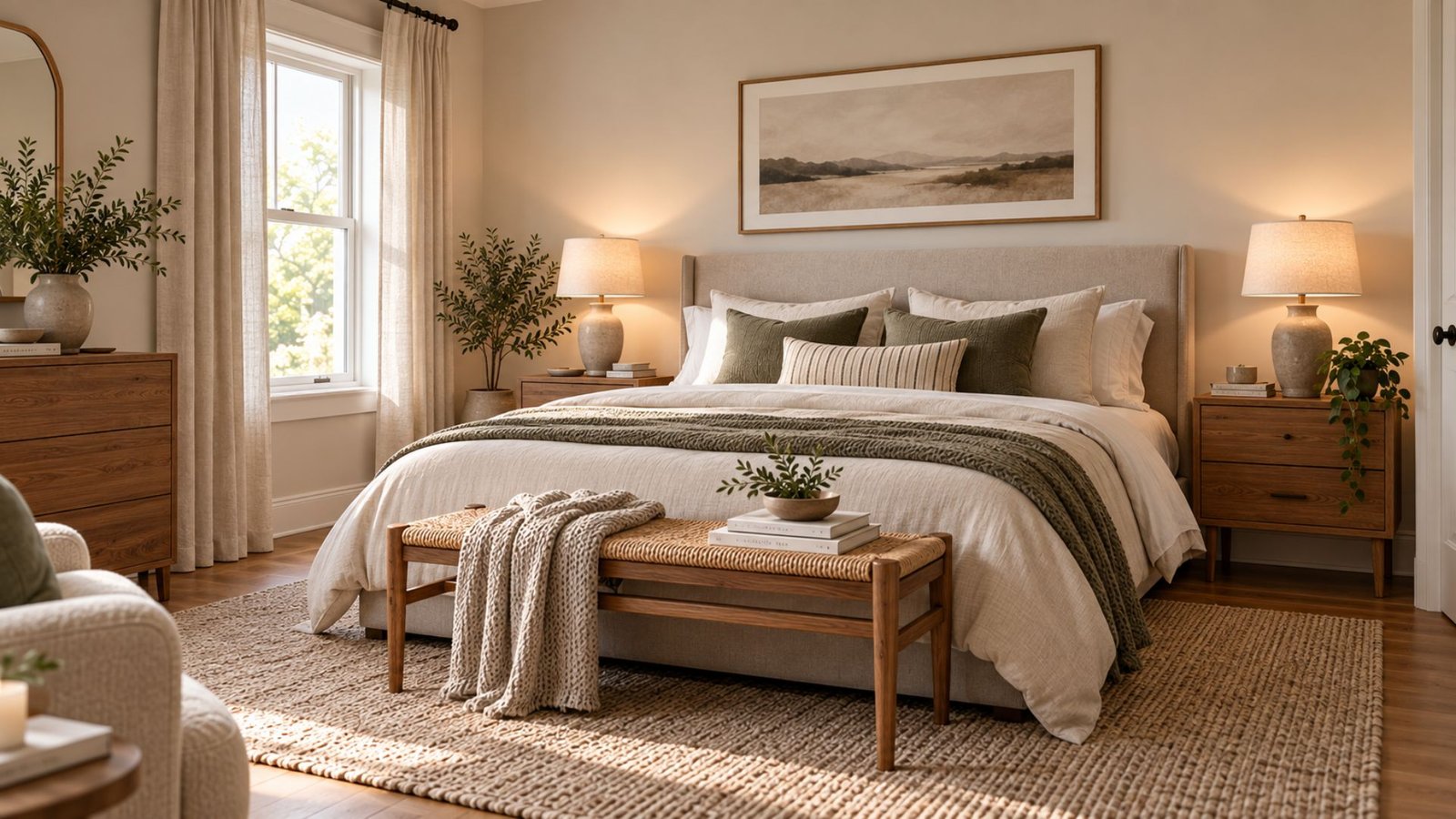
Warm neutral
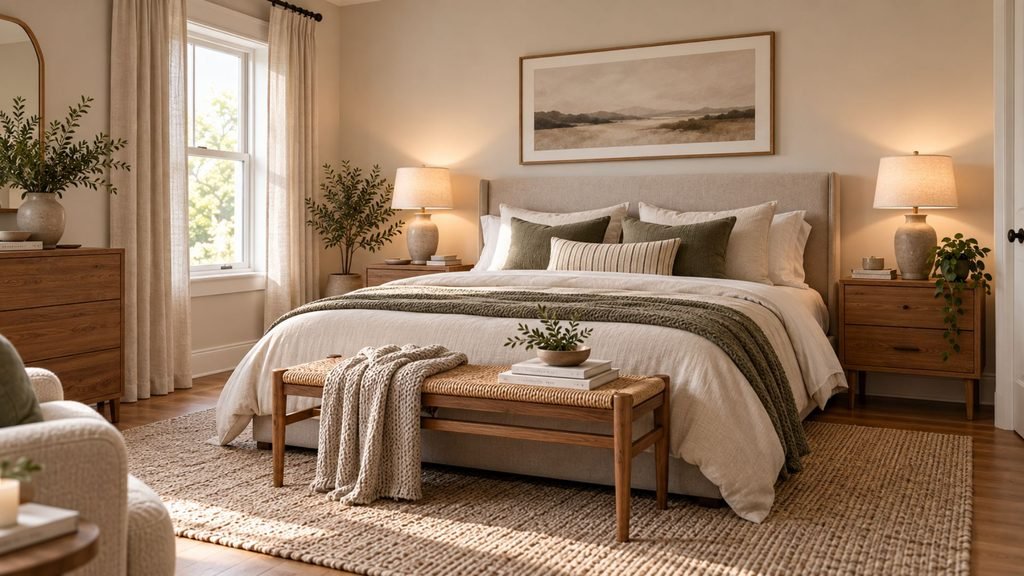
The room above is a useful starting reference: soft greiges and cream, warm wood, restrained contrast, and enough variation in texture to keep the palette from feeling flat.
A warm-neutral bedroom doesn’t need many colors. Differences between linen, upholstery, wood, woven fibers, and softer textiles can provide much of the visual depth.
Cozy
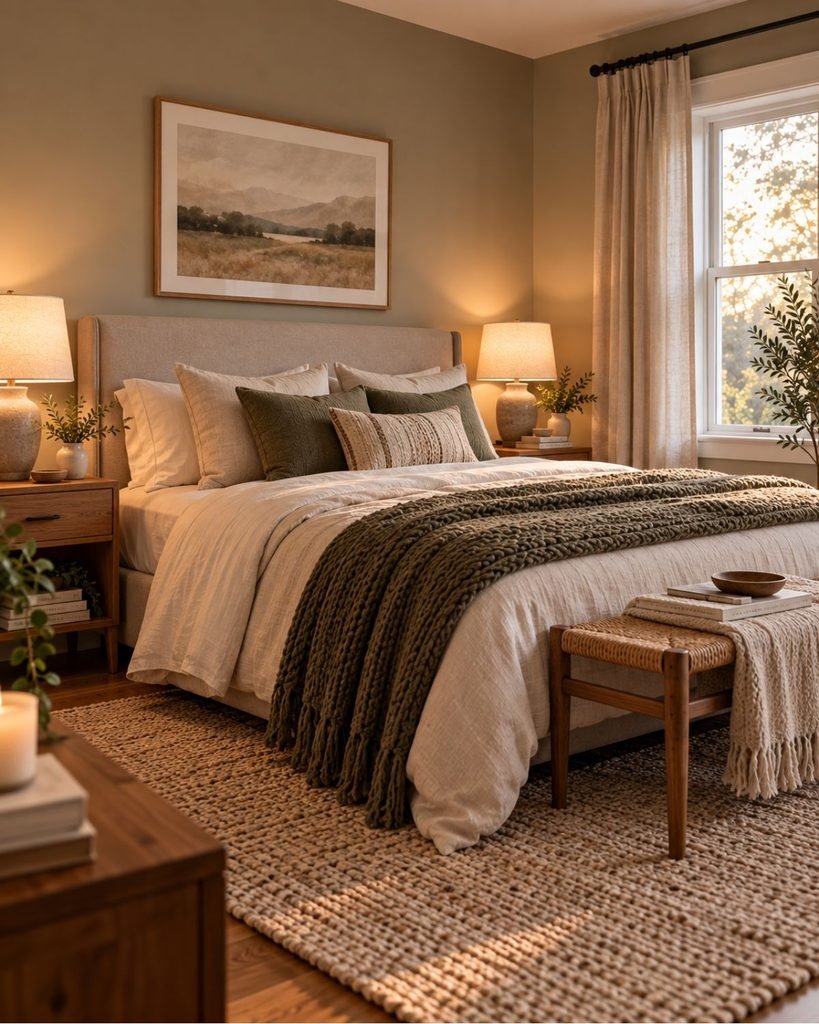
A cozy bedroom can be built through texture and lighting rather than filling the room with decorative objects.
Layered bedding, a substantial throw, tactile cushions, a soft rug, curtains, and warm bedside lighting can make the room feel inviting while keeping the overall palette controlled.
The goal is warmth without visual clutter.
Modern
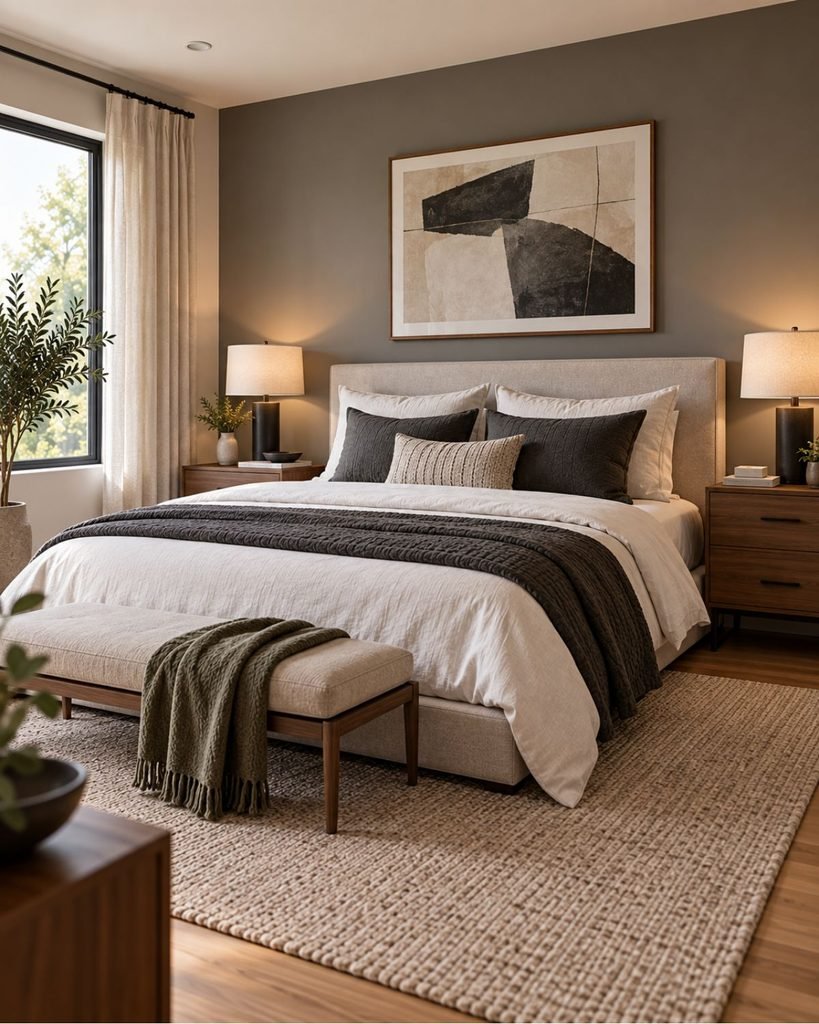
Clean lines, simpler furniture profiles, and a restrained palette give a modern bedroom ideas its clarity.
That doesn’t mean the room has to feel stark. Wood, upholstered surfaces, textured bedding, a rug, and carefully chosen artwork can soften the composition without introducing unnecessary visual noise.
Sage green
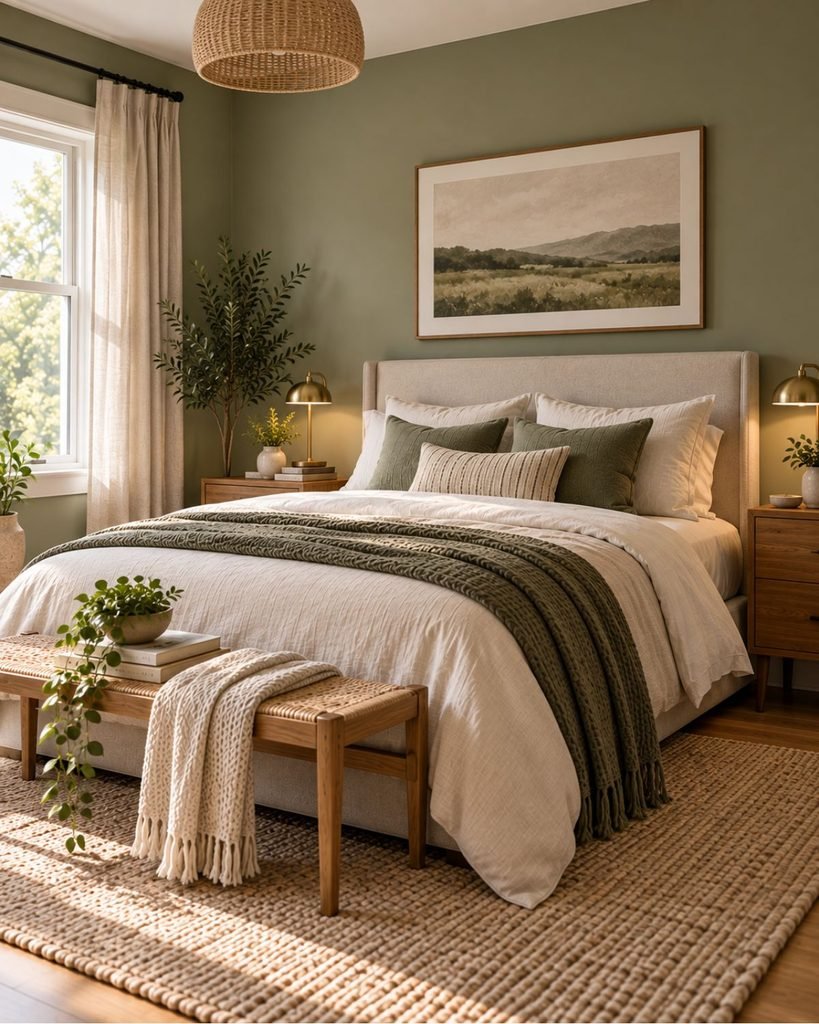
Muted sage works particularly well with cream, warm wood, woven materials, and restrained metallic accents.
Instead of repeating green across every object, let the walls or one major surface establish the color and use quieter materials around it. This gives the palette a clear hierarchy.
Japandi
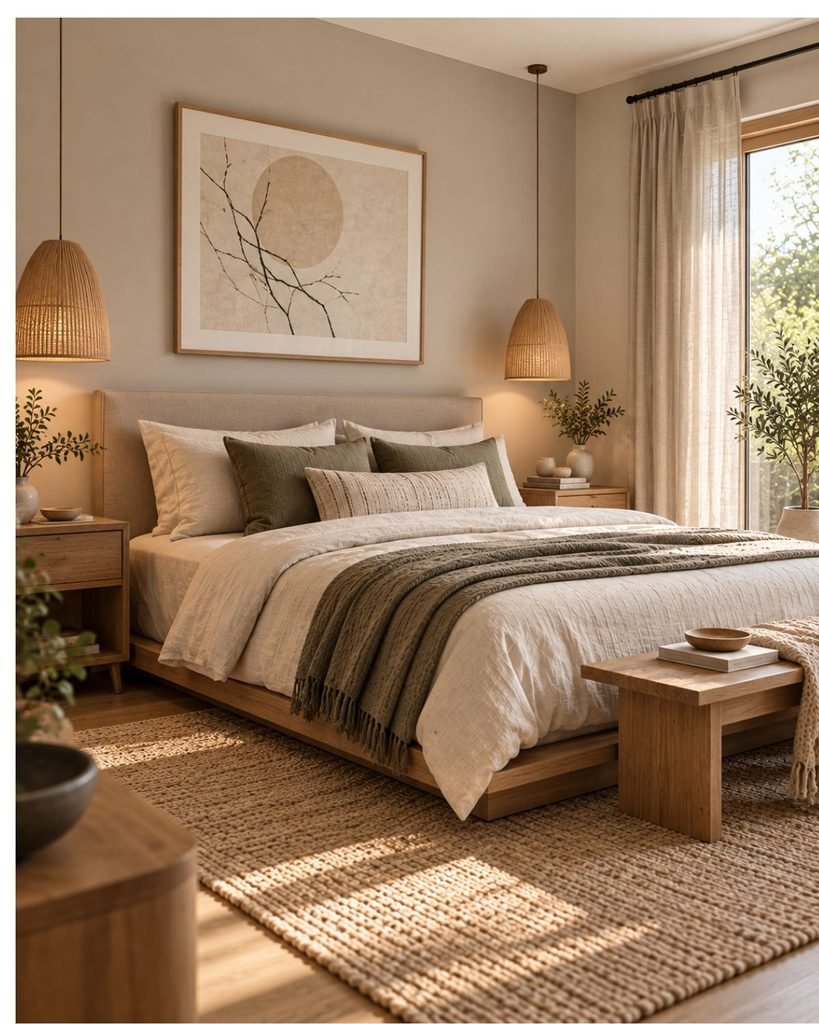
Japandi interior bedroom ideas combine elements associated with Japanese simplicity and Scandinavian warmth: lower furniture, natural materials, restrained decoration, and an emphasis on useful objects.
In a bedroom, that can translate into a low-profile bed, light or medium-toned wood, neutral linen, simple lighting, and relatively little decorative clutter.
Bold color
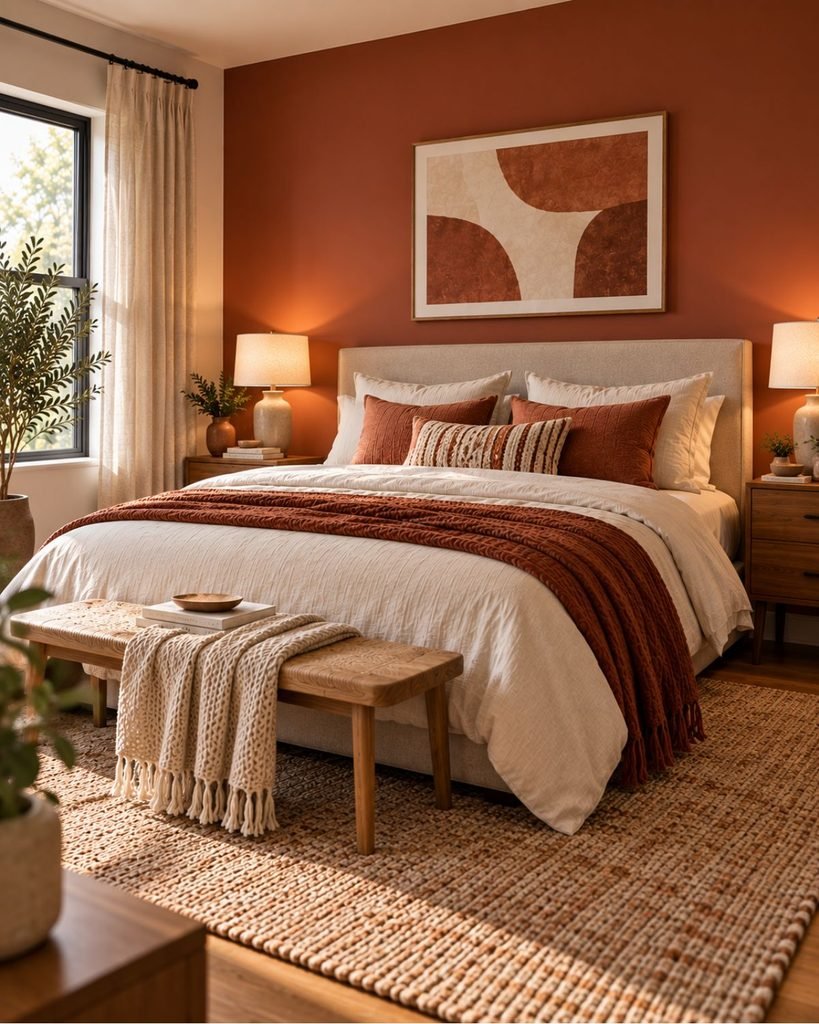
A bedroom can carry strong color without becoming visually overwhelming.
One concentrated area, such as a deep terracotta wall behind the headboard, can establish the room’s personality while neutral bedding and warm wood provide visual rest.
This approach also makes bold color easier to change later than distributing several competing shades throughout the room.
Working with a small bedroom? The same principles still apply, but furniture depth, circulation, and storage become more important because every piece occupies a larger share of the available room. Start with the bed and protect the clearest walking route before adding secondary furniture.
Once you have explored the bedroom ideas above, the next step is turning that visual direction into a practical sequence of design decisions.
The Wallsaide bedroom decision order
Bedroom advice is often presented as an unordered collection of decorating tips. In practice, some decisions affect almost everything that follows.
This is Wallsaide’s own editorial framework, not an industry standard. Think of it as a practical order for working through a bedroom without repeatedly undoing earlier decisions.
- Define the room’s primary function. Decide whether it is primarily for sleeping or also needs to accommodate reading, working, dressing, or another regular activity.
- Place the bed first. It is usually the room’s largest and least flexible piece of furniture, so its position determines much of the remaining layout.
- Choose the color palette. Think about how you want the bedroom to feel both during the day and under the lighting you actually use at night.
- Scale furniture to the bed. Nightstands, benches, dressers, and other pieces should work with the bed’s proportions rather than compete with them.
- Balance both sides of the bed. Balance doesn’t require identical furniture, but both sides should feel visually related.
- Layer the lighting. Give general lighting, bedside lighting, and softer evening illumination distinct jobs.
- Add texture. Bedding, curtains, rugs, upholstery, and natural materials can provide depth without requiring more colors or decorative objects.
- Personalize last. Once the room works functionally, finish it with artwork, books, objects, plants, and other details that make it feel individual.
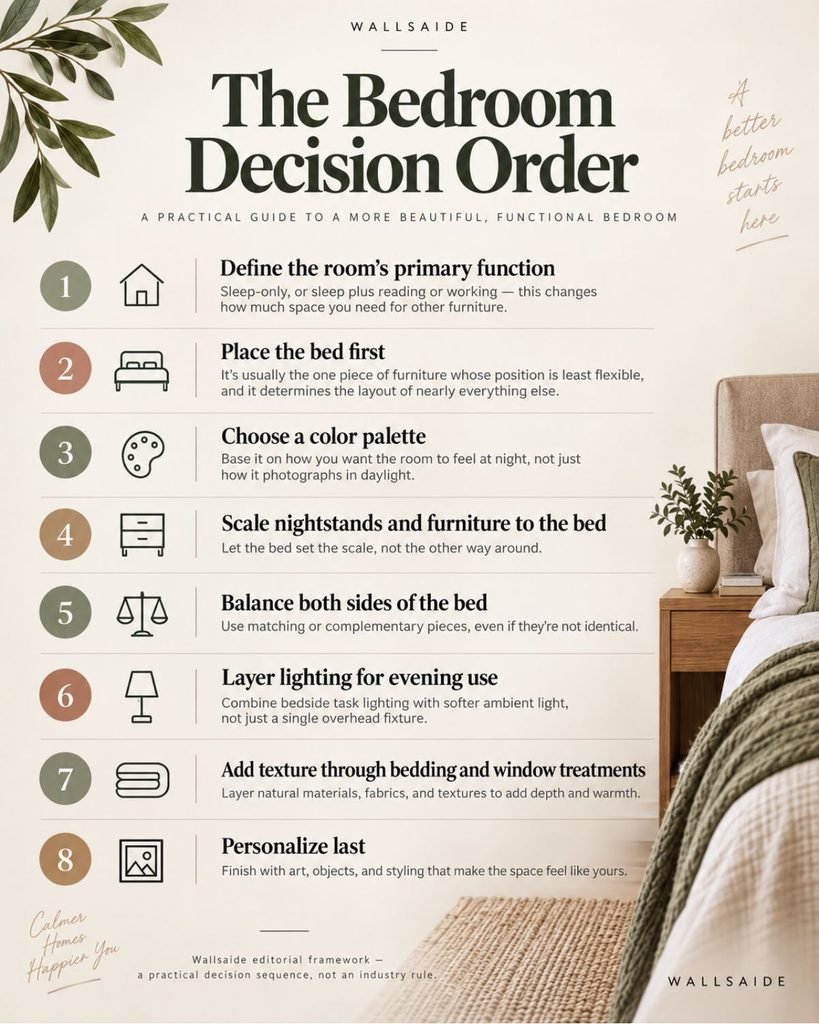
Wallsaide’s bedroom decision order is an editorial framework for making design decisions, not an industry rule.
Start with the bed
The bed is usually the least flexible piece of furniture in a bedroom, both in size and in where it can realistically go. That makes it a sensible place to start before choosing secondary furniture.
A few common placement principles are worth considering, although the room’s actual doors, windows, closets, radiators, outlets, and dimensions should ultimately determine the layout.
Use a solid headboard wall where practical. A solid wall can create a visually stable backdrop and avoids potential conflicts with windows, curtains, radiators, or other openings.
Protect circulation. A perfectly centered bed isn’t necessarily a well-positioned bed if it makes the room awkward to move through. Preserve a usable route between the entrance, bed, storage, and other frequently used areas.
Consider the doorway sightline. Some design traditions, including feng shui, place significance on the relationship between the bed and door. Treat this as a preference rather than a universal functional rule.
Leave room for what belongs beside the bed. Bed placement should account for nightstands, lamps, switches, outlets, and anything else you regularly need within reach.
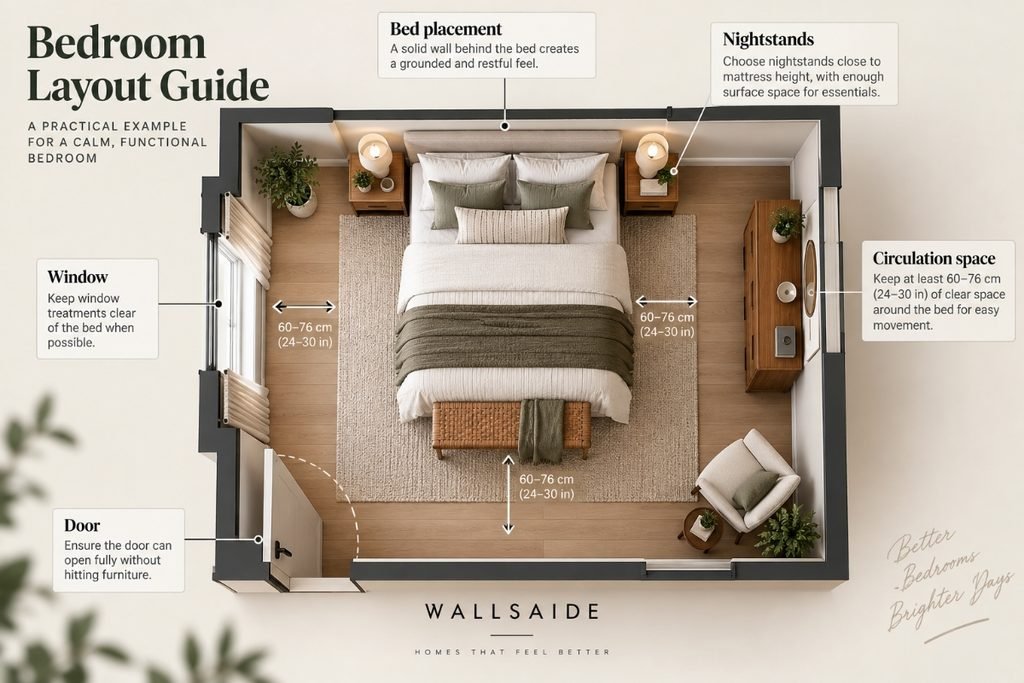
Where doors, windows, closets, or other fixed features make an idealized arrangement impossible, prioritize a usable walking route and a practical bed position over trying to satisfy every conventional layout rule.
Choosing a bedroom color palette
Bedroom colors should be considered under more than one lighting condition.
Paint, bedding, wood, and fabrics can look noticeably different in daylight and under artificial lighting, so evaluate important colors in the actual room during both the day and evening.
A simple palette can begin with three roles:
A dominant tone establishes most of the visual field, often through walls or another large surface.
A supporting tone connects larger furniture, bedding, curtains, or rugs to that dominant color.
An accent introduces smaller moments of contrast through cushions, artwork, lamps, or decorative objects.
These proportions don’t need to follow a rigid formula. Their purpose is simply to prevent every color from competing for equal attention. If you’re still deciding which colors should fill those roles, our interior color bedroom ideas guide explains how to build a coordinated whole-room palette.
Furniture scale and nightstand balance
Furniture should be considered in relation to the bed rather than selected as a collection of unrelated individual pieces.
Nightstands have an outsized visual effect because they frame the bed and sit directly beside the room’s main focal point.
A very low nightstand can feel disconnected from a tall mattress and headboard, while an oversized piece can compete with the bed and consume valuable floor area.
As a practical starting point, a nightstand surface close to mattress height often feels visually connected to the bed and is usually easier to reach while lying down.
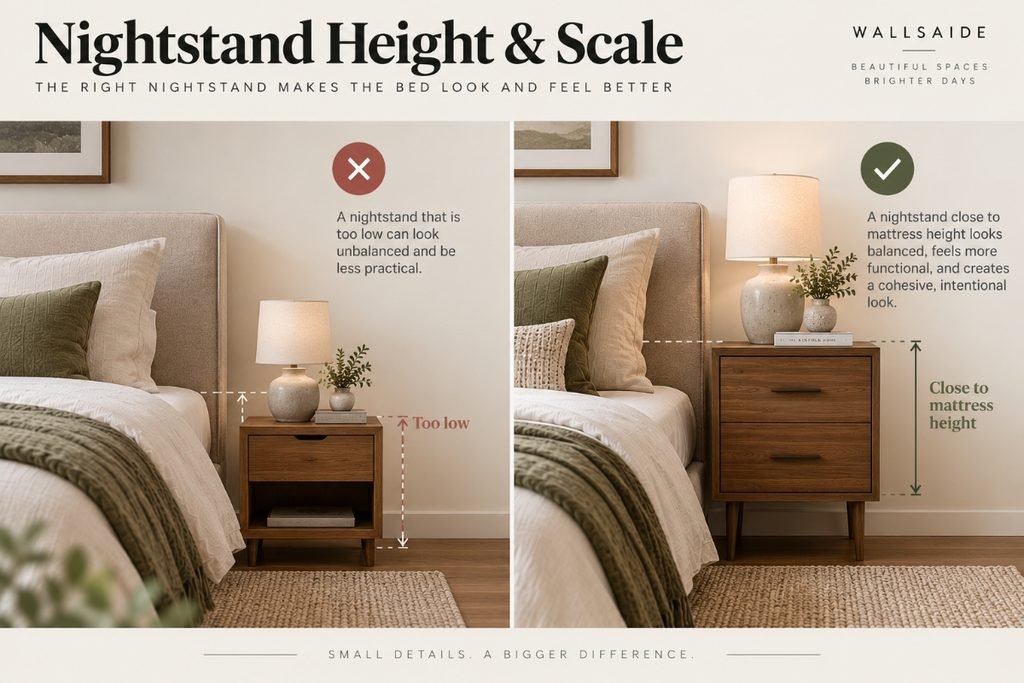
Matching nightstands provide straightforward symmetry, but matching isn’t required.
Two different pieces can still feel deliberate when their heights, proportions, or visual weight relate to one another. A pair might use different materials or shapes while maintaining similar surface heights, for example.
The goal is balance, not duplication.
Layer bedroom lighting
A single overhead fixture can provide general illumination, but it doesn’t need to perform every lighting job in the bedroom.
Think in layers instead.
General lighting makes the whole room usable and provides enough illumination for everyday tasks.
Bedside or task lighting puts light where you need it for reading or other activities without illuminating the entire room.
Softer ambient lighting can create a lower, more comfortable level of illumination in the evening.
A bedroom doesn’t need numerous fixtures to achieve this. Even one useful bedside lamp in addition to the main room light can provide more flexibility than relying entirely on the ceiling fixture.
Use rugs, curtains, and bedding to add texture
Bedrooms contain several large textile surfaces, which makes texture especially useful.
A rug can visually connect the bed to the surrounding floor. Where room dimensions allow, having the rug extend visibly beyond the sides of the bed usually creates a stronger relationship than placing a small isolated mat beside it.
There isn’t one correct rug configuration for every bedroom. Bed size, room dimensions, furniture placement, and the amount of exposed floor all affect what works.
Curtains and bedding provide additional opportunities to layer linen, cotton, wool, woven fibers, or other textures without introducing another strong color.
The result can be visually richer even when the palette itself remains restrained.
Give the bed wall a clear focal point
The wall behind the bed naturally attracts attention because it frames the room’s largest piece of furniture.
A headboard may provide enough structure by itself. In another room, a large piece of artwork or a restrained accent wall might provide the stronger focal point.
The important part is hierarchy.
An elaborate headboard, highly patterned accent wall, and oversized artwork can each be effective individually, but using all of them at equal intensity can make it difficult to understand what the eye should notice first.
Choose what should lead and allow the surrounding elements to support it.
Personalize after the room works
A bedroom can be technically well arranged and still feel anonymous.
Personal objects are what move it beyond a showroom: books you actually read, artwork you care about, photographs, ceramics, a favorite textile, or a plant that suits the available light.
The reason personalization comes last in the Wallsaide decision order isn’t because it’s unimportant.
It’s because decorative details work better when they aren’t being asked to compensate for an awkward bed position, oversized furniture, poor lighting, or an unresolved palette.
Get the room working first. Then give it character.
Bedroom mistakes worth avoiding
Even strong bedroom ideas can fall apart when furniture, lighting, color, and decoration are chosen in the wrong order. Many common bedroom problems begin earlier in the decision process.
Choosing furniture before establishing the bed position. You can end up owning pieces that technically fit but leave poor circulation once everything is in the room.
Ignoring furniture scale. A dresser, bench, or nightstand can be attractive by itself and still feel disproportionately large or small beside the bed.
Using only one overhead light. It limits how comfortably the room can adapt from daytime tasks to evening use.
Choosing paint only in daylight. A color you like in sunlight may look considerably different under your actual lamps.
Using a rug that feels disconnected from the bed. Look at how the rug relates to the entire sleeping area rather than treating it as an isolated decorative object.
Creating competing focal points. When the headboard, wall treatment, artwork, bedding, and lighting all demand equal attention, the room can lose visual hierarchy.
Styling before solving function. Decorative objects can’t fix a layout that is uncomfortable to move through.
Bedroom ideas FAQ
Where should you place a bed in a bedroom?
Start with a practical wall that allows the headboard to feel visually anchored while preserving useful circulation around the room. Account for doors, windows, closets, outlets, radiators, and bedside furniture before deciding on the final position. Traditional rules about the relationship between the bed and doorway can be considered, but they don’t need to override a layout that works better for the actual room.
What height should a bedroom nightstand be?
There is no universal nightstand height because mattress and bed-frame heights vary. As a practical starting point, a nightstand surface near the top of the mattress is often comfortable to reach and visually connected to the bed.
Do bedroom nightstands need to match?
No. Matching nightstands create easy symmetry, but different nightstands can work when their proportions, surface heights, materials, or visual weight create an intentional relationship.
How do you make a bedroom feel finished?
Resolve the major decisions before adding more decoration. Start with function and bed placement, establish the palette and furniture scale, then address lighting and texture before adding artwork and personal objects. This gives decorative details an existing structure to work with rather than asking them to hold the room together.
What colors work best in a bedroom?
There is no single best bedroom color. Consider the room’s natural light, artificial lighting, existing flooring and furniture, and the atmosphere you want to create. Test important paint colors in the actual room during both daylight and evening before committing to them.
The best bedroom ideas ultimately depend on the room itself: its dimensions, fixed features, natural light, furniture requirements, and the way you use the space every day.
About the author
Emma Carter writes about interior color, home décor, and practical styling for Wallsaide. She focuses on helping readers combine colors, materials, textiles, and decorative elements into rooms that feel balanced and cohesive.