
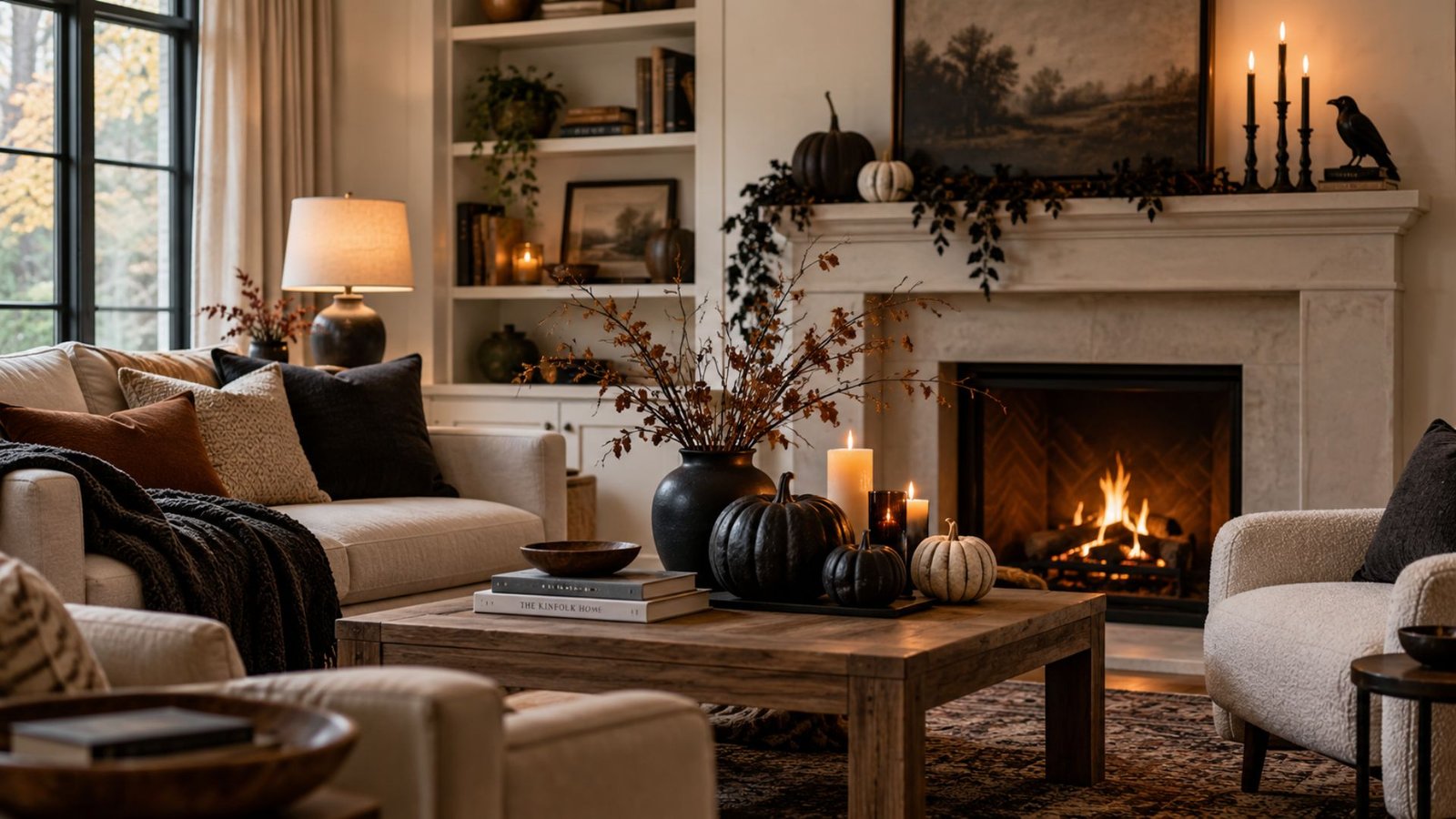

Most Halloween decor ideas start with a look — gothic, elegant, spooky-cute — and work backward from there, which is how a room ends up with seasonal pieces that feel like they were dropped in from a catalog rather than styled for the actual space.
A better starting point is the room itself: what’s already on the walls, the sofa, the shelves, and what a few well-chosen seasonal pieces can add to that, rather than compete with it.
This guide covers six directions to draw from, plus the Wallsaide Halloween Overlay Method for keeping any of them from turning into clutter.
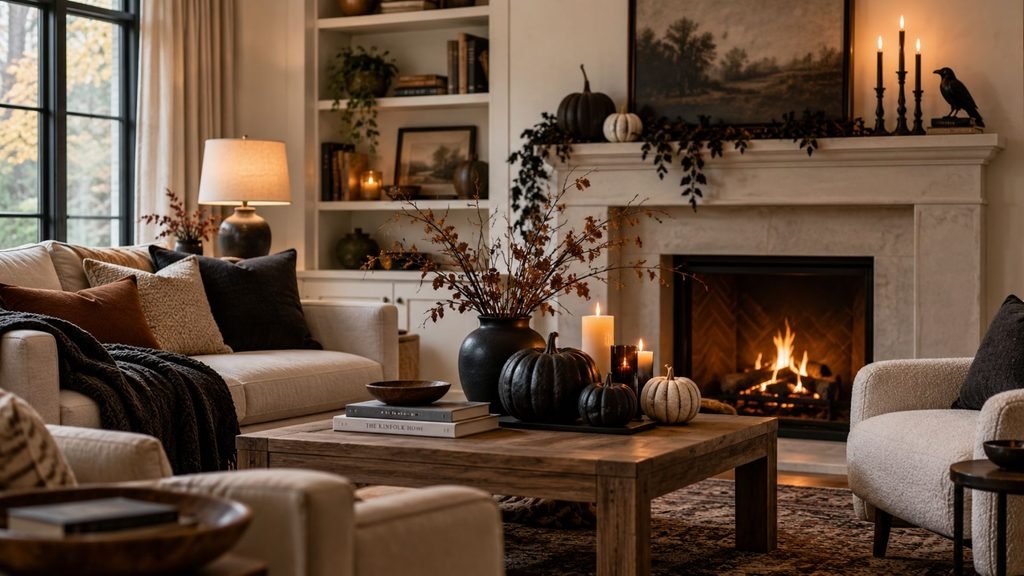
Start with your room’s existing palette
Before choosing a Halloween “look,” it’s worth naming what’s already in the room: warm or cool undertones, the dominant neutral, the wood and metal tones already present.
A room built around warm creams and honey-toned wood may be easier to extend with natural pumpkins, warm candlelight, and earthy seasonal details. Cooler grays and black metal can provide an equally useful starting point for charcoal, burgundy, or more gothic accents.
These are starting points rather than rules; deliberate contrast can work when it’s repeated intentionally elsewhere in the room. Fighting the existing palette with an unrelated seasonal color scheme is one of the more common reasons Halloween decor ends up looking like a temporary costume rather than part of the room.
Wallsaide’s complete guide to interior color ideas covers reading undertones and palettes in more depth — the same reading applies here, just applied to a seasonal layer instead of a permanent one.
Halloween decor ideas: 6 directions to start from
These directions build on Wallsaide’s broader living room ideas, applied specifically to a seasonal layer rather than the room’s permanent design.
Warm and cozy
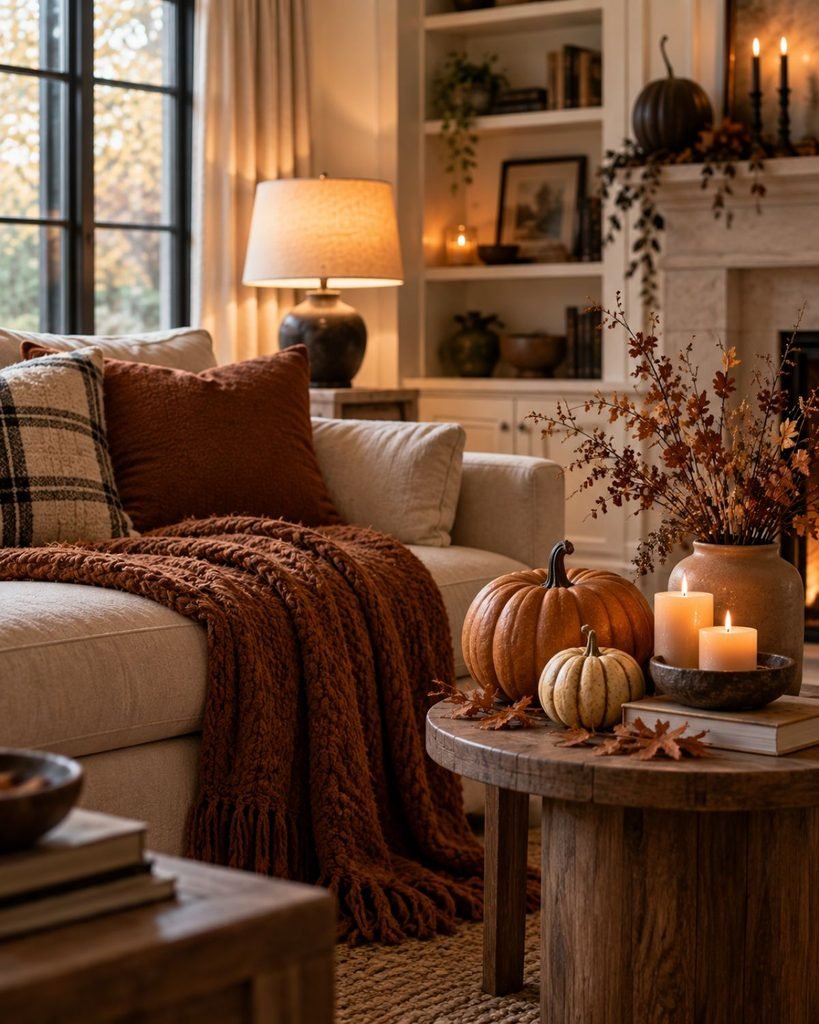
Natural-toned pumpkins, dried leaves, warm candlelight, and a knit throw suit a room that’s already warm-toned and don’t need much added to feel seasonal.
This direction works because it borrows from what’s usually already in the room in autumn — honey-toned wood, cream or oatmeal textiles, warm lamp light — rather than introducing anything new. A few natural or white-washed pumpkins on a side table, a bundle of dried leaves or wheat in a simple vase, and two or three warm candles are usually enough.
It tends to lose its warmth if a saturated jack-o’-lantern orange gets mixed in alongside the muted tones — sticking to natural, unpainted pumpkin colors keeps the look cohesive rather than costume-like.
Moody and gothic
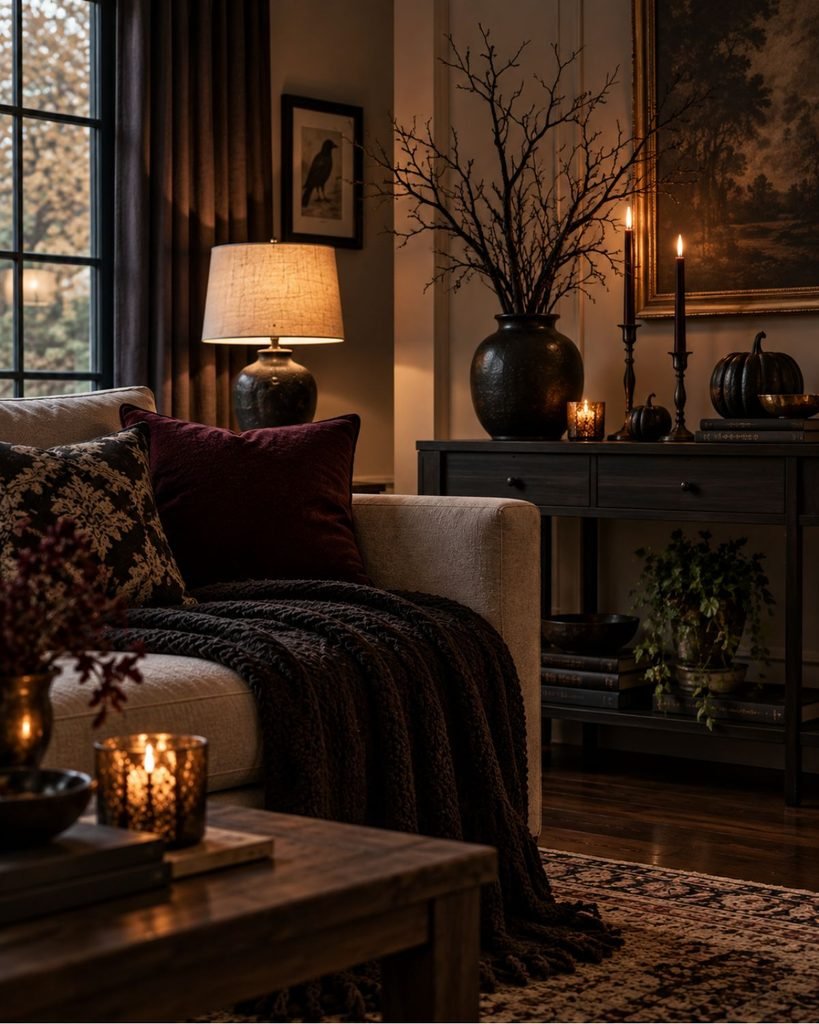
Charcoal and black tones, iron finishes, and bare branches suit a room already leaning cool or dark-toned, since the direction works by extending colors and materials the room already has rather than fighting them.
A dark wood console, one black or deep charcoal object, a few bare or black-painted branches in a simple vase, and iron-toned candle holders usually carry the whole look — a burgundy or aubergine cushion adds a single point of warmth without softening the mood too much.
This direction can look heavy-handed in a very light, warm room unless it’s kept to one contained area, and it’s worth stopping at one dark accent rather than layering several, which can tip a room from moody into simply dim.
Black and gold
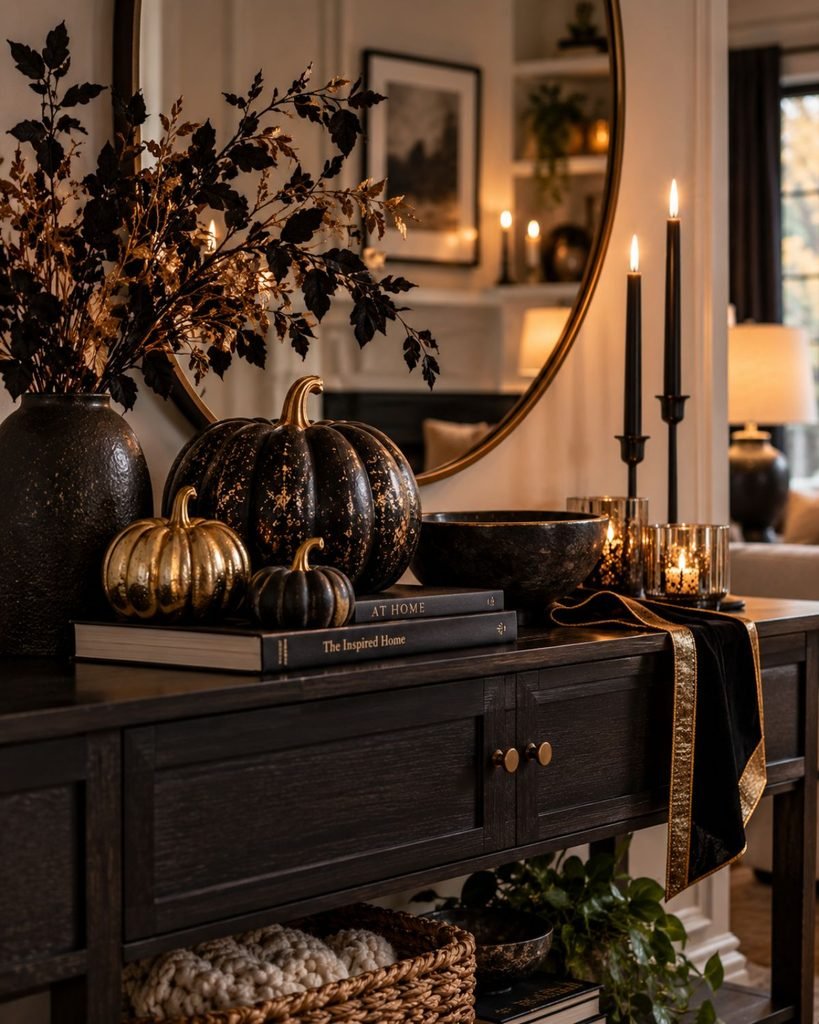
Black and gold reads as festive without being overly literal. It works particularly well when the room already contains black frames, dark hardware, brass, or other warm metallic finishes, because the seasonal layer can echo materials that are already present.
One or two black pumpkins with a subtle gold rim, a small gold candle holder, and a black ribbon or garland detail are enough for one surface.
Where this direction tends to go wrong is scale — covering an entire console or mantel in black-and-gold pieces can start to look like party decor rather than a considered accent, so leaving visible open space around the objects matters more here than in most of the other directions.
Vintage
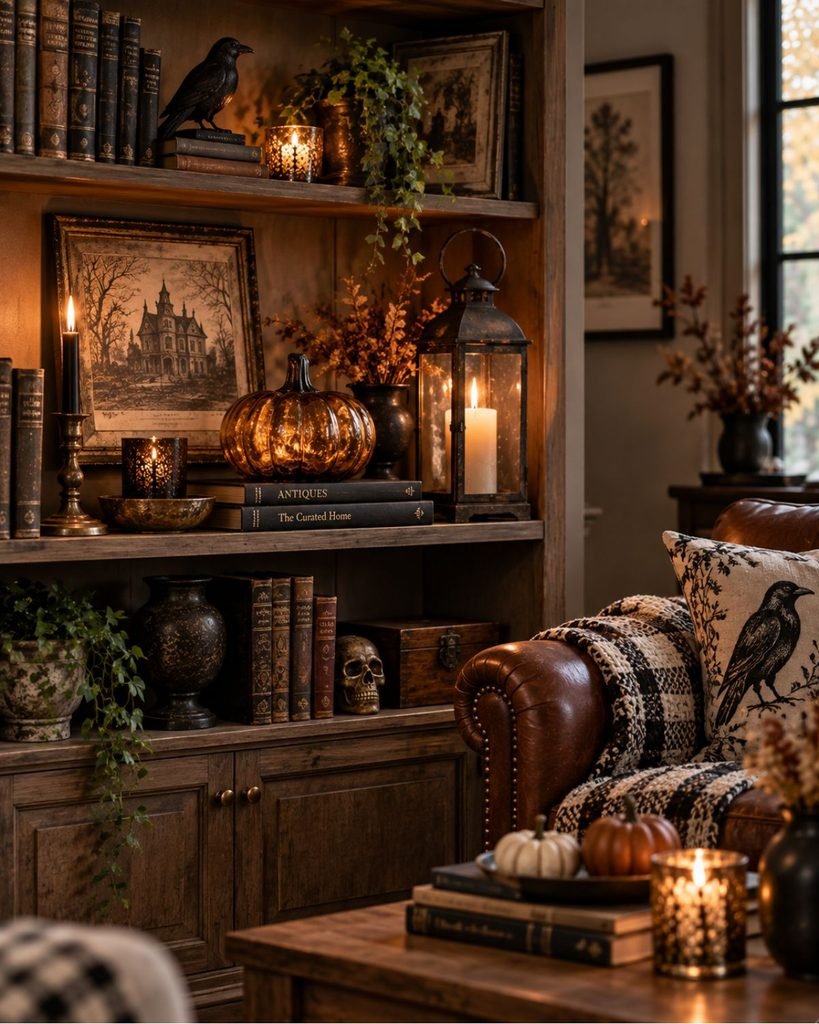
Muted, aged tones and antique-style objects suit a room that already leans traditional or collected-over-time rather than sleek and modern — this direction works by adding a couple of aged-looking pieces rather than a full costume-shop assortment.
An antique-style glass or ceramic pumpkin, a small vintage-look lantern with a flameless candle, and one muted sepia-toned paper decoration are usually enough to establish the mood on a single shelf.
It reads as thoughtful rather than dated as long as the pieces look genuinely aged or well-made rather than obviously mass-produced — a room full of new, glossy finishes can make an inexpensive “vintage-style” prop look more like a costume piece than a keepsake.
Neutral and minimalist
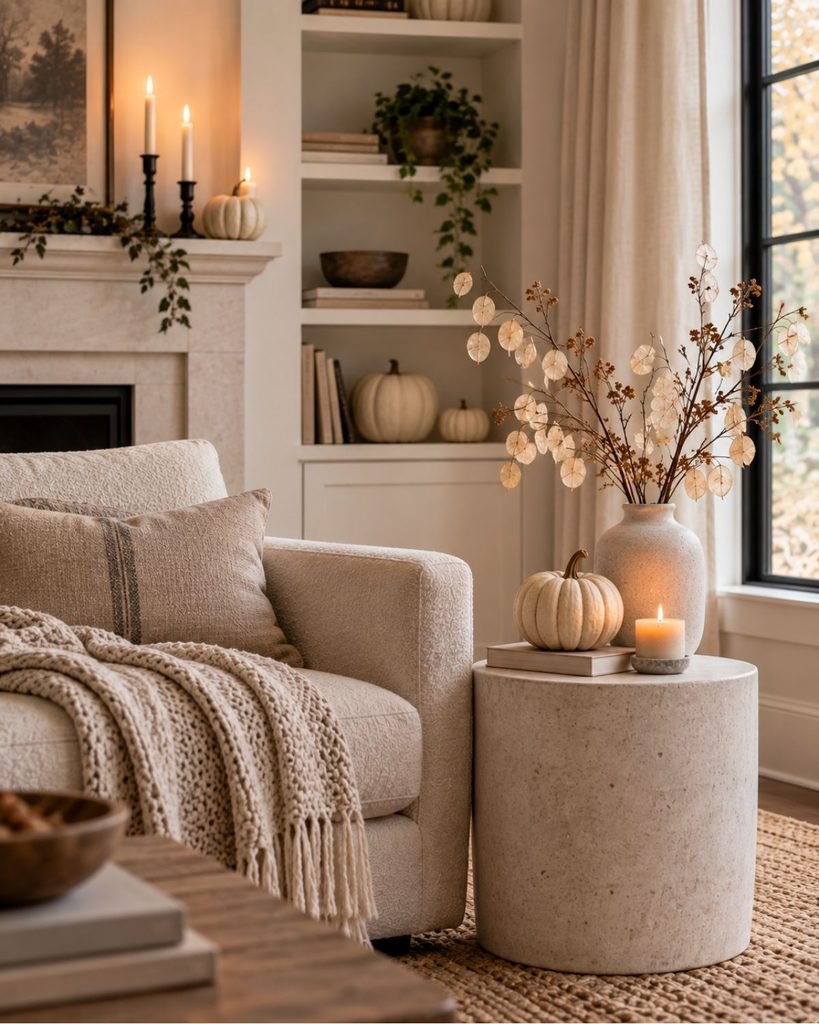
If your living room is already built around a neutral palette, this direction barely needs to announce itself as Halloween at all — a couple of pale, natural-toned pumpkins do the job.
It works because it asks for almost no new color: white or unpainted pumpkins, one dried botanical stem, and the room’s existing lamps and textiles carry the whole look.
The risk with this direction isn’t clutter, since it naturally stays sparse — it’s under-commitment. One lone pumpkin on an otherwise untouched shelf can read as forgotten rather than intentional, so it’s worth pairing it with at least one other small element so the styling reads as a deliberate choice.
Our guide to neutral living room ideas covers the underlying palette this direction draws from.
Natural and botanical
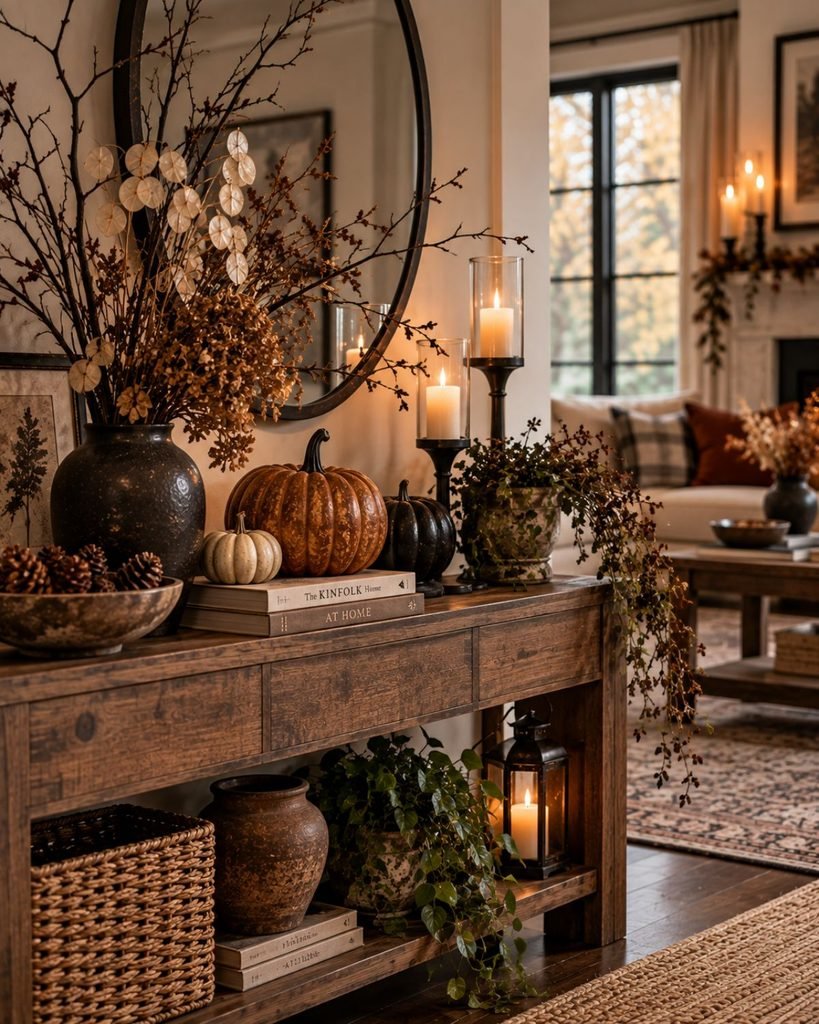
Dried and natural materials — lunaria, bare branches, dried herbs — read as seasonal without reading as Halloween in the costume sense, which makes this one of the easier directions to fold into almost any existing room, regardless of its color palette.
It works by leaning on texture and form rather than color: dried lunaria stems for their pale, papery discs, a few bare branches for height, and a small bundle of herbs tied with twine for a rougher note.
One small natural-toned pumpkin is optional rather than essential.The thing to avoid is treating this as a full witch-themed vignette with cauldrons or overtly costume-like props mixed in — the strength of this direction is restraint, and a single literal prop can undercut it.
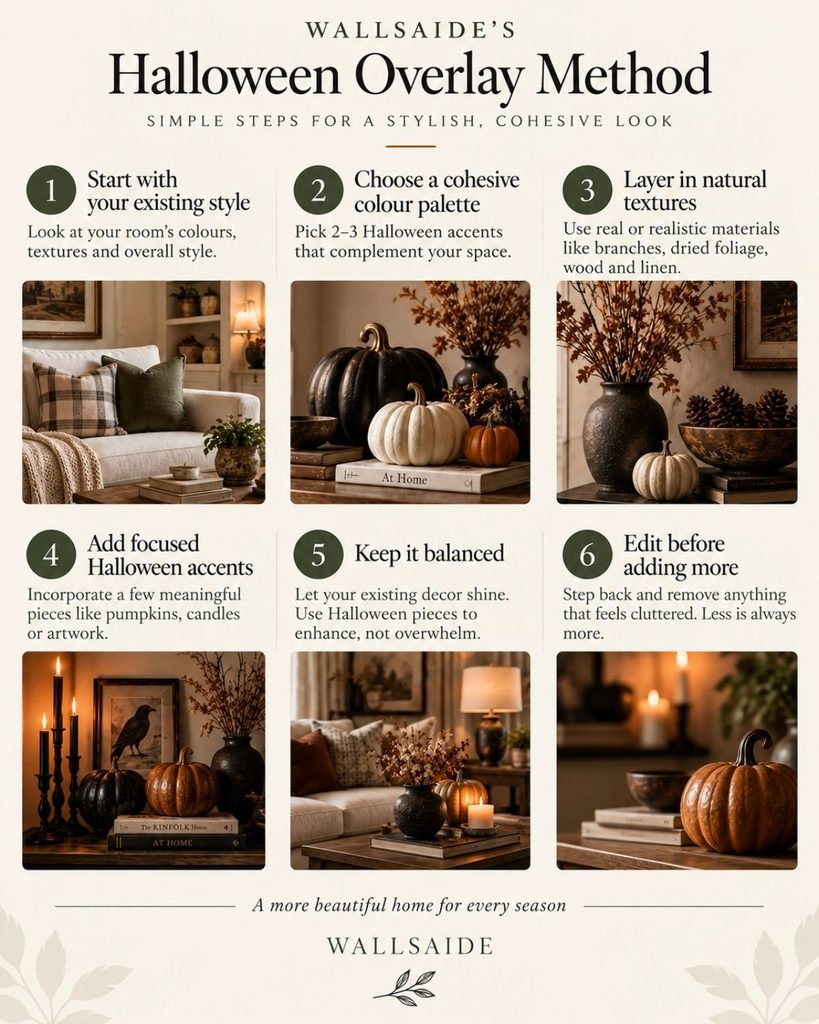
The Wallsaide Halloween Overlay Method
Every direction above works better, and stays easier to undo in November, when it’s applied through the same short sequence rather than added piece by piece.
This is Wallsaide’s own editorial method, not an industry standard:
- Start from your room’s existing palette, not a Halloween palette.
- Choose one seasonal direction that suits what’s already there.
- Pick one focal surface — a mantel, console, or shelf — rather than decorating everything at once.
- Repeat a limited number of motifs, two or three at most.
- Light it for evening. Candlelight is a simple way to shift the mood without adding more objects.
- Edit before adding more, if the space starts to feel cluttered.
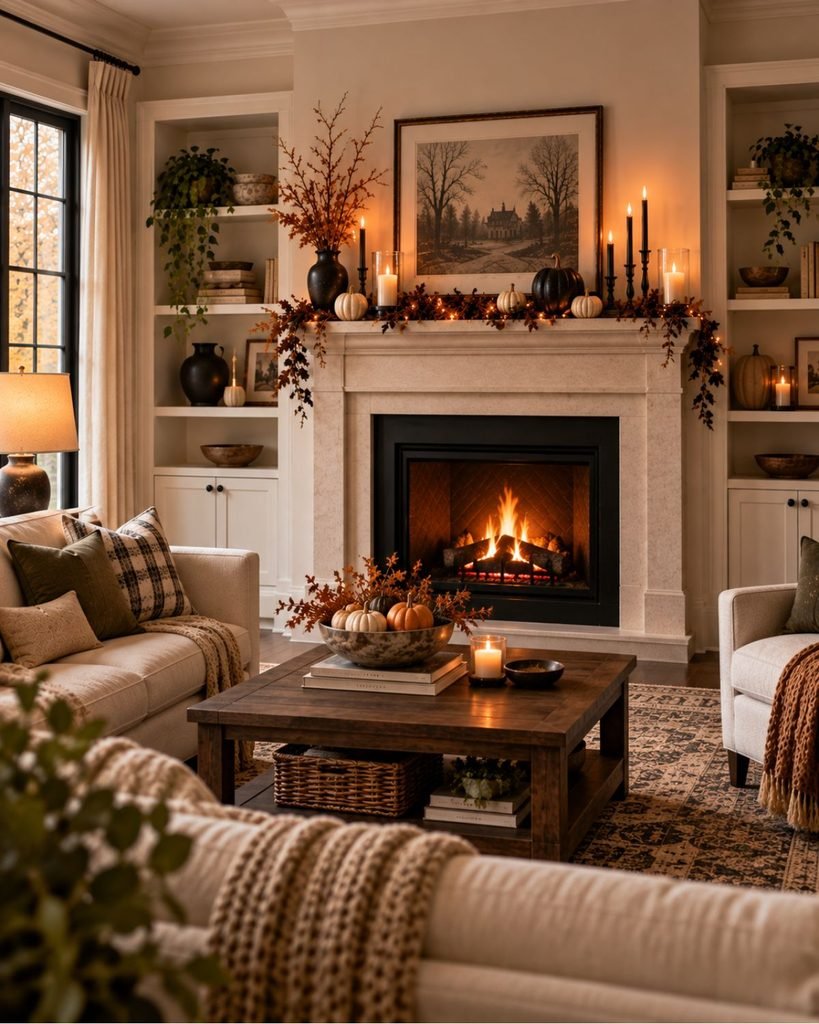
Choosing one focal surface
A mantel, a console table, or a single shelf is usually enough to establish a Halloween mood for an entire room — trying to decorate every surface equally is one of the more reliable ways to end up with a cluttered, unfocused result rather than a room that reads as intentionally seasonal.
Halloween decor in a small space or apartment
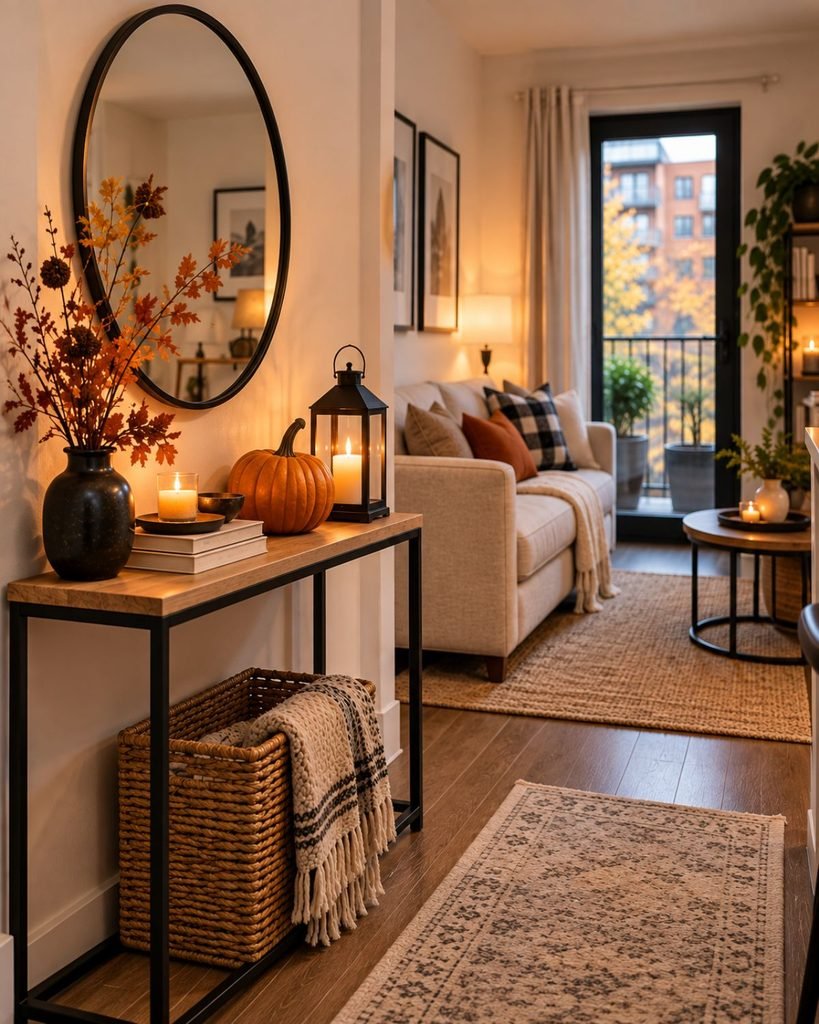
A small living room or apartment usually only has room for one styled surface anyway, which makes the Overlay Method’s “one focal surface” step less of a discipline and more of a natural fit.
A compact console, shelf, or side table can carry the seasonal layer on its own. Try one small pumpkin, one botanical element, and one flameless candle rather than spreading several small decorations around the room. Keeping the floor and circulation paths clear also matters more in a tight space, so use the surfaces you already have instead of introducing seasonal baskets, floor lanterns, or other objects that consume usable space.
Our guide to small space ideas covers the broader spatial-planning logic this borrows from — the same “pick one thing to do well” reasoning applies here, just applied to seasonal styling instead of permanent furniture.
Lighting does most of the atmosphere
Low, warm lighting is one of the simplest ways to shift an existing room toward a more atmospheric evening mood without adding another layer of decorative objects.
Flameless candles are the safer choice in most spots, particularly near curtains, dried botanicals, paper decorations, or anywhere décor might shift. If you use a real candle, the National Fire Protection Association recommends keeping it at least 1 foot (30 cm) from anything that can burn, placing it in a sturdy holder on a sturdy, uncluttered surface, and extinguishing it when you leave the room or go to bed.
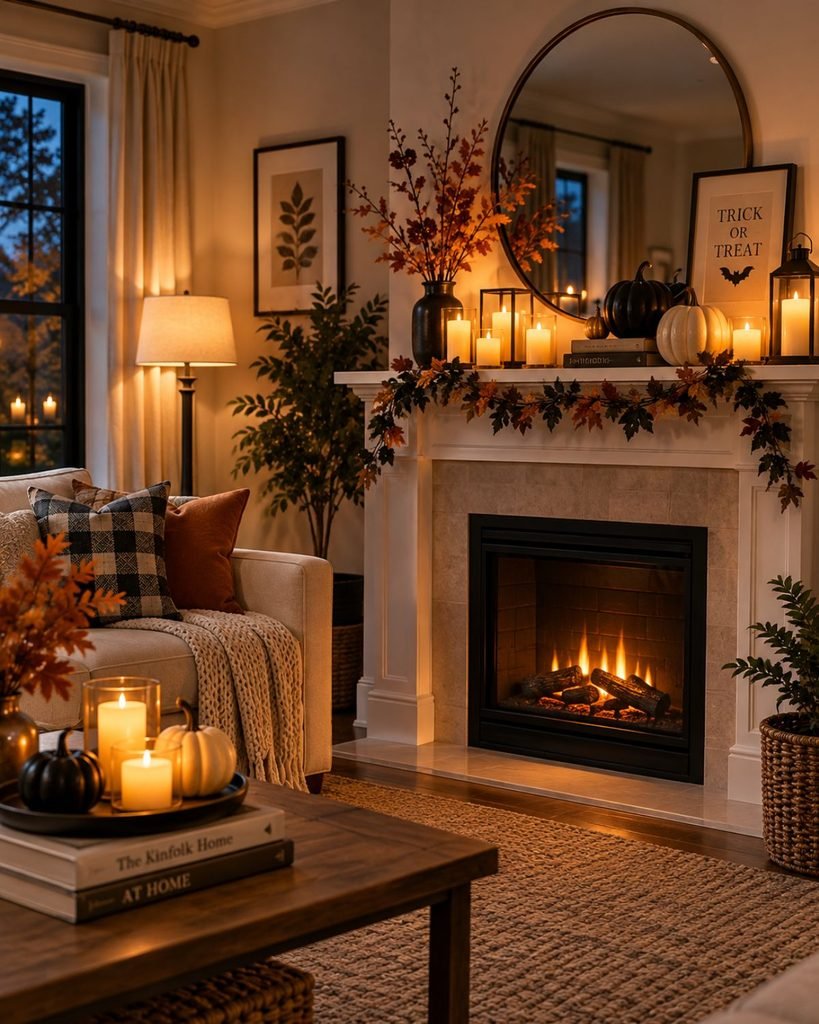
Overdecorated vs. edited
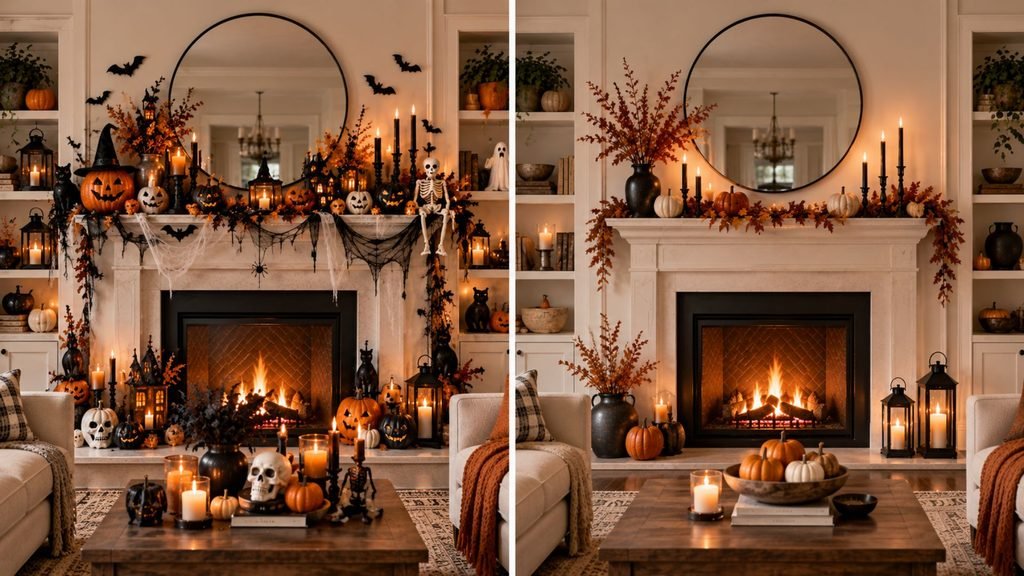
Halloween decor mistakes
- Choosing a seasonal palette that fights the room’s existing undertone, rather than starting from what’s already there.
- Decorating every surface at once, rather than picking one focal point and leaving the rest of the room alone.
- Mixing several unrelated Halloween themes in the same room — gothic, cute, and cartoonish all competing for attention.
- Relying on a single bright overhead light, which undercuts the atmosphere candlelight and lamps would otherwise create.
- Adding more decor to fix a cluttered result, instead of removing something first.
Where this leaves you
Halloween decor doesn’t need its own separate aesthetic — it works best as a light seasonal layer on a room that already has a palette and a personality.
Start from what’s already there, pick one direction and one focal surface, keep the motifs limited, light it well, and edit before adding more.
Halloween decor ideas FAQs
How do I decorate for Halloween without it looking cluttered or like a costume store?
Pick one focal surface — a mantel, console, or shelf — rather than decorating the whole room, limit yourself to two or three repeated motifs, and edit before adding anything new if the space starts to feel busy.
How do I make Halloween decor work with my home’s existing colors?
Start with the undertones and dominant finishes already in the room, then choose seasonal colors that either relate to them or create deliberate contrast. Warm rooms can easily accommodate natural pumpkins and candlelit earthy tones, while cooler rooms can provide a useful base for charcoal, burgundy, or darker accents. Neither approach is a fixed rule.
Can Halloween decor still feel cozy rather than scary?
Yes — warm-toned pumpkins, dried botanicals, layered candlelight, and existing textiles like a knit throw can create a seasonal atmosphere without any overtly scary or costume-store elements at all.
How do you decorate a small apartment for Halloween?
Usually with one styled surface rather than several — a single console table or shelf with one or two objects and a candle does the same job in a small space that a full mantel does in a larger room.
When should you start decorating for Halloween?
There is no fixed date, but late September through early October gives Halloween decor enough time to feel seasonal without taking over the room for too long. If you already use autumn decor, you can transition gradually by keeping the existing warm textures and natural elements, then adding a few distinctly Halloween details as October approaches.
About the author
Emma Carter writes about interior color, home décor, and practical styling for Wallsaide. She focuses on helping readers combine colors, materials, textiles, and decorative elements into rooms that feel balanced and cohesive.