
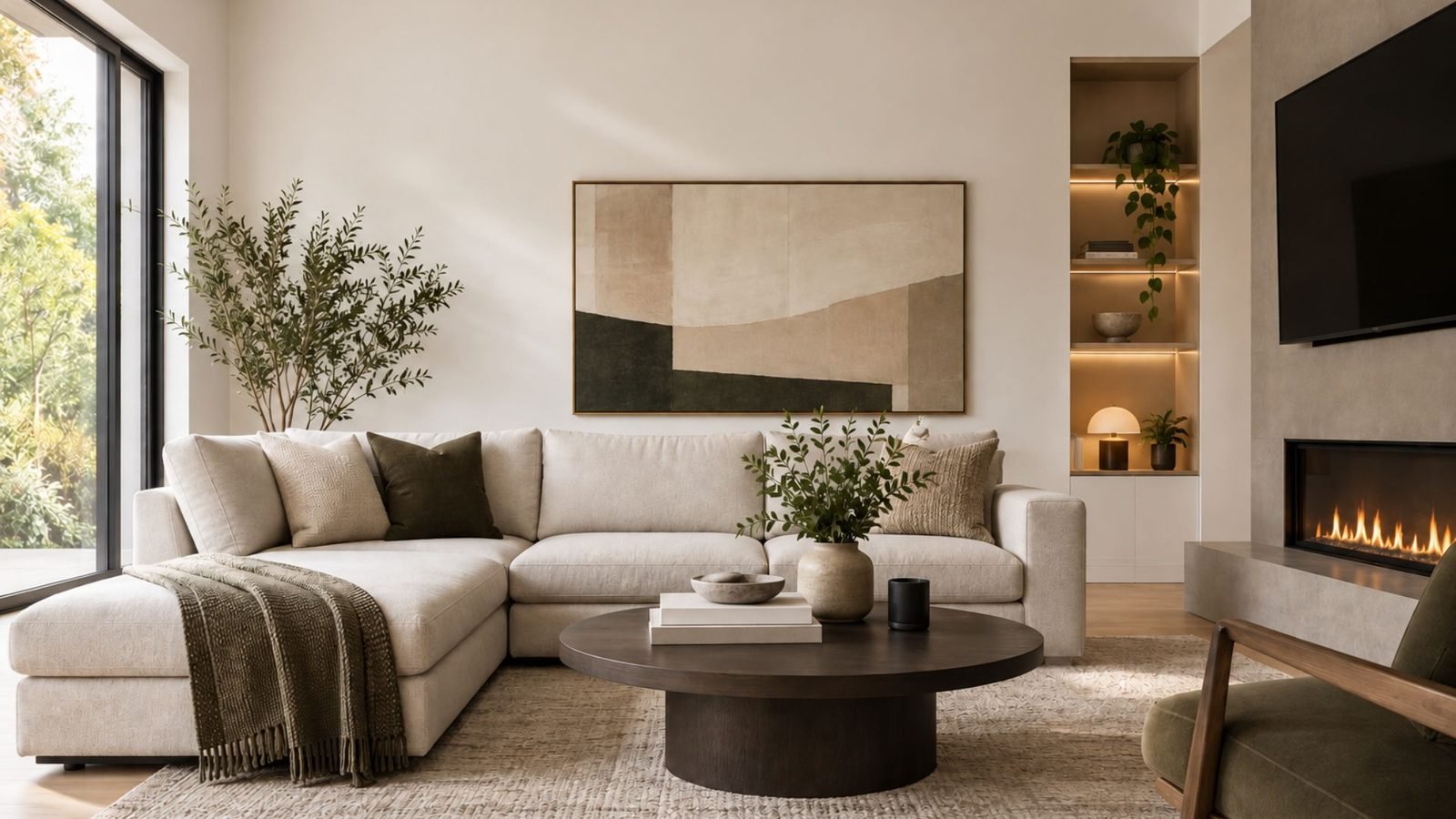

“Modern” gets used in more than one way in interior design. Historically, it describes a design movement associated with the early-to-mid-20th century, where function, simple forms, restrained ornament, and honest use of materials became central ideas.
Most people searching for modern living room ideas, however, are looking for something broader: a room that feels clean-lined, uncluttered, current, and intentional without becoming cold or impersonal.
That broader interpretation is what we’ll use here. If you’re planning more than one aspect of the room, start with our broader living room ideas guide, then use the principles below to develop a specifically modern direction.
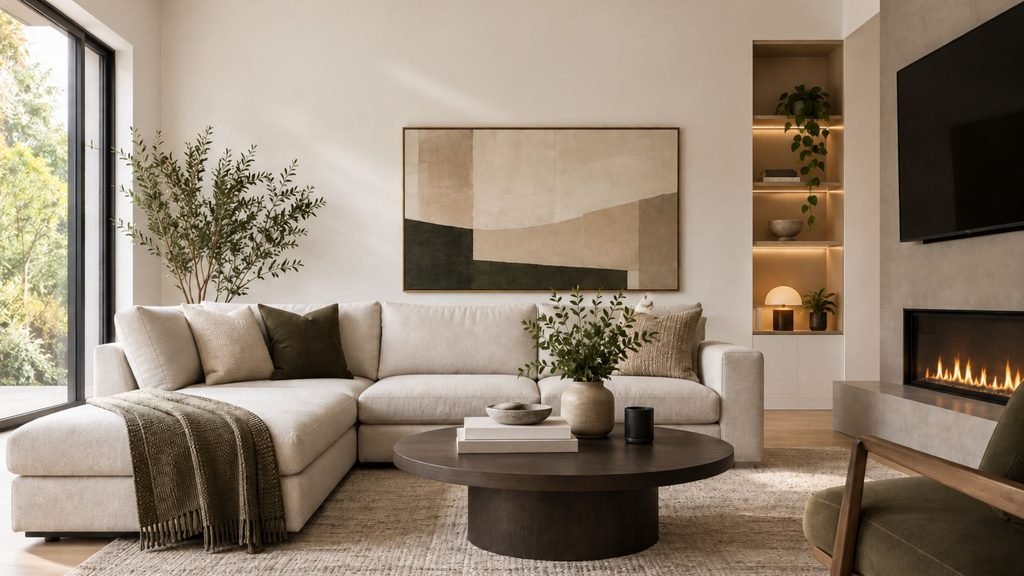
What actually makes a living room read as modern
A room doesn’t read as modern just because it contains furniture labeled “modern style.”
The effect comes from several visual decisions working together: clean lines, deliberate proportions, a restrained palette, material contrast, visible negative space, layered lighting, and a few well-chosen objects rather than many small ones.
Miss several of these and a room built from genuinely modern-looking pieces can still feel generic or showroom-like.
That distinction matters because the solution usually isn’t buying an entirely different set of furniture. It’s understanding which part of the visual system is missing.
Modern vs. contemporary vs. mid-century modern vs. minimalist
These terms overlap in real interiors, but they aren’t identical.
- Modern is historically associated with early-to-mid-20th-century design principles: functional forms, relatively little ornament, simple silhouettes, and materials used clearly rather than disguised.
- Mid-century modern developed within the broader modern movement and is especially associated with streamlined furniture, exposed legs, warm woods, practical forms, and occasional stronger color.
- Contemporary describes design of the current period rather than one fixed historical style. What counts as contemporary therefore changes over time.
- Minimalist is more concerned with reduction and restraint. A minimalist room may also be modern, but reducing the number of objects alone doesn’t define a historically modern interior.
For decorating purposes, the useful lesson is simpler: don’t rely on the style label alone. Look at the room’s lines, proportions, materials, spacing, and overall composition.
The Wallsaide Modern Living Room Checklist
Instead of asking whether every individual piece is technically “modern,” evaluate how the room works as a whole.
The Wallsaide Modern Living Room Checklist uses seven checks:
- Line — clean, straight, or simply curved edges rather than elaborate carving or heavy trim.
- Proportion — furniture deliberately sized for the room, with breathing room around major pieces.
- Palette — a controlled group of core tones rather than unrelated colors introduced one by one.
- Material contrast — deliberate combinations such as warm wood with metal or smooth surfaces with woven texture.
- Negative space — some open floor, wall, and surface area left intentionally empty.
- Layered lighting — illumination coming from more than one source or height.
- Selective decoration — fewer objects with a clear purpose rather than many small accessories competing for attention.
This is a Wallsaide editorial diagnostic rather than an industry rule. Its purpose is to help identify why a room reads as modern—or why it doesn’t.
The line and form difference
One of the easiest distinctions to see is furniture silhouette.
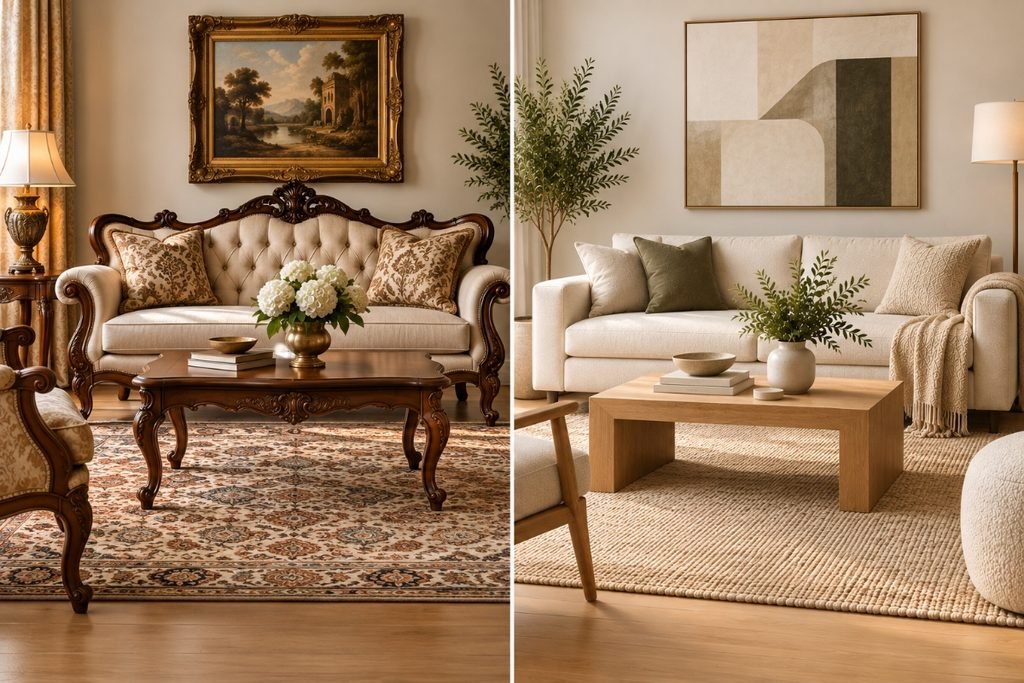
An ornate piece may use carved timber, decorative trim, tufting, elaborate legs, or several competing curves. A cleaner-lined piece reduces those details and lets the overall silhouette do more of the visual work.
Neither approach is inherently better. They simply create different visual languages.
For a modern room, the important point is consistency. A simple sofa, restrained table, and clean-lined chair reinforce one another instead of asking individual pieces to compete for attention.
Modern living room ideas: 4 directions to start from
Modern doesn’t have to mean one particular palette or one type of furniture. These four directions use the same underlying principles differently.
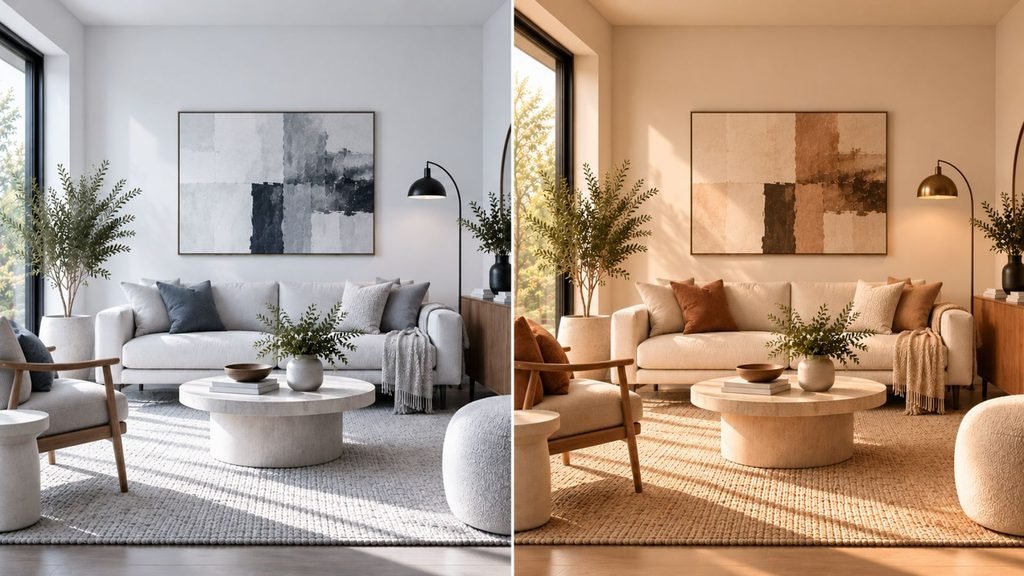
Warm modern
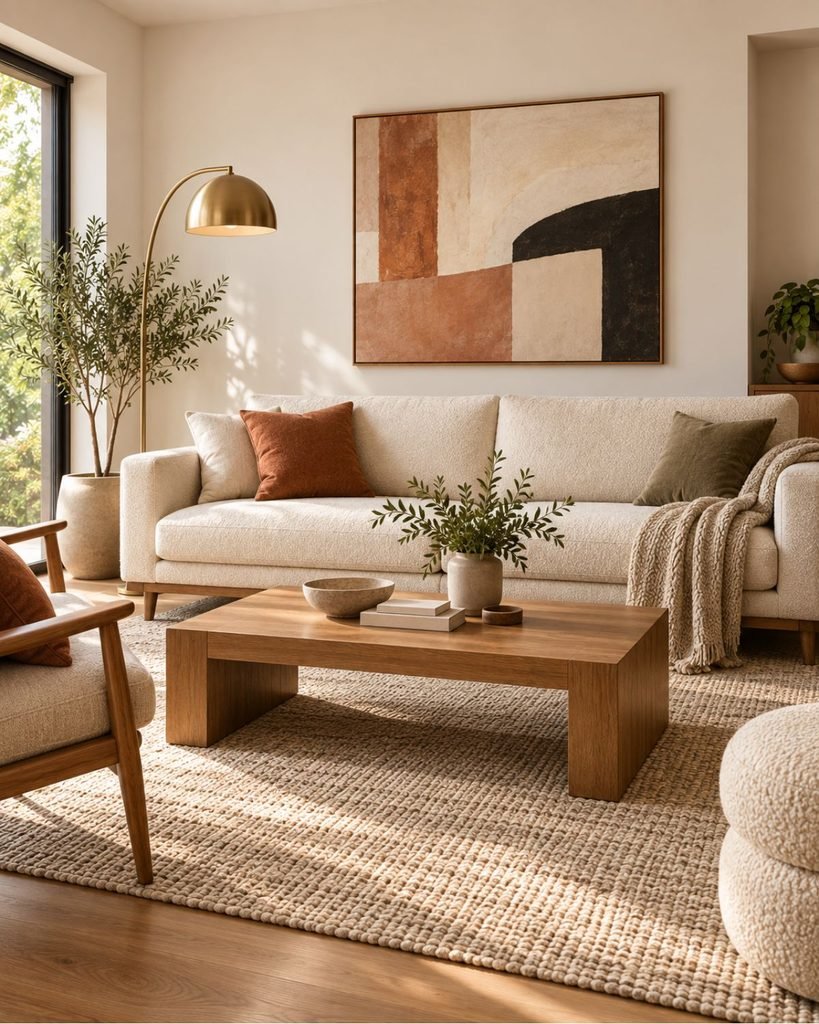
Warm wood, cream or oatmeal upholstery, textured textiles, and restrained warm-metal details soften clean furniture lines without making the room visually busy.
The warmth comes primarily from materials, color temperature, and texture, not from adding more accessories.
This works particularly well when you like modern simplicity but don’t want the room to feel clinical.
Modern neutral
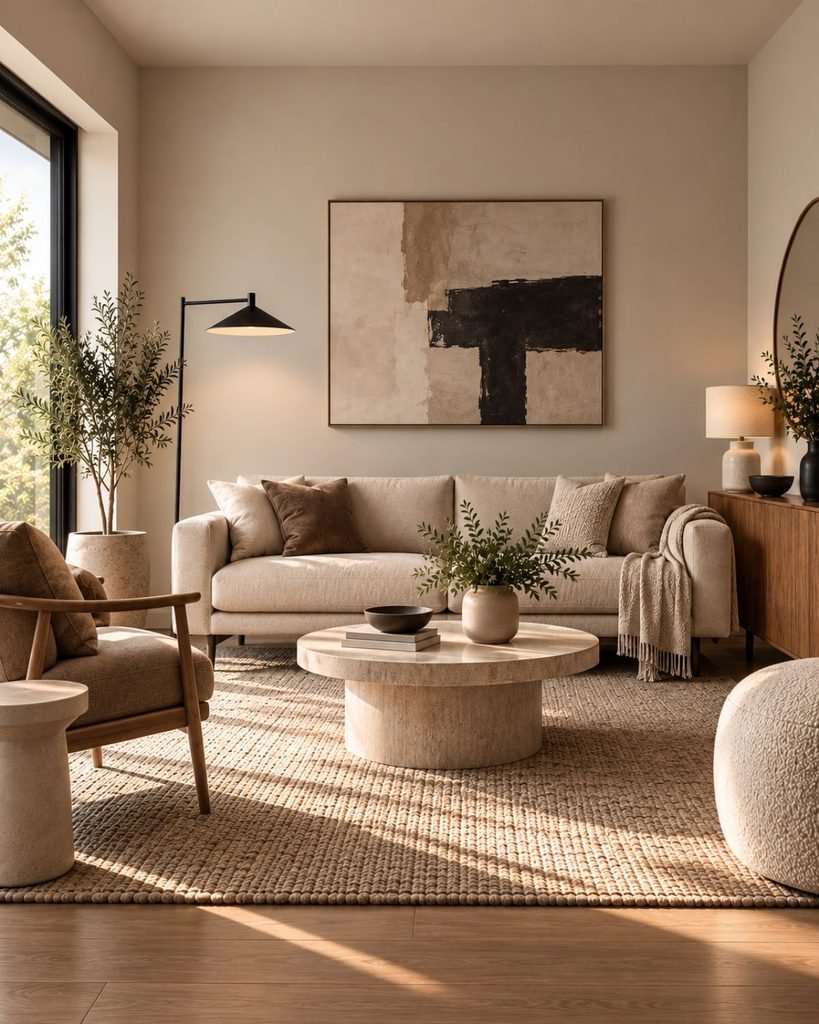
A restrained neutral palette can make furniture form and texture more noticeable because strong color isn’t competing for attention.
The key is variation.
Pale greige walls, oatmeal upholstery, deeper taupe accents, warm timber, and a small amount of black can all sit within a restrained palette while still creating visible depth.
If you want to develop this direction further, our neutral living room ideas guide explains how undertones, texture, materials, and contrast keep a neutral room from becoming flat.
Dark and moody modern
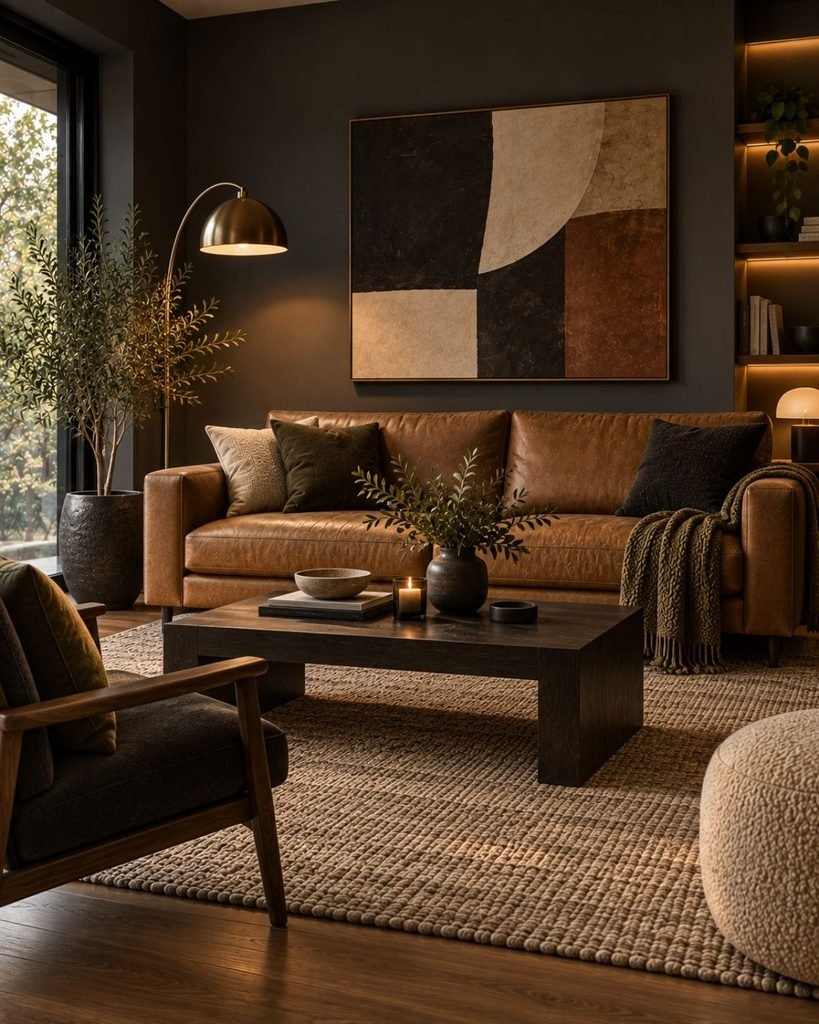
Modern rooms don’t have to be pale.
Deep charcoal walls, dark timber, black metal, or other saturated finishes can still work with clean modern forms. The challenge is preserving enough visual separation between surfaces and providing adequate light at different heights.
A darker room with only one strong overhead fixture can feel harsh or gloomy. Adding softer light closer to seating level creates a more dimensional evening atmosphere.
Modern with natural wood
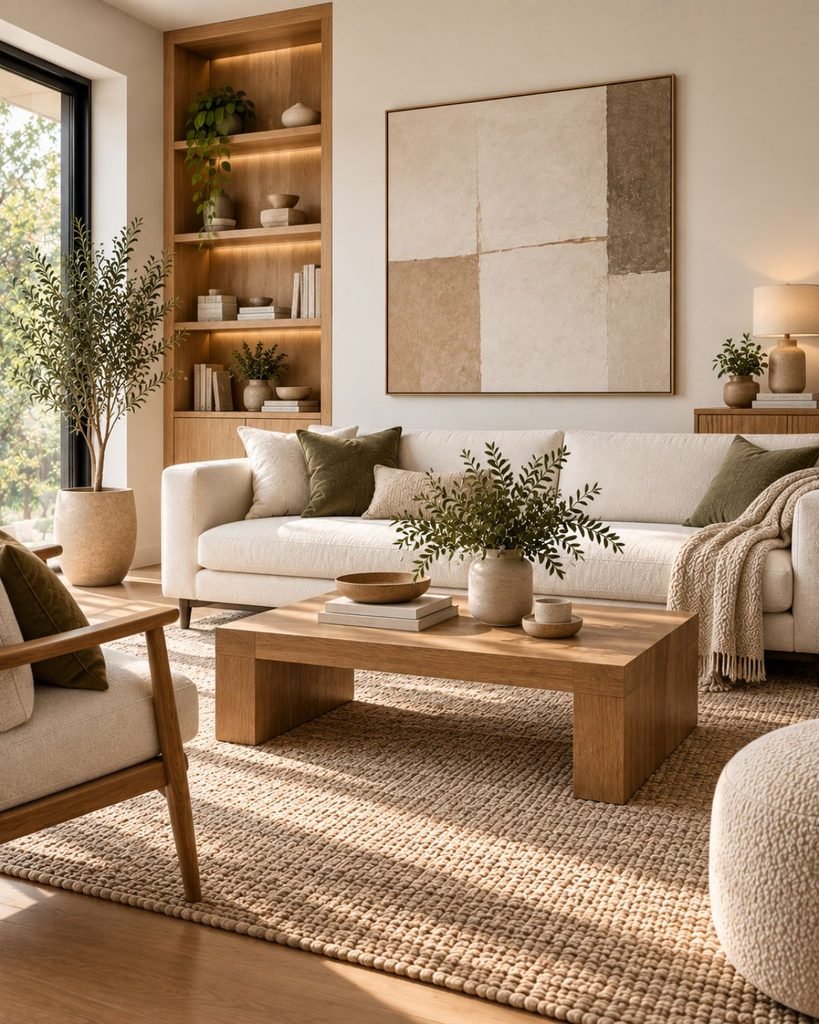
Natural wood is particularly useful when a clean-lined room feels too sterile.
Wood grain introduces irregularity and texture without requiring another decorative pattern. A timber coffee table, console, shelving system, or exposed furniture frame can therefore add warmth while preserving a restrained composition.
Pairing wood with a contrasting material—such as black metal, ceramic, glass, stone, or woven fabric—makes the difference more visible.
Why modern rooms turn cold instead of warm
A modern room often starts feeling cold when too many surfaces share the same smooth, hard finish.
Imagine a low-profile sofa in slick fabric, a glass-and-chrome coffee table, bare walls, little textile variation, and one bright overhead fixture. Each piece might fit a modern aesthetic individually, yet together they provide very little material or lighting contrast.
The solution doesn’t necessarily require replacing the furniture.
A textured rug introduces softness. A warm wood surface breaks up glass and metal. Artwork gives a large bare wall a focal point. A floor or table lamp creates light at a lower level.
Negative space is doing real work
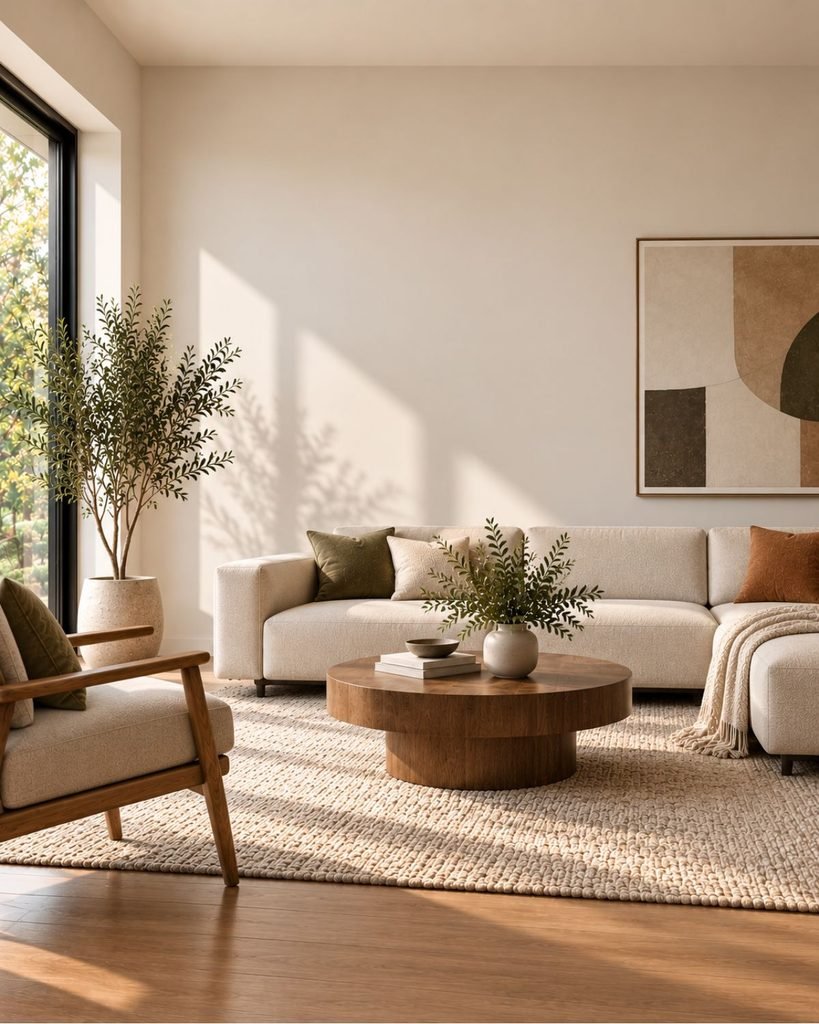
Empty space isn’t automatically wasted space.
In a modern living room, the visible floor between furniture, an unfilled section of wall, or an uncluttered tabletop can help separate individual forms so they’re easier to read.
This is particularly important when the room contains strong furniture silhouettes.
Adding another chair, side table, plant, basket, or piece of wall art simply because an empty area exists can gradually remove the breathing room that made the composition feel deliberate in the first place.
Negative space should therefore be treated as part of the design rather than as a gap waiting to be filled.
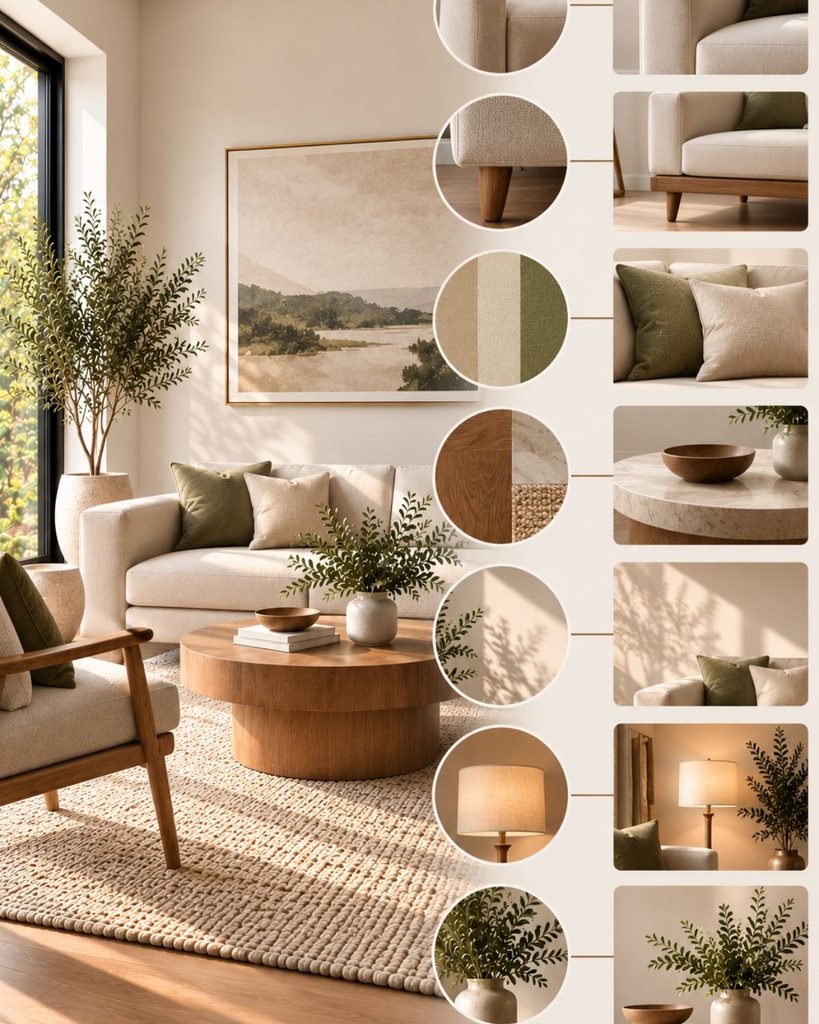
Material contrast up close
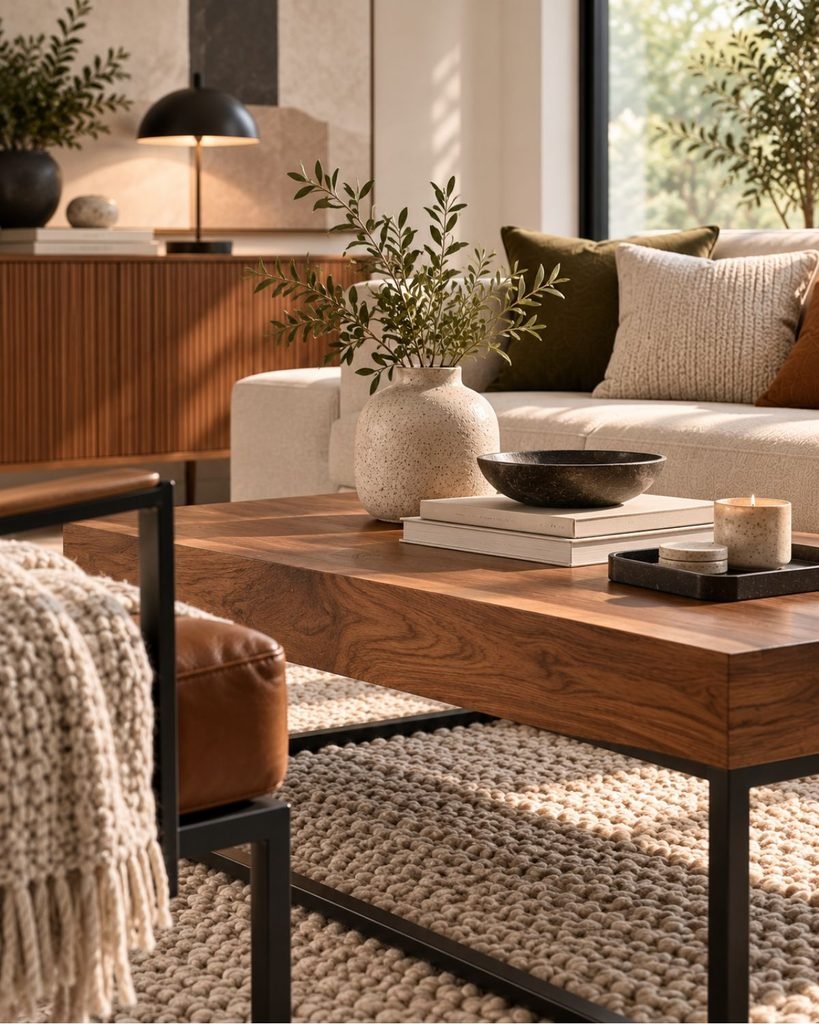
Material contrast doesn’t require dramatic combinations.
Warm timber beside black metal already creates one contrast. Smooth ceramic against woven wool creates another. Glass against textured upholstery can do the same.
The principle is useful because it creates visual variation without requiring additional colors or decorative objects.
If the room feels flat, inspect the materials before adding more décor. Sometimes the problem isn’t that the room needs another object—it needs a different surface.
Modern living rooms in practice
Once the overall direction is established, furniture, lighting, art, and accessories should reinforce it rather than operate independently.
Start with the largest forms. A sofa and major storage piece establish much of the room’s visual weight, while the coffee table and chairs help determine how open or dense the central furniture arrangement feels.
Lighting should then work at different heights. General illumination can handle the overall room, while a floor lamp, table lamp, or other localized source adds depth around seating areas.
Decoration comes later.
One or two larger pieces of art may provide more visual clarity than several unrelated small pieces. Likewise, one substantial object on a coffee table can often contribute more than a collection of small accessories.
The objective isn’t to make the room empty. It’s to make each addition feel intentional.
Modern living rooms in a small space
Modern design can work particularly well in compact rooms because clean furniture lines and controlled decoration reduce visual noise.
But small rooms make proportion more important.
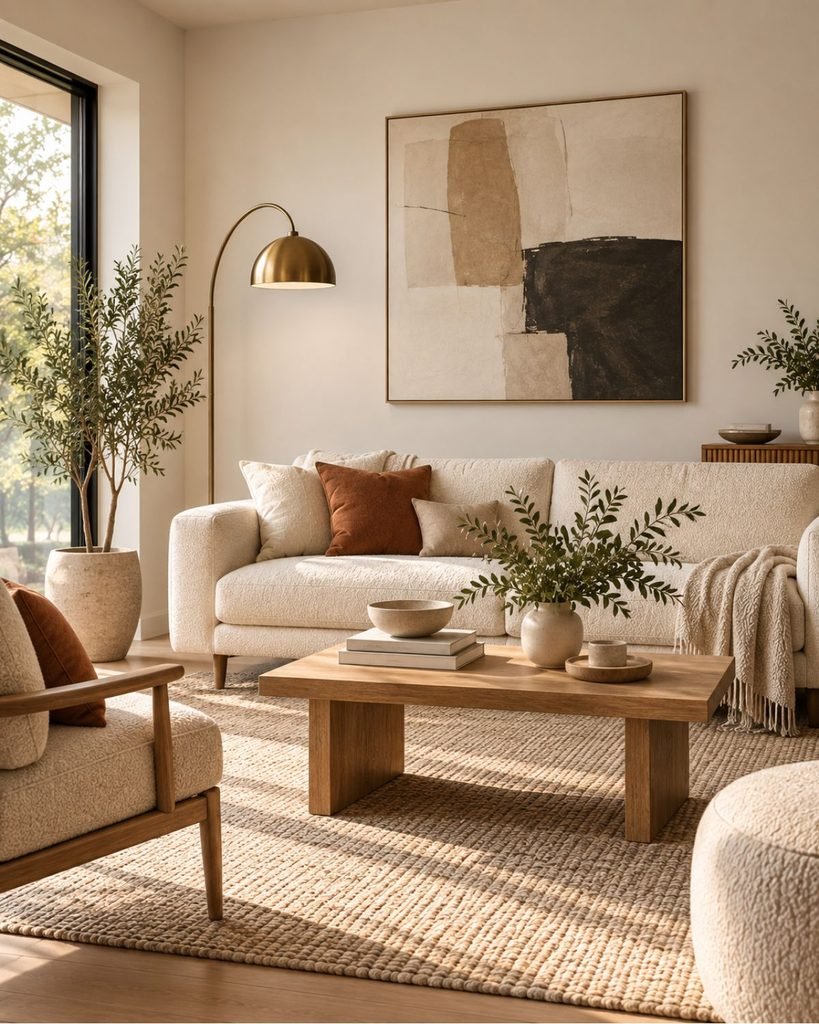
A sofa that overwhelms the available wall, an oversized coffee table, or too many occasional pieces can remove the negative space that allows the room to feel composed.
Choose fewer pieces with dimensions that preserve useful circulation, then allow some visible floor between major furniture elements.
Our small living room ideas guide goes deeper into furniture scale, layout, circulation, and making limited floor space work effectively.
Modern living room mistakes
A few recurring decisions can weaken an otherwise strong modern room:
- Choosing furniture by its style label alone. Look at line, scale, materials, and how the piece interacts with everything around it.
- Filling every available surface. Modern rooms generally benefit from some deliberately unused visual space.
- Relying on one overhead light. Light coming from different heights creates more depth and a less institutional atmosphere.
- Using only smooth, hard finishes. Introducing wood, wool, linen, woven fibers, or another tactile material can provide necessary contrast.
- Combining too many competing furniture languages. One ornate object can work as deliberate contrast; several unrelated decorative styles can make the composition lose clarity.
- Removing so much that the room loses personality. Restraint and emptiness aren’t the same thing. Art, books, plants, textiles, and meaningful objects can still belong in a modern room.
Where this leaves you
The best modern living room ideas are less about finding furniture with the correct label and more about controlling the relationship between the pieces already in the room.
Check the lines first. Then look at proportion, palette, material contrast, negative space, lighting, and decoration.
If several of those elements are working together, the room can feel modern without becoming sterile. If it still feels cold or generic, resist the urge to immediately buy more furniture. The missing element may simply be warmth, texture, contrast, or light.
Modern living room ideas FAQ
What’s the difference between modern and contemporary living rooms?
Modern has historical roots in early-to-mid-20th-century design, while contemporary refers to design of the current period and therefore changes over time. In everyday decorating language, however, the terms often overlap because current interiors borrow heavily from earlier modern principles.
Does a modern living room have to be neutral or white?
No. Dark and saturated colors can work in a modern living room too. Clean lines, deliberate proportions, controlled materials, negative space, and lighting contribute more to the overall modern read than any single wall color.
Why does my modern living room feel cold instead of inviting?
Look first at materials and lighting. A room dominated by smooth, hard surfaces and one overhead light can feel sterile even when the furniture is attractive. Texture, natural wood, softer textiles, art, and light at multiple heights can introduce warmth without changing the underlying style.
Can a modern living room work in a small space?
Yes. Clean lines and restrained decoration can be particularly useful in compact rooms. Furniture scale, circulation, and negative space become more important, however, because oversized or excessive furniture can quickly make a small room feel crowded.
How can I make a modern living room feel more personal?
Keep the clean lines and restrained layout, but add a small number of objects that have meaning or character. Artwork, books, plants, collected ceramics, photographs, and distinctive textiles can make the room feel lived-in without creating clutter. The goal is selective decoration, not removing personality.
About the author
Lauren Johnson writes about interior design, home décor, color, and practical room styling for Wallsaide. She focuses on helping readers understand why design choices work and how to recreate beautiful, functional spaces at home.