
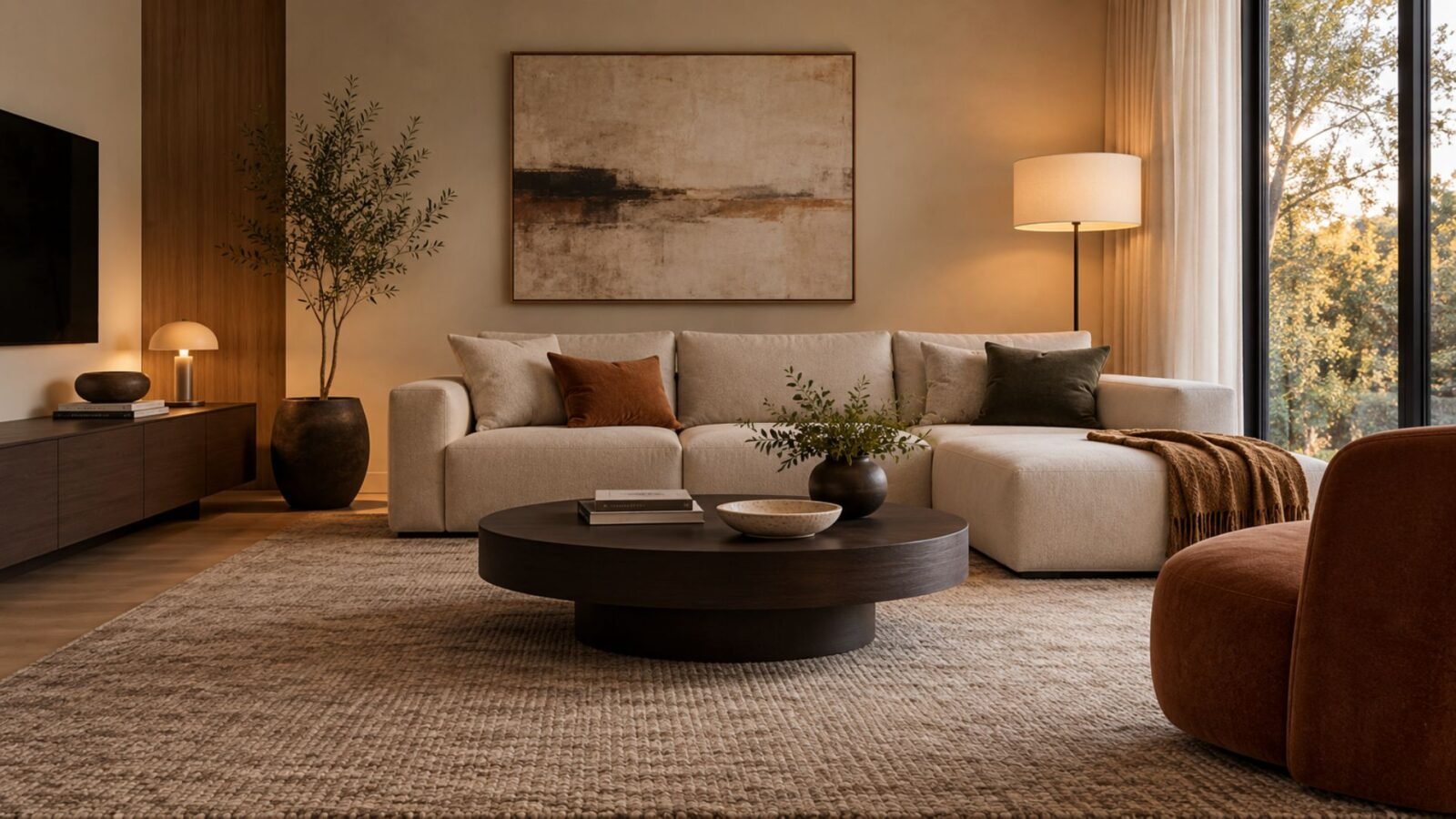

The goal isn’t to empty the room. It’s to reduce visual competition while keeping enough comfort, function and personality for the room to feel lived in.
Minimalist living room ideas work best when minimalism means edited rather than empty. You don’t need to remove the books you read, hide every lamp or replace comfortable furniture with severe architectural pieces.
Instead, reduce the number of things competing for attention. Keep useful furniture, create clear visual hierarchy, control repeated colors and materials, and decide deliberately what stays visible. Then bring warmth through upholstery, lighting, surface variation, color and personal objects without rebuilding the clutter you just removed.
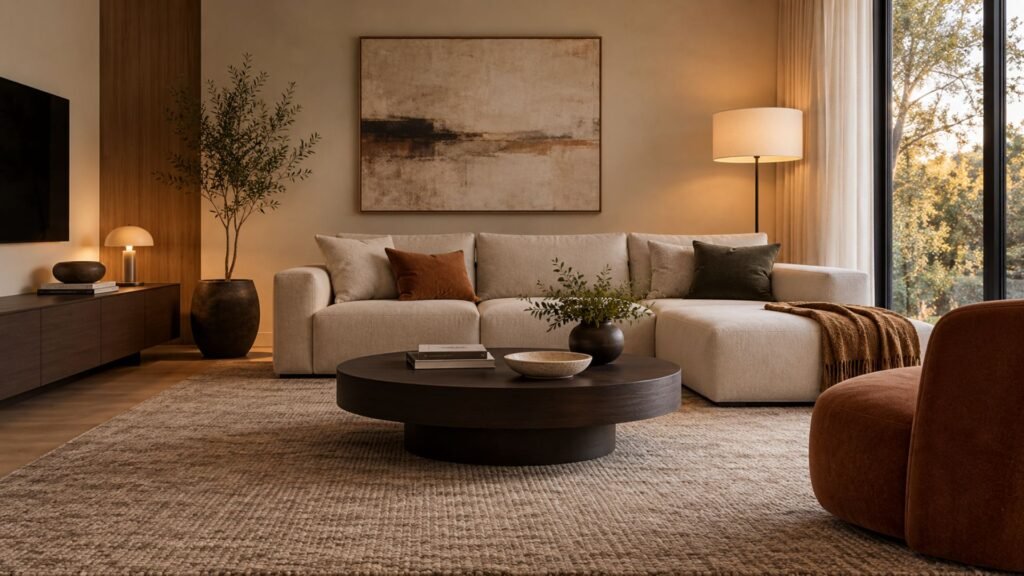
Minimalist doesn’t mean empty
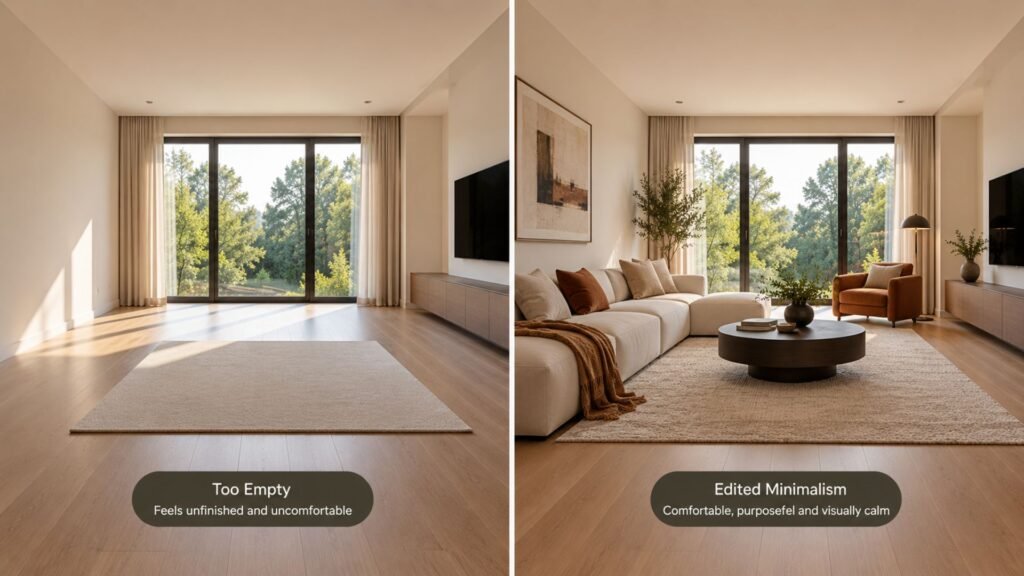
An empty room and a minimalist room solve different problems.
Emptiness is simply an absence of objects. Minimalism is more useful when it controls how much information the eye has to process at once: fewer competing focal points, simpler furniture relationships and enough open space for important pieces to register clearly.
That distinction matters in a living room because this is not a gallery.
You still need somewhere to sit, put down a drink, read after dark and store the objects you use. Removing a necessary side table because the room looks cleaner without it has not improved the design if you immediately start putting your coffee on the floor.
The most useful minimalist living room ideas aim for visual quiet, not physical emptiness.
Start by reducing competition, not possessions
Before removing furniture, identify what is actually making the room feel busy.
Imagine a living room with a sofa, two chairs, coffee table, television, floor lamp, bookcase and rug. That sounds like a lot, but those pieces can form one coherent seating area.
Now imagine a room with fewer objects: a sofa, brightly patterned rug, oversized artwork, sculptural lamp and statement coffee table. Every item may be attractive individually, yet all five can compete to become the focal point.
Object count alone therefore tells you surprisingly little.
Look instead for competing shapes, colors, patterns and decorative clusters. Decide what should command attention and let more of the room support it.
A strong artwork may justify quieter cushions. A sculptural sofa may need little decoration behind it. A dramatic stone coffee table doesn’t also require six decorative objects arranged across its surface.
Minimalism becomes easier once every object stops auditioning for the lead role.
Keep the things that make the room comfortable
Warm minimalism does not require sacrificing a comfortable sofa for a visually lighter one.
Start with physical comfort and edit around it.
A generously upholstered sofa can work in a minimalist room when its silhouette is relatively coherent and the surrounding composition stays controlled. The same applies to an armchair, ottoman or substantial rug.
This is one place where minimalist and merely sparse rooms diverge.
A sparse room may remove cushions, curtains, rugs and secondary lighting because they add objects. A livable minimalist room asks whether those objects perform enough work to justify their presence.
Curtains can soften both light and acoustics. A rug can make a seating group read as one composition. A floor lamp provides useful evening light. A cushion can make a deep sofa genuinely comfortable.
Useful is not the enemy of minimal.
Warmth doesn’t have to mean beige
Many minimalist living room ideas rely on warm neutrals because closely related colors can reduce contrast without requiring an all-white room.
Minimalism comes from hierarchy and editing, not a particular paint card.
A room can use olive, muted blue, terracotta, burgundy, chocolate brown or even a stronger isolated color while remaining visually restrained. The important question is whether color is organized or scattered.
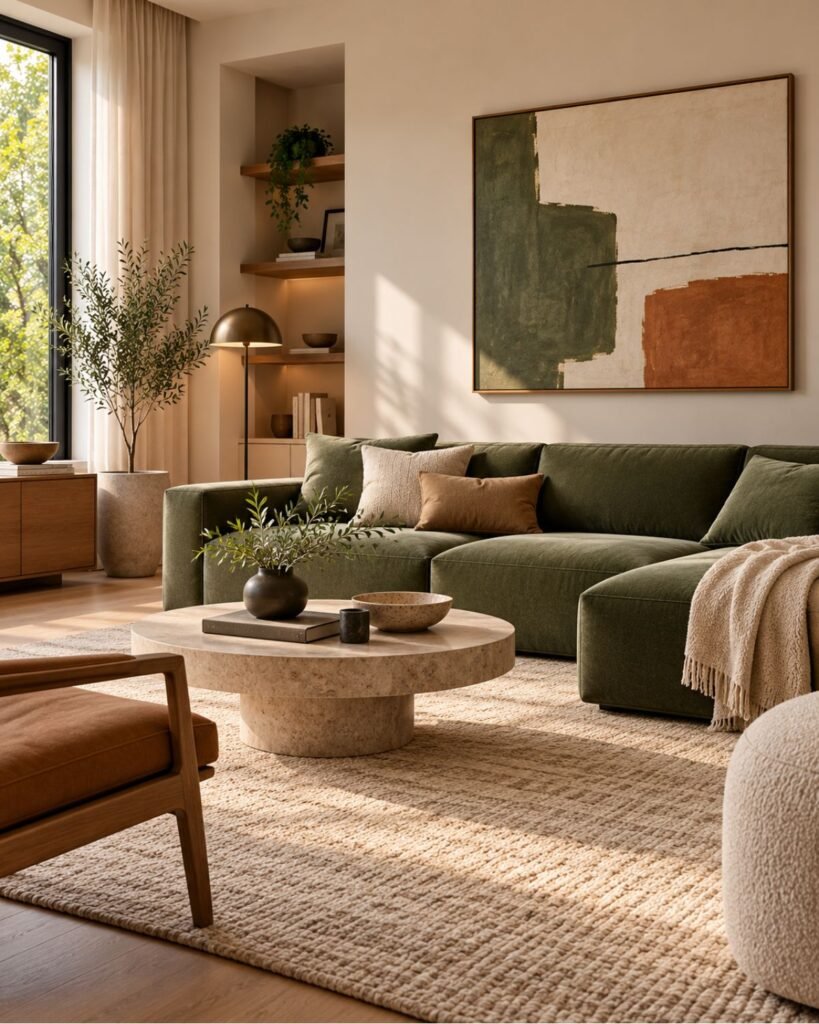
For example, one muted green sofa against quiet walls can provide substantial color without creating visual clutter. Repeating five slightly different greens across cushions, ceramics, artwork, curtains and decorative objects creates a more fragmented result.
Color can actually reduce the need for decoration.
When a sofa or artwork already gives the room identity, fewer accessories may be necessary.
Use texture where another object would be unnecessary
Texture is frequently recommended for warm minimalist rooms, but simply adding more textured accessories can defeat the purpose.
A better approach is to make surfaces already required by the room do more work.
Instead of adding decorative baskets for texture, choose upholstery with a visible weave. Let a rug introduce tactile variation. Use curtains with enough body to contrast with a smooth painted wall. A plaster-like finish, timber grain or veined stone can provide variation without adding another object.
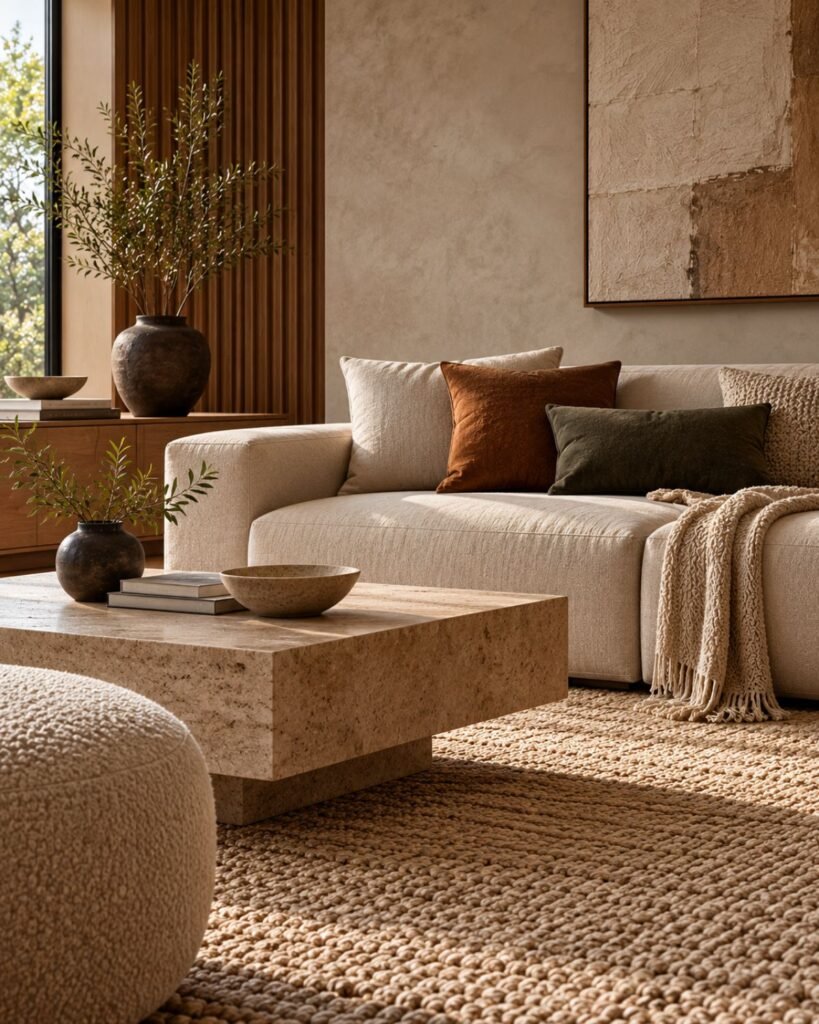
This is why surface character matters more than the sheer number of materials.
A smooth sofa, smooth floor, smooth painted cabinet and smooth wall can make even a warm palette feel visually thin. Changing one or two of those surfaces gives light something different to reveal.
Texture works best here as variation within necessary surfaces, not decoration piled on top of them.
Let lighting create depth after dark
A minimalist room that looks balanced in daylight can become surprisingly flat when one ceiling fixture illuminates everything evenly.
Multiple light sources give you control without requiring decorative clutter.
A floor lamp beside the sofa can support reading. A table lamp can illuminate a darker corner. A wall light can keep another surface from disappearing at night. Not every light needs to be switched on simultaneously.
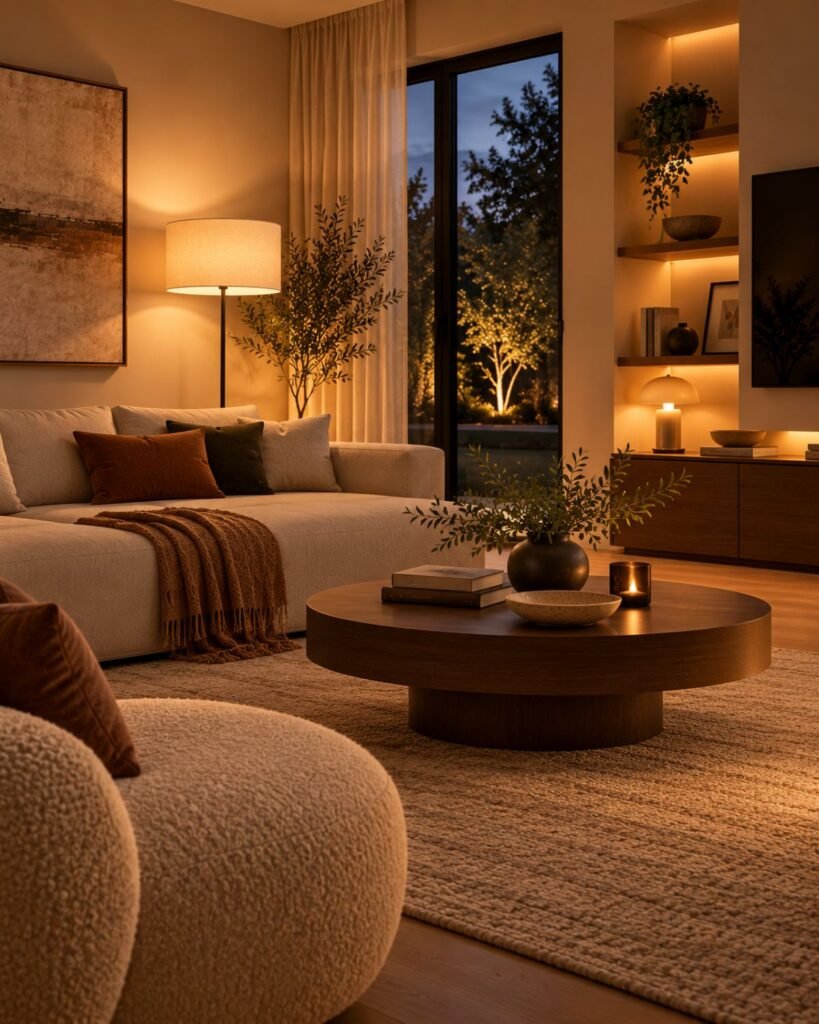
The important distinction is between adding lamps as decoration and giving light an actual job.
A restrained room benefits from light and shadow because they create depth without introducing more colors or patterns. That can be especially useful when the palette itself is deliberately quiet.
Furniture shape matters more when there is less furniture
As decoration decreases, furniture becomes more visible.
That makes proportion, silhouette and spacing more important.
A minimalist living room does not require every piece to be rectangular and severe. In fact, one curved sofa or rounded chair can soften a room dominated by straight walls, cabinetry and windows without requiring additional decoration.
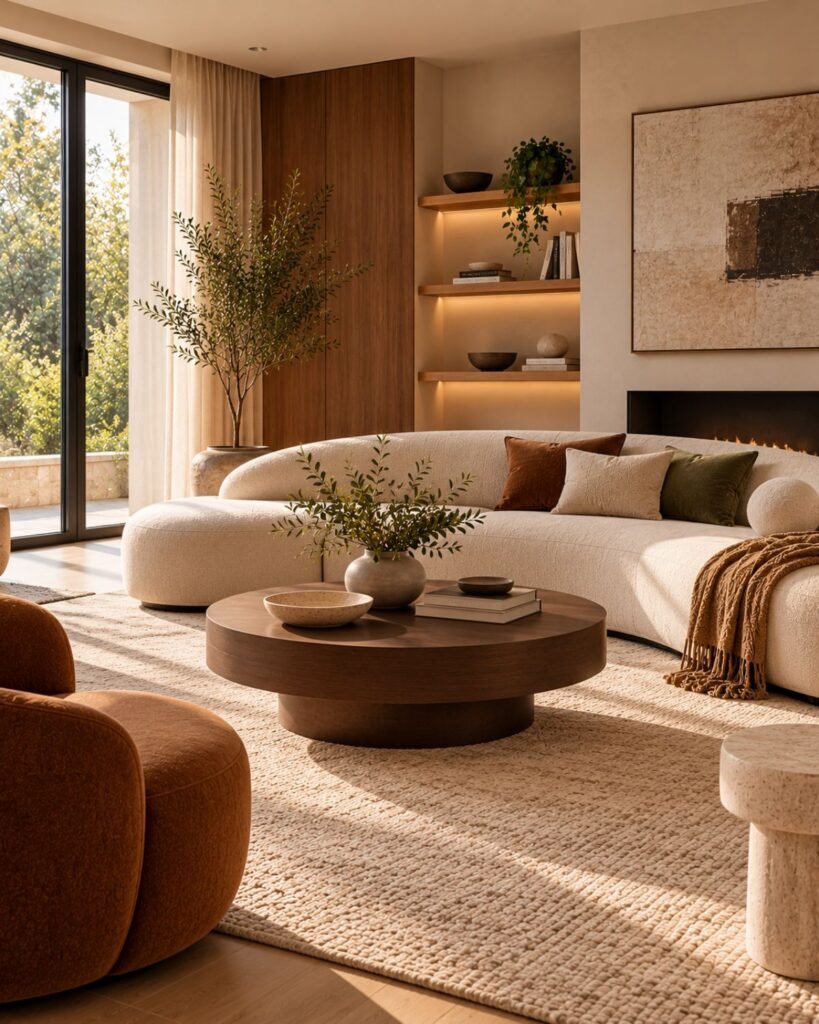
The mistake is making every piece sculptural.
A curved sofa, irregular coffee table, statement chair and dramatic floor lamp can quickly create the same competition minimalism was supposed to remove.
Choose where the interesting silhouette belongs. Let simpler forms support it.
This is also where minimalist and [modern living room ideas] can overlap without becoming identical. Modern furniture can provide the vocabulary; minimalism determines how much of that vocabulary appears at once.
Decide what stays visible
Real living rooms contain things.
There are remotes, cables, chargers, books, blankets, games, children’s belongings and objects that appear because somebody actually lives there. A minimalist room that works only immediately after everything has been removed for a photograph is not a practical model.
The more useful distinction is visible versus concealed, not possessions versus no possessions.
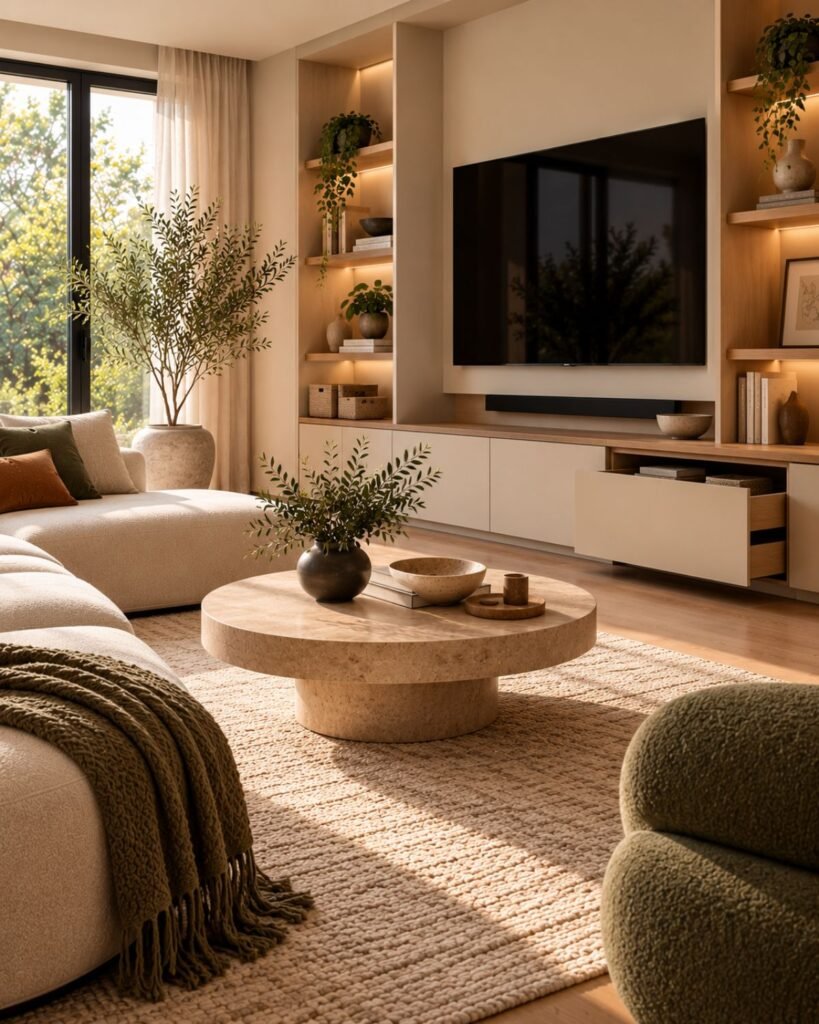
Closed storage works well for visually fragmented necessities: charging cables, spare electronics, paperwork, games and miscellaneous small objects.
Open storage is better treated as display space.
That doesn’t mean a shelf needs three carefully spaced beige vases. Books you actually read, one personal object and a useful box can remain visible. The goal is to avoid turning every available shelf into a separate composition competing with the rest of the room.
A simple test helps: if an object is frequently used, meaningful or visually important, it has a reason to remain. If it is merely filling an empty surface, question it.
The best minimalist living room ideas aren’t tied to one aesthetic. The same principles of editing and hierarchy can produce warm, colorful, high-contrast or dark rooms.
Four minimalist living room directions
Minimalism is broad enough to produce rooms with very different personalities. These four directions use the same principle of visual editing without relying on the same palette.
1. Warm neutral minimalism
Warm white, oatmeal, taupe and brown create a low-contrast foundation, while upholstered furniture and a few tactile surfaces keep the room comfortable.
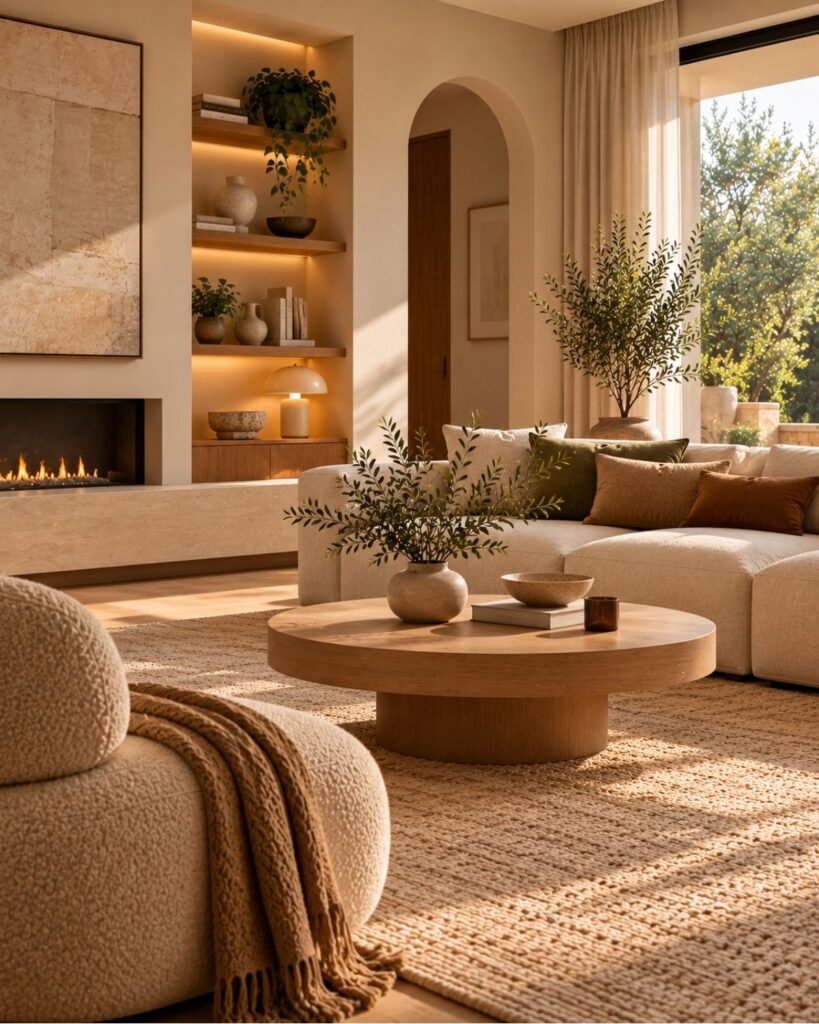
This is the easiest direction to overdo because every surface can collapse into beige.
Use value changes to maintain definition. A darker table, shadow line, artwork or chair frame can give the eye enough structure without turning the room high-contrast.
What can go wrong: adding endless cream cushions, throws, ceramics and baskets to compensate for a palette that feels flat. More beige objects are rarely the solution to too much beige.
2. High-contrast minimalism
White, black and intermediate gray or natural tones can create a sharper minimalist room.
The critical word is intermediate.
If every object jumps directly from bright white to solid black, the room can become visually hard. A gray sofa, warm flooring, mid-tone timber or textured rug can bridge the extremes.
What can go wrong: making every frame, lamp, table leg and accessory black because the room needs “contrast.” Repetition eventually becomes visual noise too.
3. Minimalism with color
Choose one meaningful color relationship rather than distributing accent colors everywhere.
A rust sofa against warm white walls, a muted blue cabinet in an otherwise restrained room or one large colorful artwork can establish character with very few additional objects.
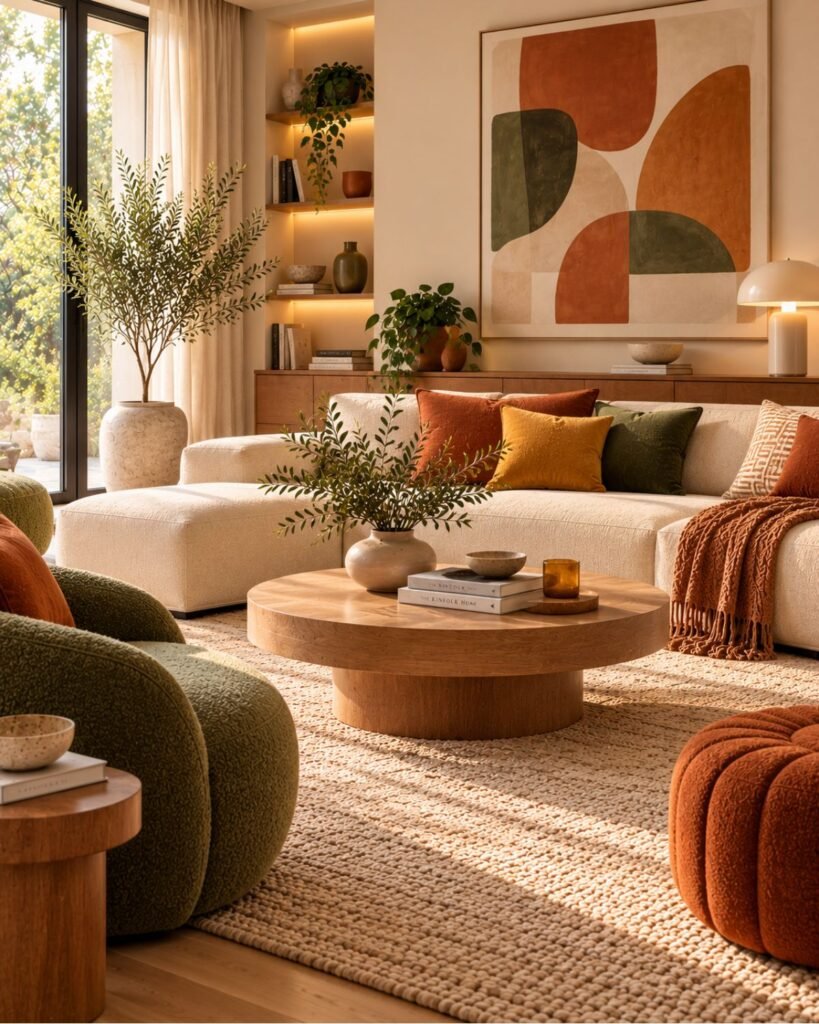
This direction demonstrates why minimalism isn’t a synonym for neutrality.
What can go wrong: treating color as a series of tiny accents. Ten colored accessories create more fragmentation than one substantial colored surface.
4. Dark minimalism
Deep brown, charcoal, muted black or another dark base can produce a minimalist room that feels enclosed rather than stark.
The room still needs separation between surfaces. Slight changes in value, upholstery texture and directed lighting become more important as the palette darkens.
What can go wrong: allowing walls, sofa, floor and cabinetry to collapse into one dark mass. Minimalism needs hierarchy even when contrast is restrained.
When negative space becomes too much space
Open space is useful when it separates things that deserve attention or preserves comfortable circulation.
It is not automatically valuable everywhere.
A bare wall beside a strong artwork can help the artwork register. Clear floor around a chair can clarify its shape. Space between the sofa and coffee table can improve movement.
But a large empty area created by pushing undersized furniture against every wall usually signals a layout problem, not successful minimalism.
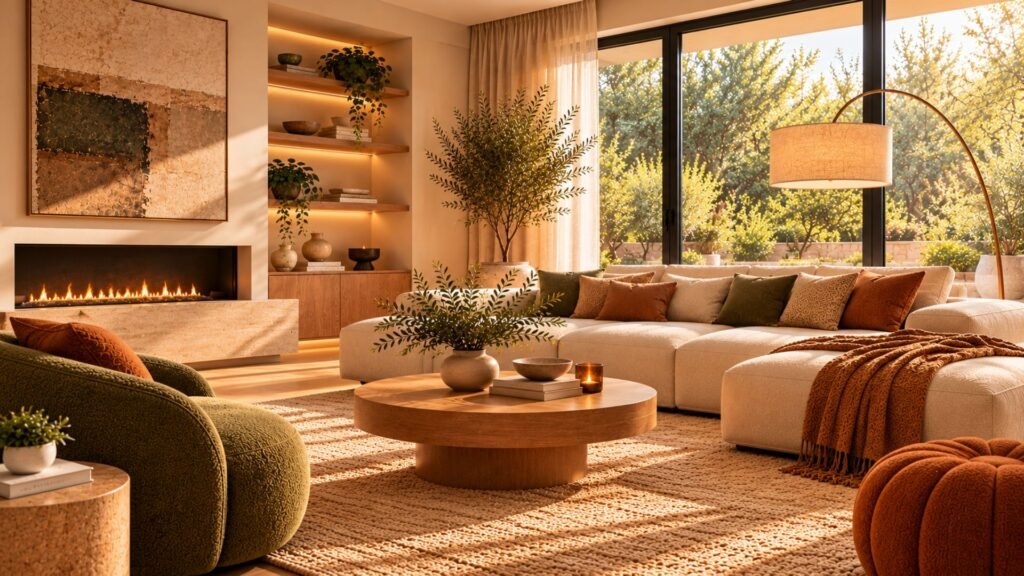
Ask what the empty area is doing.
If it improves movement, separates visual groups or gives an important feature room to register, keep it. If it exists only because you believe minimalist rooms require lots of emptiness, reconsider the layout.
Minimalism in a small living room
Minimalist living room ideas can work particularly well in compact rooms when they reduce visual fragmentation, but they cannot rescue poor furniture planning.
Do not remove useful furniture simply to expose more floor.
A correctly scaled sofa, one useful table and adequate storage can create less visual noise than several tiny pieces chosen because they appear physically lighter. Fewer, better-resolved furniture relationships are usually more useful than miniaturizing everything.
Closed storage can be particularly valuable because small everyday objects occupy a larger share of the visual field in a compact room.
For furniture scale, circulation and layout decisions that apply regardless of style, use our [small living room guide].
Minimalist, Organic Modern, or Japandi?
These styles overlap visually, but their organizing ideas differ.
Minimalism is primarily concerned here with reduction, hierarchy and controlling visual competition.
Organic Modern combines clean contemporary structure with natural material variation. Wood, stone, tactile textiles and organic forms carry much of its character.
Japandi draws specifically from Japanese and Scandinavian design influences, with restraint, function, craftsmanship and deliberate breathing room playing important roles.
A minimalist room does not need natural materials, Japanese influence or Scandinavian furniture.
It could use chrome, lacquer, glass, saturated upholstery or polished stone and still remain minimalist if those elements form a disciplined composition.
If natural material is what you want to carry the room, see our [Organic Modern living room guide]. If Japanese-Scandinavian synthesis is the goal, continue to our [Japandi living room guide].
How to make your existing living room more minimalist
You don’t need to recreate expensive minimalist living room ideas by buying an entirely new furniture set.
Start with the room as it is.
First, identify the dominant element. It might be the sofa, fireplace, view, artwork or media wall. Decide whether the rest of the room supports that hierarchy or fights it.
Next, clear surfaces temporarily rather than throwing things away. Return the objects you actually use or genuinely want to see. This makes the difference between editing and indiscriminate removal visible very quickly.
Then look for fragmentation.
Could three small storage pieces become one? Could cables disappear into the cabinet already present? Could several tiny artworks become one stronger arrangement? Could five unrelated cushions become two or three that relate to the sofa?
Finally, evaluate comfort.
If the room became colder, harder to use or less personal during the edit, you removed something that was doing useful work. Restore the function, then find a quieter way to express it.
That is a more durable route to minimalism than continually removing objects until the photograph looks sparse.
Where this leaves you
The most successful minimalist living room ideas don’t prove how little you can live with. They make the important things easier to notice and the room easier to use.
It makes the important things easier to notice and the room easier to use.
Keep furniture that earns its footprint. Conceal visually fragmented necessities while allowing useful and meaningful objects to remain visible. Use color deliberately, let required surfaces carry texture, and give lighting specific jobs.
Most importantly, stop measuring minimalism by emptiness.
A comfortable sofa, books you read, good lighting and an object with personal meaning do not weaken a minimalist room. Uncontrolled competition does.
Minimalist living room FAQs
What makes a living room minimalist?
A minimalist living room controls visual competition through deliberate furniture choices, clear hierarchy, restrained decoration and useful open space. It does not need to be empty, white or sparsely furnished.
How do you make a minimalist living room feel warm?
Keep the composition restrained while adding warmth through upholstery, tactile surfaces, lighting, tonal variation, comfortable furniture or controlled color. Warmth does not require filling the room with accessories.
Can a minimalist living room have color?
Yes. Minimalism is not a color palette. One substantial colored element can actually reduce the need for multiple decorative accents while keeping the room visually controlled.
How much decor should a minimalist living room have?
There is no useful universal number. Keep objects that are functional, meaningful or important to the composition, and question objects whose only role is filling an empty surface.
What’s the difference between minimalist and modern interior design?
Modern or contemporary design describes a broader visual vocabulary of forms, materials and furniture. Minimalism is more specifically about reduction and hierarchy. A modern room can contain many competing elements, while a minimalist room deliberately limits that competition.
How do you hide everyday clutter in a minimalist living room?
Use closed storage for visually fragmented necessities such as cables, chargers, games and paperwork. Keep frequently used, meaningful or visually important objects accessible rather than trying to conceal everything.
Can minimalism work in a small living room?
Yes, particularly when it reduces visual fragmentation. But minimalism should not replace good layout planning: correctly scaled furniture, useful storage and clear circulation remain necessary.
References
- Architectural Digest. “Living Room Visual Clutter Removal: Here’s Your Guide to a Streamlined Space.”https://www.architecturaldigest.com/story/living-room-visual-clutter-removal
- Homes & Gardens. “Minimalist Living Room Ideas – 15 Inspiring Pared-Back Looks.”https://www.homesandgardens.com/ideas/minimalist-living-room-ideas
- Homes & Gardens. “How to Embrace Warm Minimalism in Your Home.”https://www.homesandgardens.com/interior-design/https://www.homesandgardens.com/interior-design/warm-minimalist-decor-trend
About the author
Emma Carter writes about interior color, home décor, and practical styling for Wallsaide. She focuses on helping readers combine colors, materials, textiles, and decorative elements into rooms that feel balanced and cohesive.