
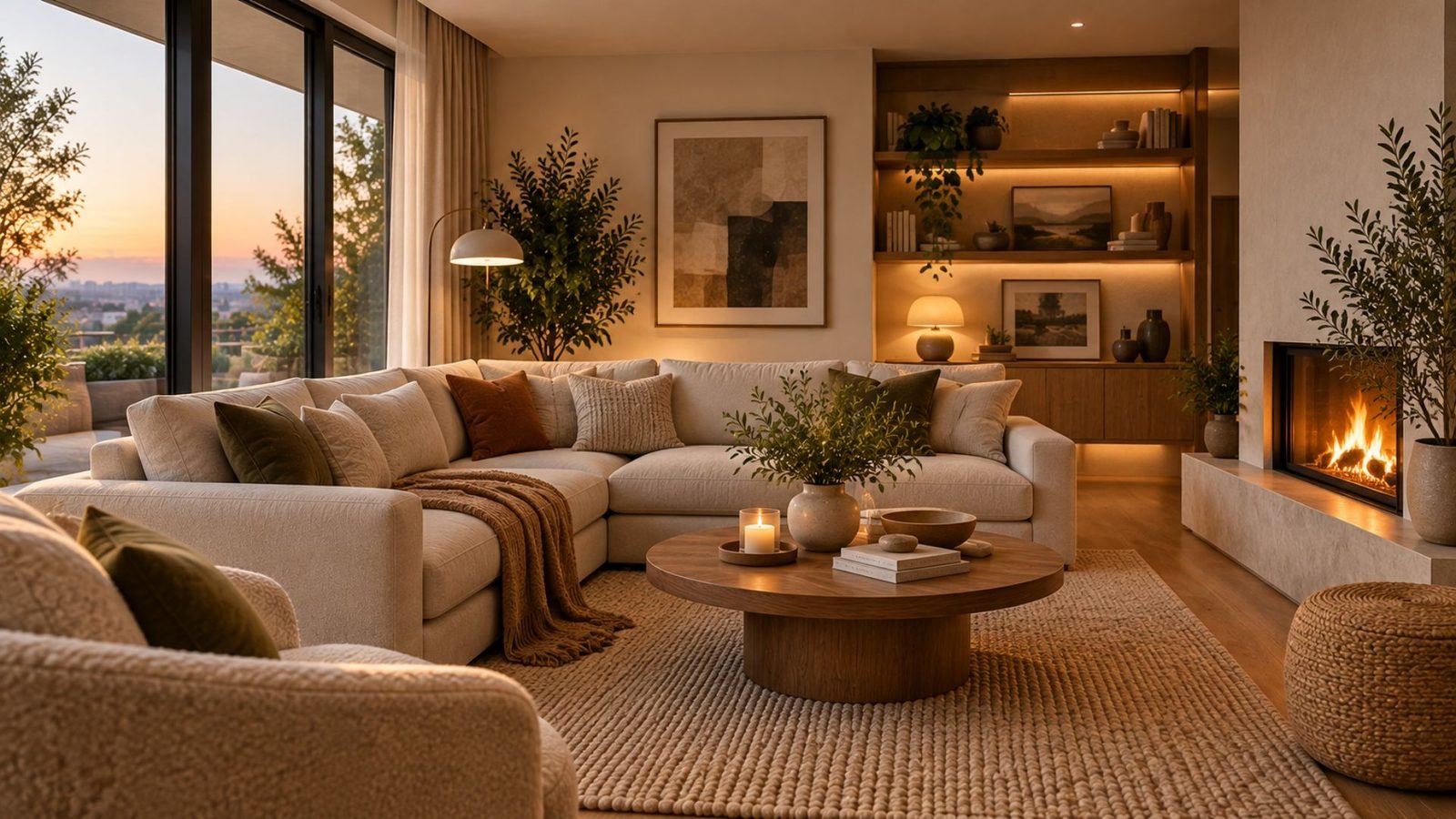

The best cozy living room ideas aren’t simply about adding the right pillows, throws, or a fireplace-scented candle. It’s a perceived quality that comes from several kinds of warmth working together — how the furniture is arranged, where the light comes from, what the materials feel and look like, and how much of the room reflects an actual person living in it.
A room can have every individual “cozy” item on a typical list and still feel oddly cold if one of those things is missing. That is usually the real explanation when a well-decorated room doesn’t quite land.
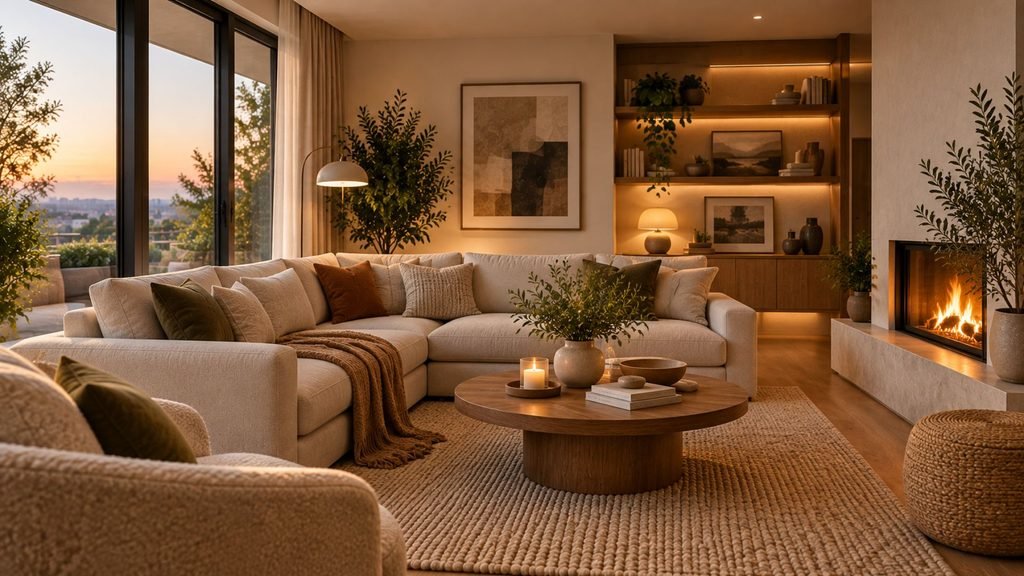
Cozy living room ideas: 6 directions to start from
There isn’t one visual formula for a cozy room. A pale Scandinavian room, a dark cocooning room and a clean-lined modern room can all feel equally warm when the underlying ingredients work together.
These six directions show how that can happen without turning “cozy” into one fixed decorating style.
Warm neutral cozy
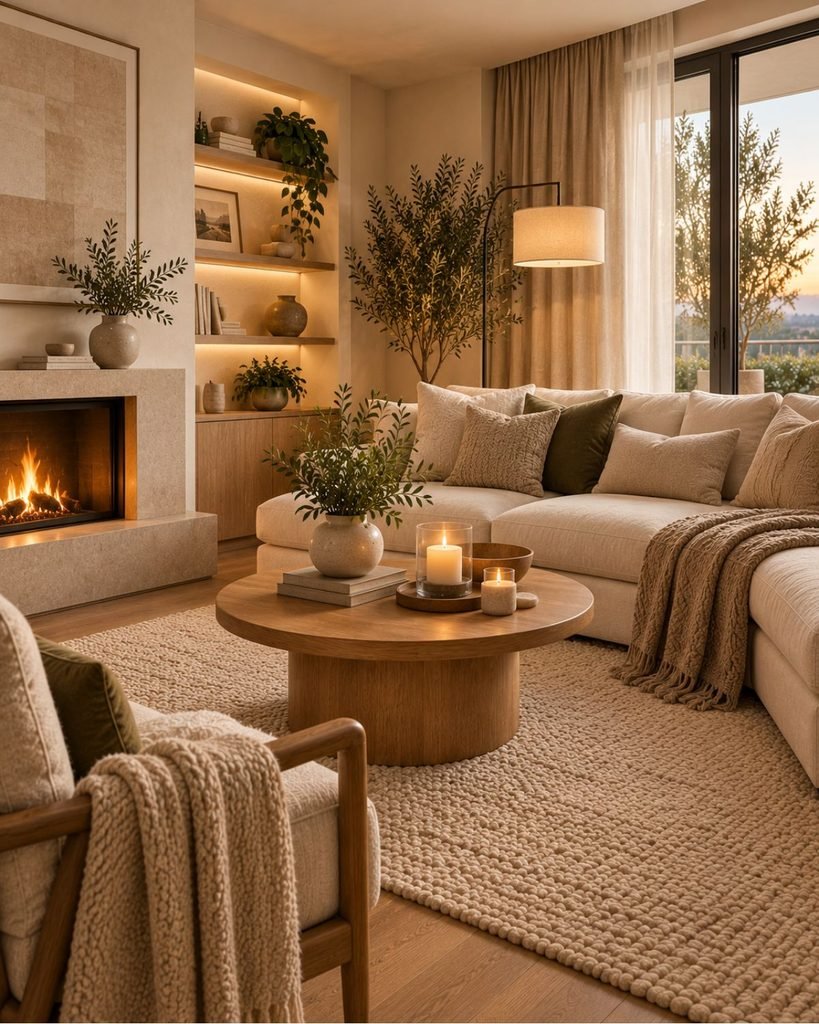
Cream, oatmeal, beige and honey-toned wood are forgiving starting points because visual warmth is already built into the palette. The remaining work is mostly about adding enough texture, arranging the furniture well and making the lighting feel softer rather than simply adding more beige.
Our guide to beige living room ideas goes deeper into this palette direction and explains how to keep beige from becoming flat.
Modern cozy
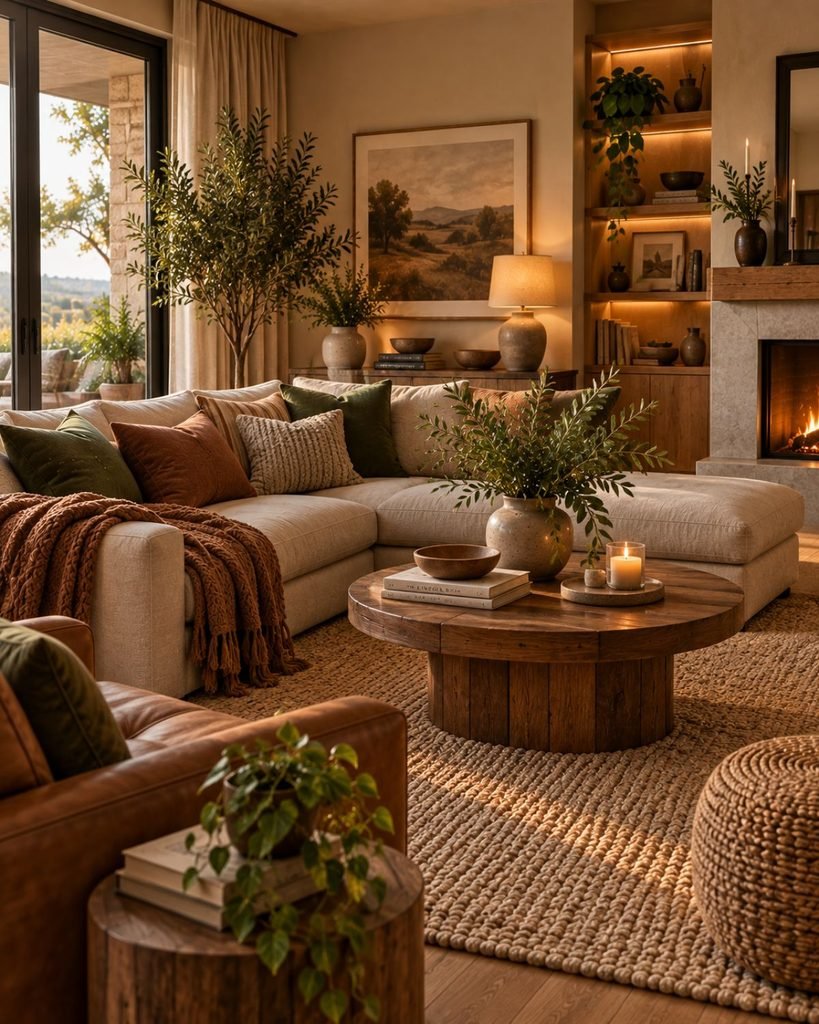
Clean lines and coziness aren’t opposites. A modern room can feel warm when hard, precise forms are balanced with natural wood, tactile fabrics, greenery and light coming from more than one source.
Our guide to modern living room ideas explains why clean-lined rooms sometimes read as cold. Much of the solution comes back to the same warmth logic used here: material contrast, layered lighting and furniture arranged for people rather than display.
Dark and enveloping cozy
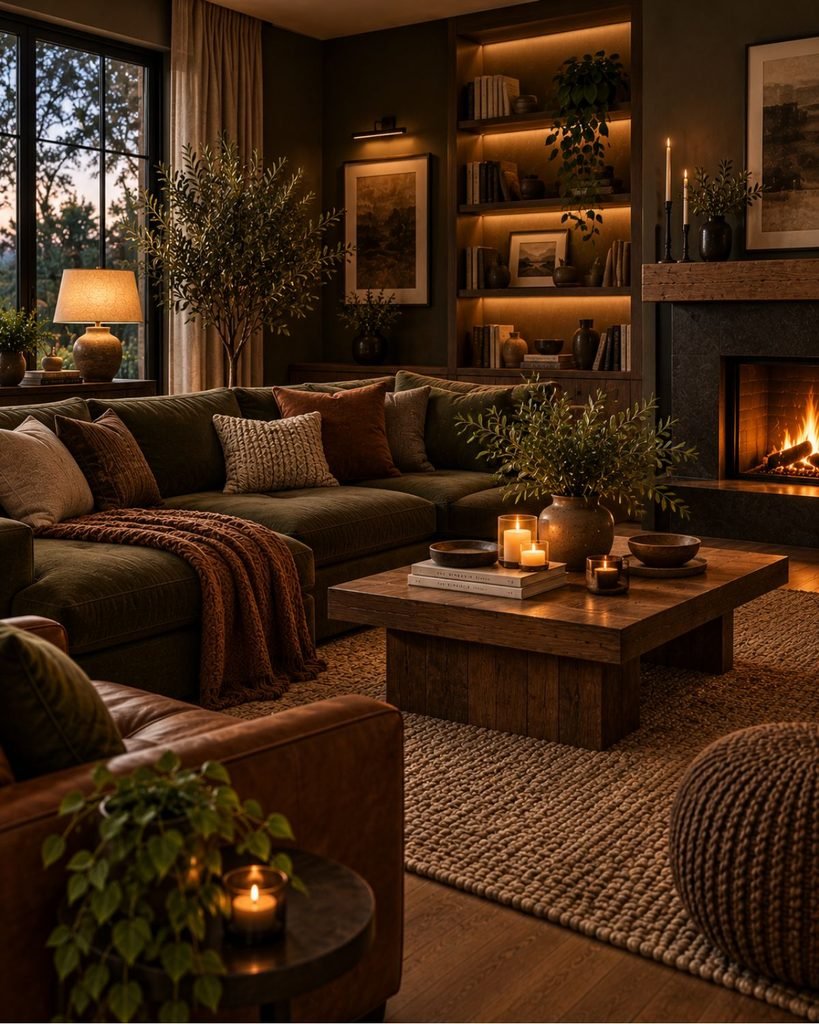
A dark room doesn’t have to feel gloomy. Deeper wall colors can make the boundaries of a living room feel more enveloping, especially when they’re balanced by warm wood, tactile upholstery and pools of soft light.
The important distinction is between darkness and flatness. A dark room still needs contrast and multiple light sources; otherwise, the depth that makes it cocooning can disappear after sunset.
Scandinavian cozy
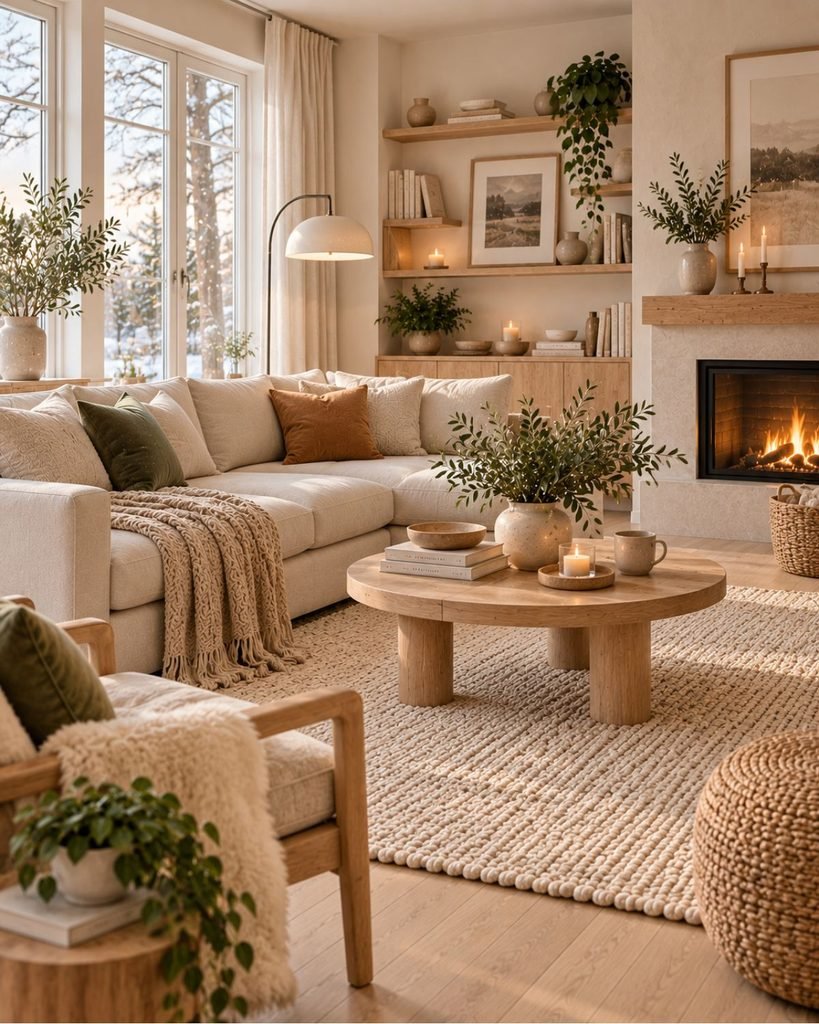
A Scandinavian direction can stay visually quiet without becoming stark. Pale timber, restrained neutral upholstery and simple forms provide the calm base; wool, woven textiles and warmer lighting supply the softness.
This is a useful reminder that coziness doesn’t require visual abundance. A room with relatively few objects can still feel warm when the objects that remain contribute texture, natural material and useful light.
Cottage cozy
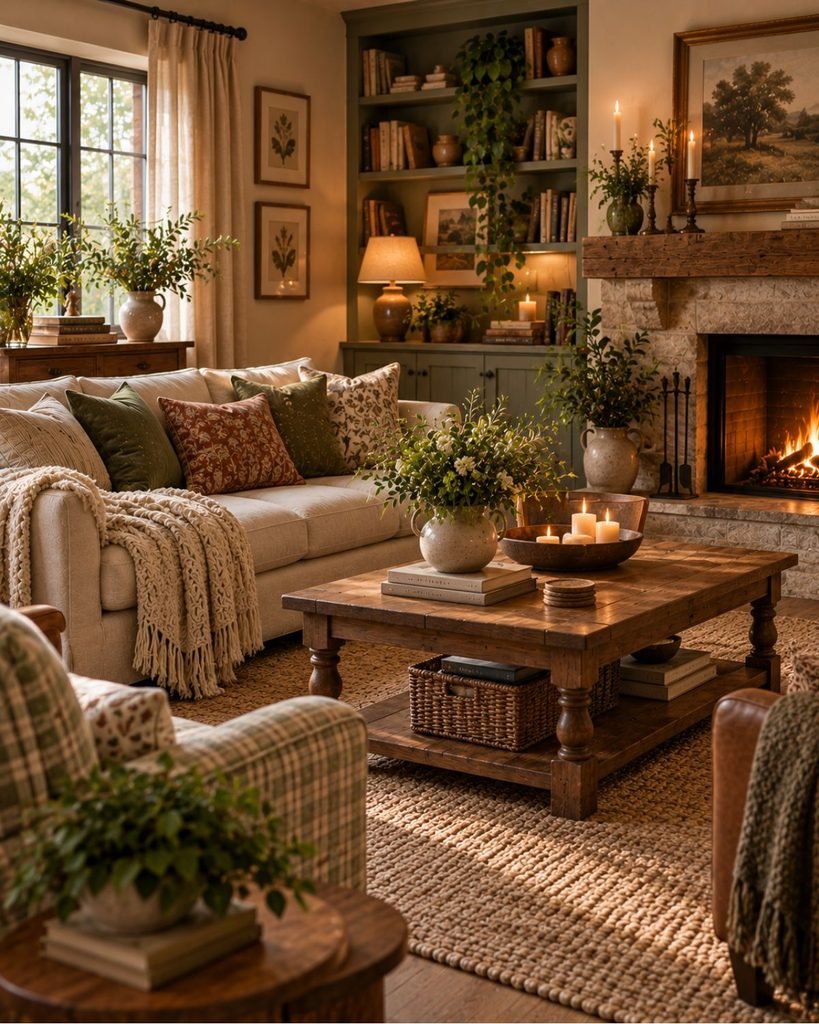
Cottage-style coziness comes from a different direction. Instead of reducing the room to a few clean forms, it allows more pattern, softer silhouettes and objects that appear collected rather than perfectly coordinated.
The key is keeping those layers intentional. Patterned cushions, books, ceramics and framed art can add personality, but every available surface doesn’t need to be filled.
Modern cozy with cleaner lines
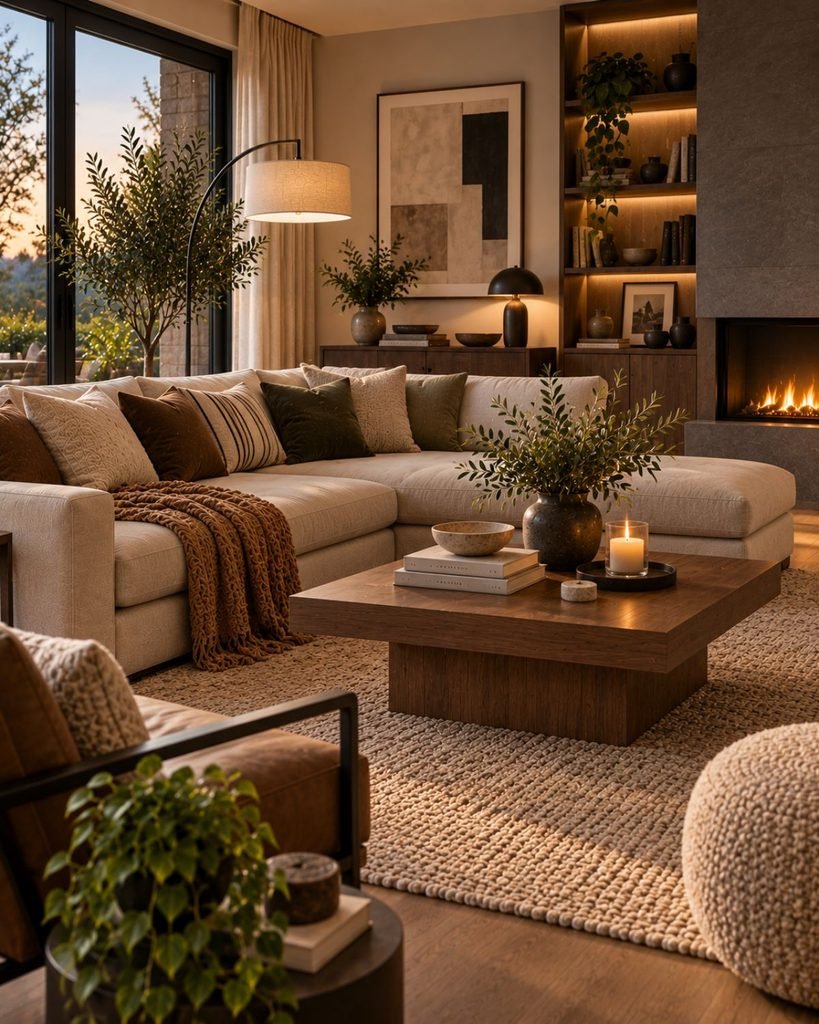
If you prefer a more contemporary room, keep the furniture visually clean and let warmth come from the surrounding layers. A warm wood table, substantial rug, textured upholstery and two or three light sources can soften a restrained room without changing its modern character.
This approach is particularly useful when you like minimal decoration but don’t want the result to resemble a showroom.
The Wallsaide Warmth Map
Most cozy living room ideas focus on individual ingredients — lighting, texture, color, and personal touches — without explaining how they relate to one another.
The Wallsaide Warmth Map treats coziness as five forms of warmth that work together rather than a sequence of decorating steps:
- Spatial warmth — furniture arranged to face or angle toward other seating at conversational distance.
- Lighting warmth — light coming from more than one source and height rather than depending entirely on one ceiling fixture.
- Tactile warmth — materials that feel physically soft or comforting, such as wool, woven upholstery and textured rugs.
- Material warmth — surfaces that look visually warm even when they aren’t soft, including wood grain, warm stone and aged metals.
- Personal warmth — a considered number of books, art, photographs and objects that make the room feel inhabited rather than staged.
This is Wallsaide’s own editorial framework, not an industry standard. Its purpose is diagnostic: if a room contains plenty of conventional “cozy” décor but still feels cold, one of these dimensions may be weak or missing.
Spatial warmth: arrangement matters as much as decor
Furniture spread around the perimeter of a room, facing outward or facing nothing in particular, can read as formal and impersonal no matter how soft the cushions are.
Angling seating toward a shared center — a coffee table, fireplace or another seat — helps the furniture read as a group rather than a collection of separate objects. The goal isn’t to crowd everything together; it’s to make the arrangement feel designed around people using the room.
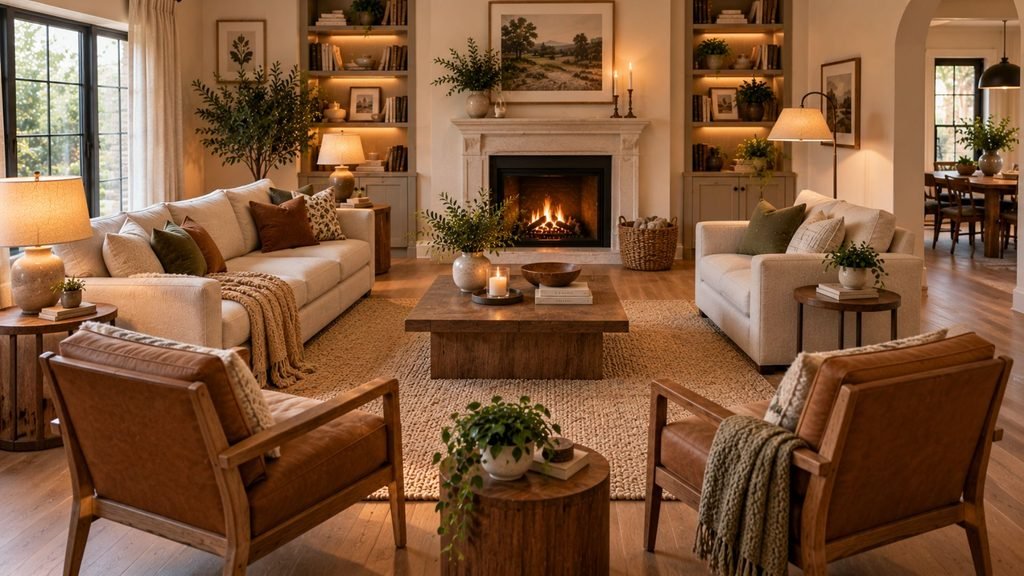
The best arrangement still leaves clear circulation around the seating. Cozy should feel gathered, not cramped.
Lighting warmth: height matters
A single ceiling fixture can illuminate the entire room, but it tends to distribute light more evenly than a group of lamps. Using light at different heights — for example, a floor lamp beside a chair and a table lamp near the sofa — creates smaller pools of light and shadow.
That variation becomes particularly useful in the evening, when the room no longer has daylight doing part of the work. Wallsaide’s complete guide to interior color ideas explores the relationship between light and perceived color in greater depth.
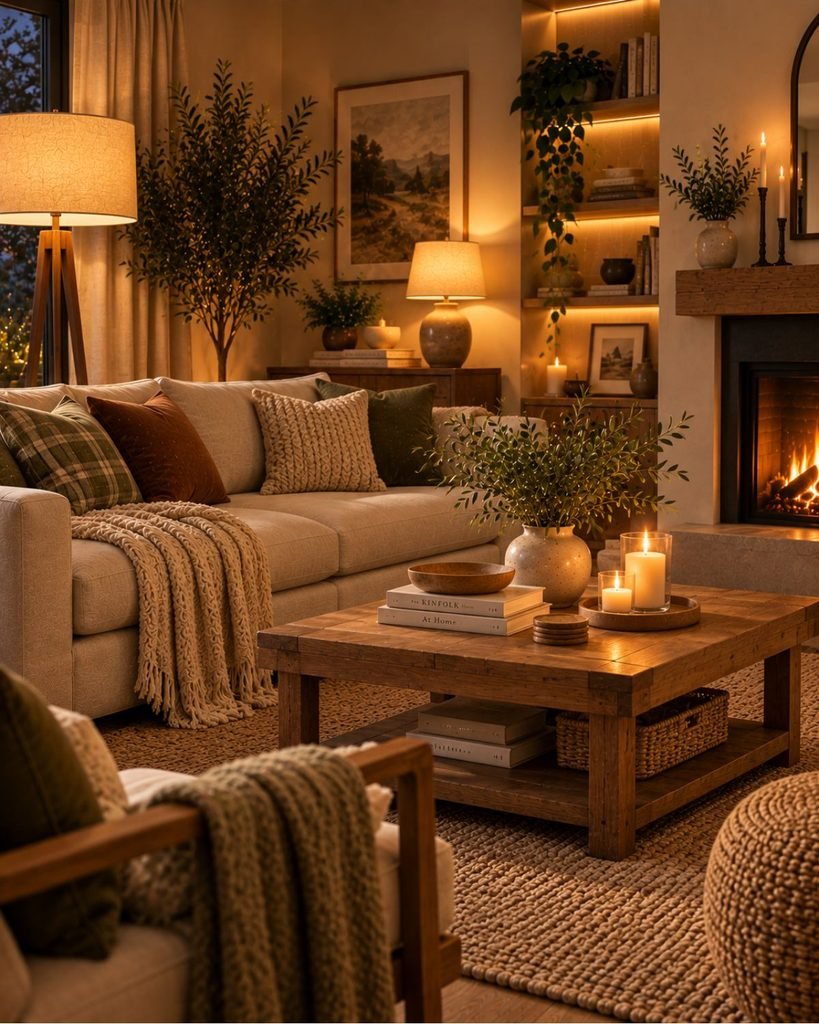
You don’t need a large number of fixtures. Two or three sources serving different purposes can create considerably more depth than simply making one central fixture brighter.
Tactile and material warmth are not the same thing
These two ideas are often treated as interchangeable, but they’re useful to separate.
Tactile warmth is something you would want to touch: a wool throw, woven cushion, soft upholstery or textured rug.
Material warmth is visual. The grain in an oak table, the patina of aged brass or the variation in natural stone can make a room look warmer even though those surfaces aren’t soft.
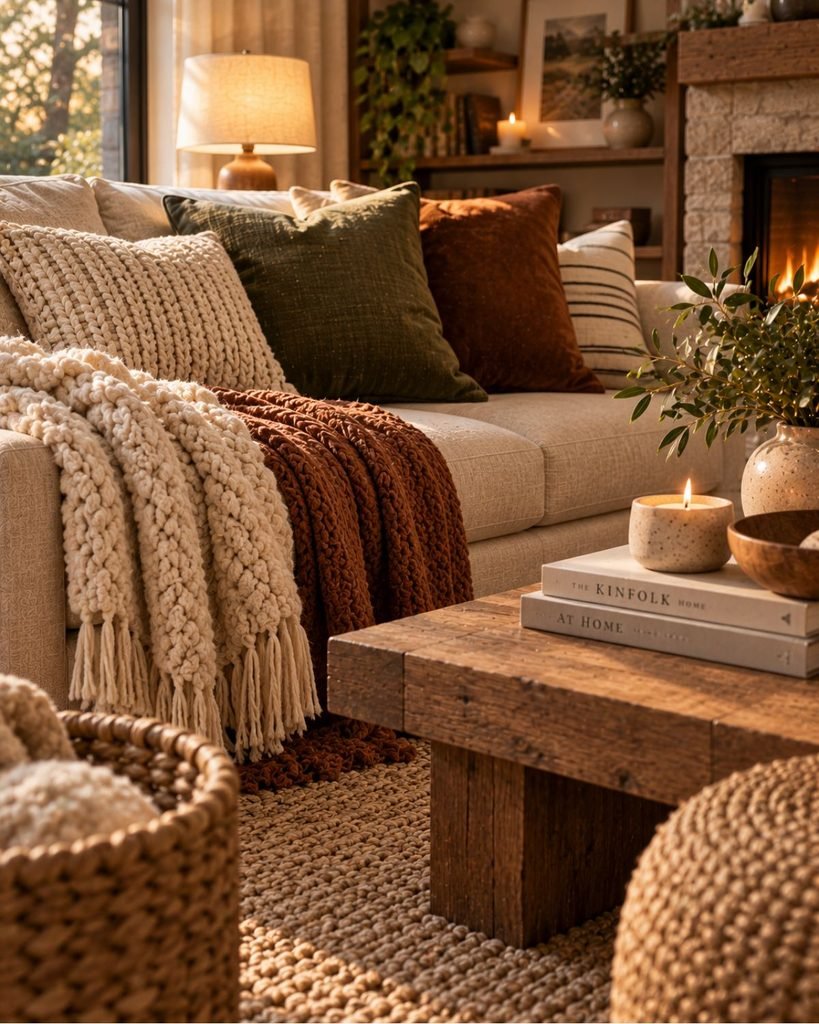
A room can have plenty of one and very little of the other. A sofa covered in cushions adds tactile softness, for example, but if every surrounding surface is glass, chrome and high-gloss white, the overall material impression can still feel cooler.
Combining both forms gives the eye and the hand different reasons to read the room as warm.
Personal warmth without clutter
Books, art, photographs and everyday objects can contribute disproportionately to how lived-in a room feels because they suggest that the space belongs to someone rather than having been assembled only for appearance.
Volume isn’t the goal. A few objects that are genuinely meaningful or genuinely used often communicate more than a larger collection selected simply because “cozy rooms have books.”
If a shelf or coffee table starts to feel crowded, edit before adding another storage basket. Personal warmth comes from evidence of life, not from filling every available surface.
Why a room with all the “cozy” objects can still feel cold
A living room can contain a knit throw, cushions, warm-toned walls and a plush rug and still feel strangely uninviting.
The problem may not be the objects at all. Spatial or lighting warmth can be missing: comfortable furniture may be pushed against separate walls, or the entire room may depend on one bright ceiling light.
Before buying another decorative object, use the Warmth Map diagnostically. Ask which type of warmth is weak rather than assuming the answer is simply “more cozy décor.”
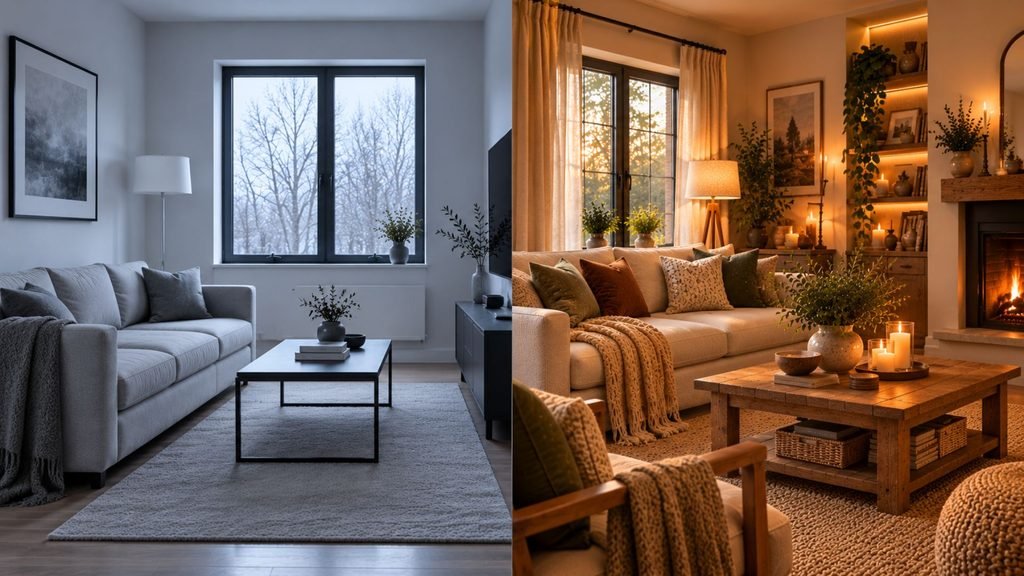
The useful lesson in a comparison like this is that a room doesn’t necessarily need more furniture. Changing the relationship between light, texture, materials and arrangement can alter how the existing room feels.
Cozy living rooms in a small space
Small living rooms have one natural advantage: furniture is already relatively close together. That can make spatial warmth easier to achieve.
The challenge is keeping that closeness from becoming congestion. Choose pieces appropriate to the available floor area, preserve a usable route through the room and avoid filling every open corner simply because it exists.
Our small living room guide goes deeper into furniture scale, layout and circulation for compact rooms.
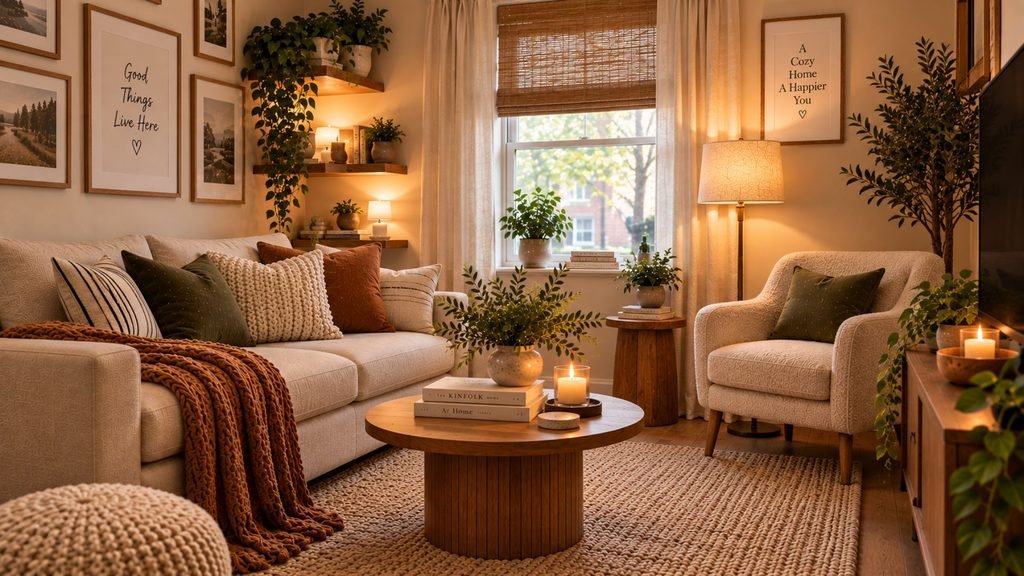
A small room doesn’t need to look sparse to feel larger. It needs enough visual breathing room for each important piece to register clearly.
Cozy living room mistakes
Several common decisions work against the feeling people are usually trying to create:
- Buying more soft objects before checking the arrangement. Another throw won’t solve seating that feels disconnected.
- Depending on one ceiling light. The room can be adequately illuminated while still lacking depth.
- Pushing every piece of furniture against a wall. This can leave a large empty center while making the seating feel disconnected.
- Using texture without material variation. Soft fabrics help, but wood, stone, metal and other surfaces contribute a different kind of warmth.
- Adding personal objects simply for volume. A few meaningful pieces usually communicate more than shelves filled for effect.
These aren’t rigid decorating rules. They’re diagnostic clues for understanding why a room may look appropriately furnished yet still fail to feel gathered.
Where this leaves you
The most useful cozy living room ideas aren’t defined by beige walls, candles, a particular sofa style, or how many cushions you own.
It feels cozy when the furniture encourages people to gather, the lighting creates depth, the room contains both tactile and visually warm materials, and enough personal detail remains to make the space feel inhabited.
That is why two rooms containing similar furniture can feel completely different. Cozy is less about the inventory of objects than the relationship between them.
Cozy living room ideas FAQs
What makes a living room feel cozy?
Furniture arranged for conversation rather than display, light coming from more than one height, materials that are both physically soft and visually warm, and a few genuinely personal objects can all contribute. The important part is how these factors work together rather than relying on any one of them.
How can I make a living room cozy without it feeling cluttered?
Prioritize arrangement, lighting and material warmth before adding more decorative objects. A well-arranged and well-lit room generally needs fewer accessories to feel warm than one trying to create coziness through decoration alone.
Can a modern living room still feel cozy?
Yes. Clean lines and coziness aren’t opposites. Warm wood, textured fabrics, a substantial rug and layered lighting can add warmth while preserving the clean visual language of a modern room.
Does a cozy living room have to use warm colors?
No. Dark or cooler colors can still produce a cozy room when the lighting, furniture arrangement, texture and materials provide enough warmth. Warm neutrals are simply an easier starting point because some visual warmth is already present in the palette.
Can a minimalist living room still feel cozy?
Yes. Having fewer objects doesn’t prevent a room from feeling warm. A minimalist room can still combine conversational furniture placement, layered lighting, tactile textiles, warm materials and a small number of personal objects without becoming visually busy.
About the author
Lauren Johnson writes about interior design, home décor, color, and practical room styling for Wallsaide. She focuses on helping readers understand why design choices work and how to recreate beautiful, functional spaces at home.