
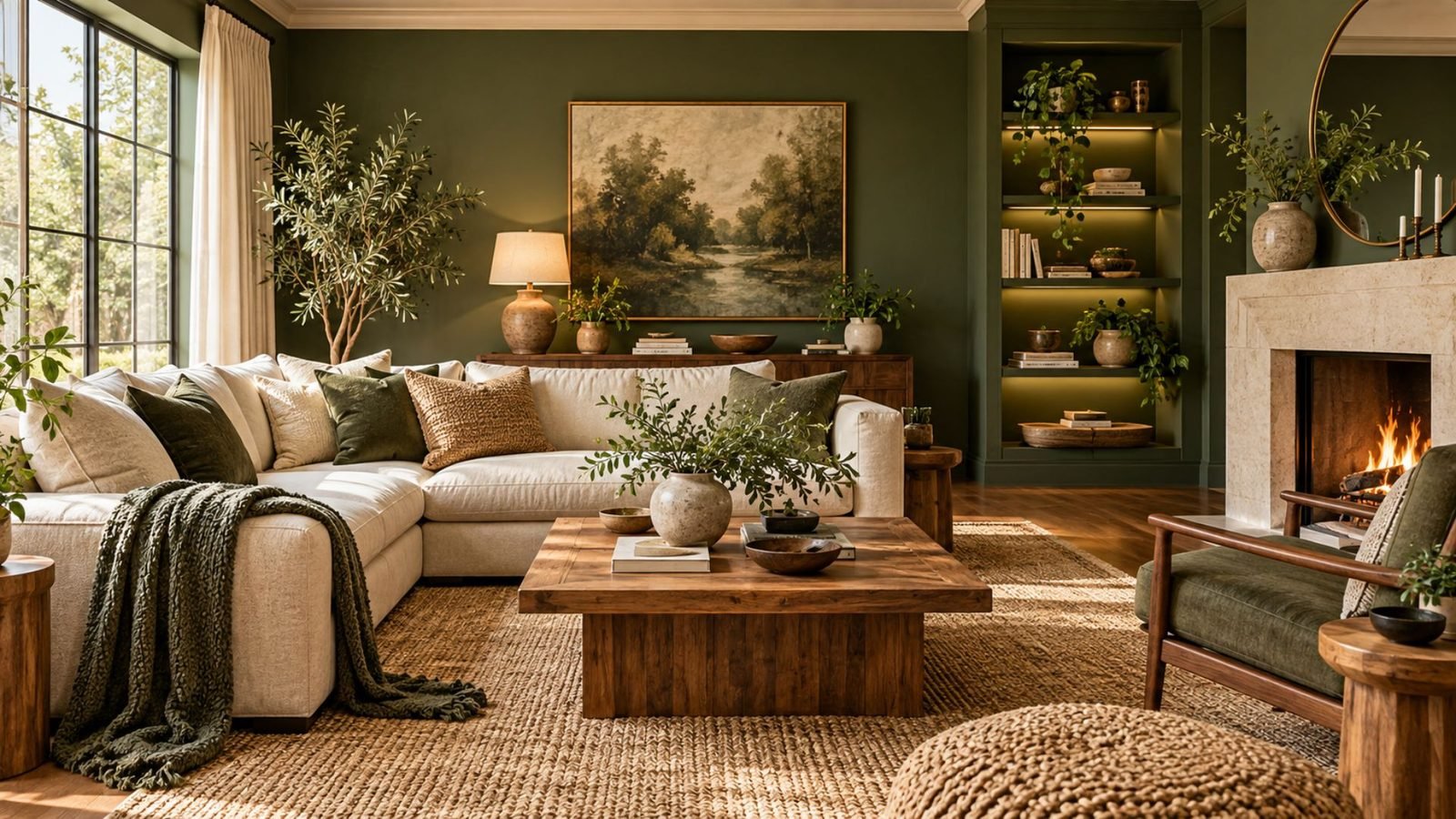

Green living room ideas work best when you decide what role green will play before choosing the exact shade.
Green can surround a living room through painted walls, anchor it through a sofa, or appear more quietly through textiles, art and smaller details. The shade still matters, but so does its visual role.
A muted olive wall and an emerald sofa aren’t simply two versions of the same idea. One changes the background of the entire room; the other creates a focal point. Getting that relationship right is often more useful than asking which green is currently popular.
This guide builds on our broader Living Room Ideas hub while focusing specifically on how to make green work.
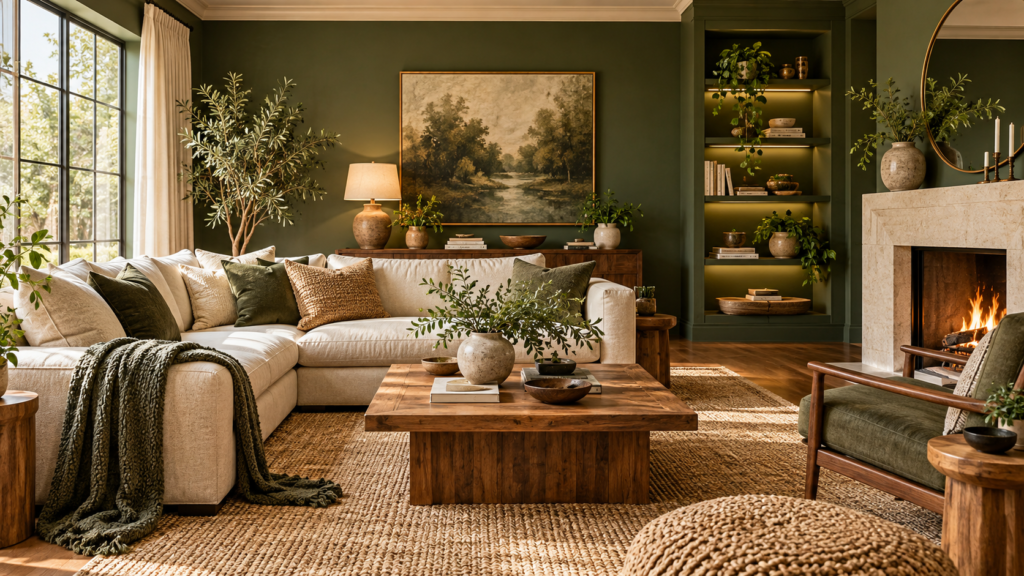
Green isn’t one design decision
Green stretches from dusty gray-greens to yellow-leaning olive and deep blue-green forest tones. Those differences affect what surrounding materials and colors feel natural beside them.
Warm greens such as olive tend to sit comfortably beside walnut, tan leather, rust and warmer neutrals. Cooler or blue-leaning greens can create a sharper relationship with warm wood, brass or cream.
Muted greens recede more easily. Saturated emerald and deep forest tones demand more visual attention.
Paint manufacturers also advise evaluating green under the actual lighting and furnishings of a room because natural and artificial light can change whether a green appears warmer or cooler. Benjamin Moore
Sage belongs within this wider family, but it sits close enough to gray-green neutral territory to deserve separate treatment; our sage green living room ideas guide explains how its undertone, depth and surrounding materials change the result.
The Wallsaide Green Anchor Principle
Instead of beginning with a shade name, decide how much of the room green should control.
The Wallsaide Green Anchor Principle divides that decision into three roles:
Envelope
Green becomes part of the architecture: walls, paneling, built-ins or another large surrounding surface.
The furniture then needs to respond to green rather than compete with it.
Anchor
The room itself remains relatively restrained while one substantial green element becomes the focal point.
A forest or emerald sofa against warm-white walls is the clearest example.
Thread
Green appears in smaller repeated elements: perhaps a patterned textile, artwork, occasional chair and one or two accessories.
The room reads as having a green palette without actually being dominated by green.
The principle is simple:
Choose one primary role for green before repeating it elsewhere.
This is Wallsaide’s editorial framework, not an industry rule. Its purpose is to prevent every green object from competing for attention.
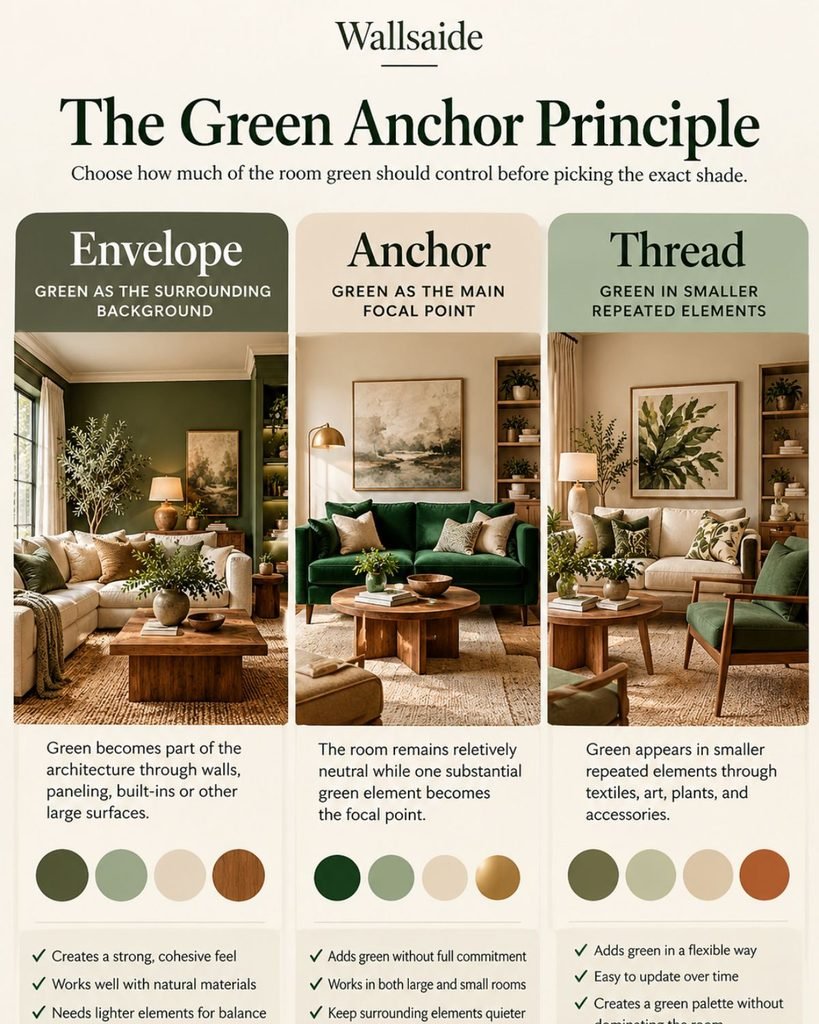
A controlled editorial graphic showing:
ENVELOPE → ANCHOR → THREAD
Green living room ideas: 5 directions to start from
These directions deliberately use green in different roles rather than simply presenting five slightly different green walls.
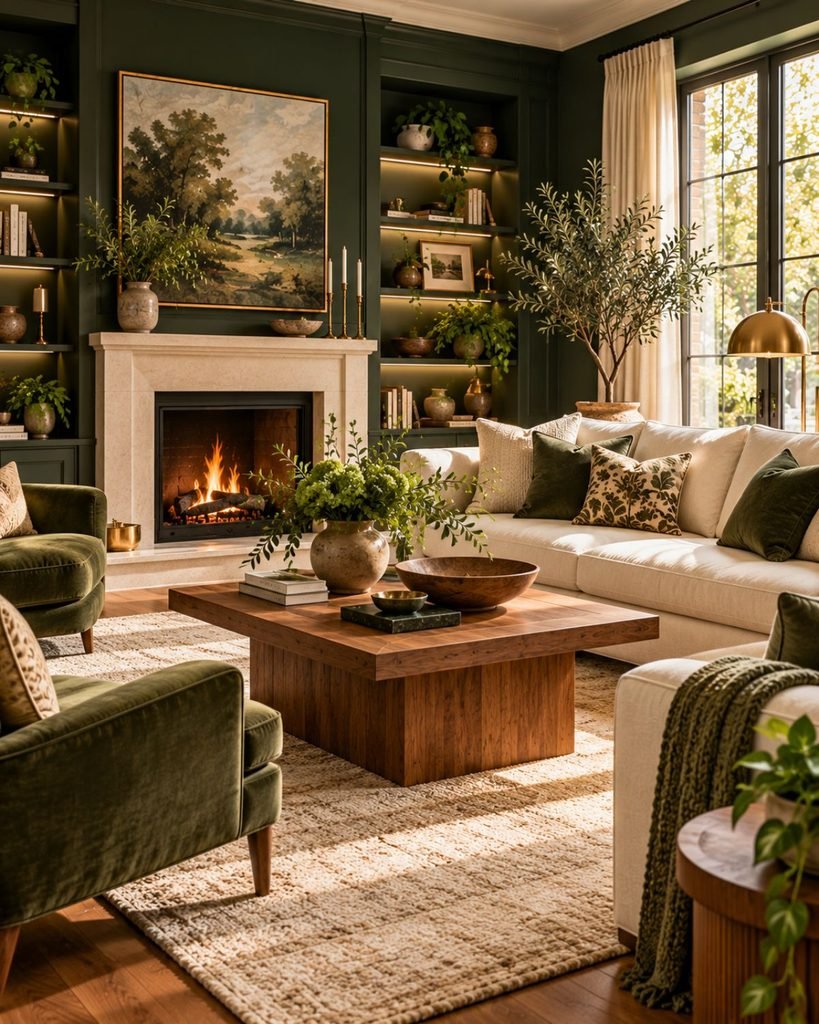
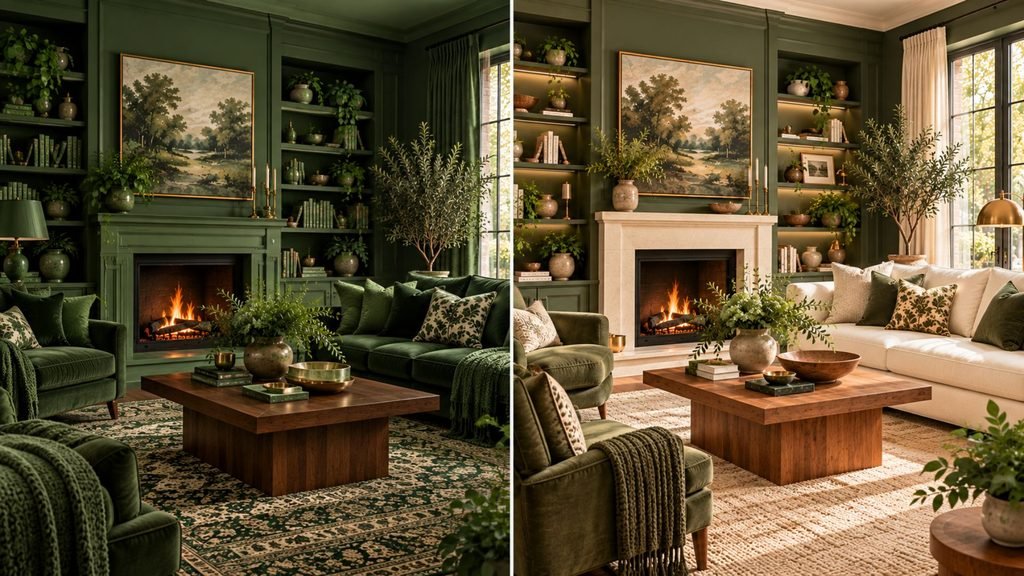
Olive green with walnut and cream
Role: Envelope
Olive works particularly well when you want green to become part of the room rather than an isolated accent. Its earthy character can sit comfortably beside walnut or other warm woods, while cream gives the darker surfaces enough separation.
If the walls are olive, resist the urge to make every textile green too. Let wood, cream and a restrained darker accent carry some of the room.
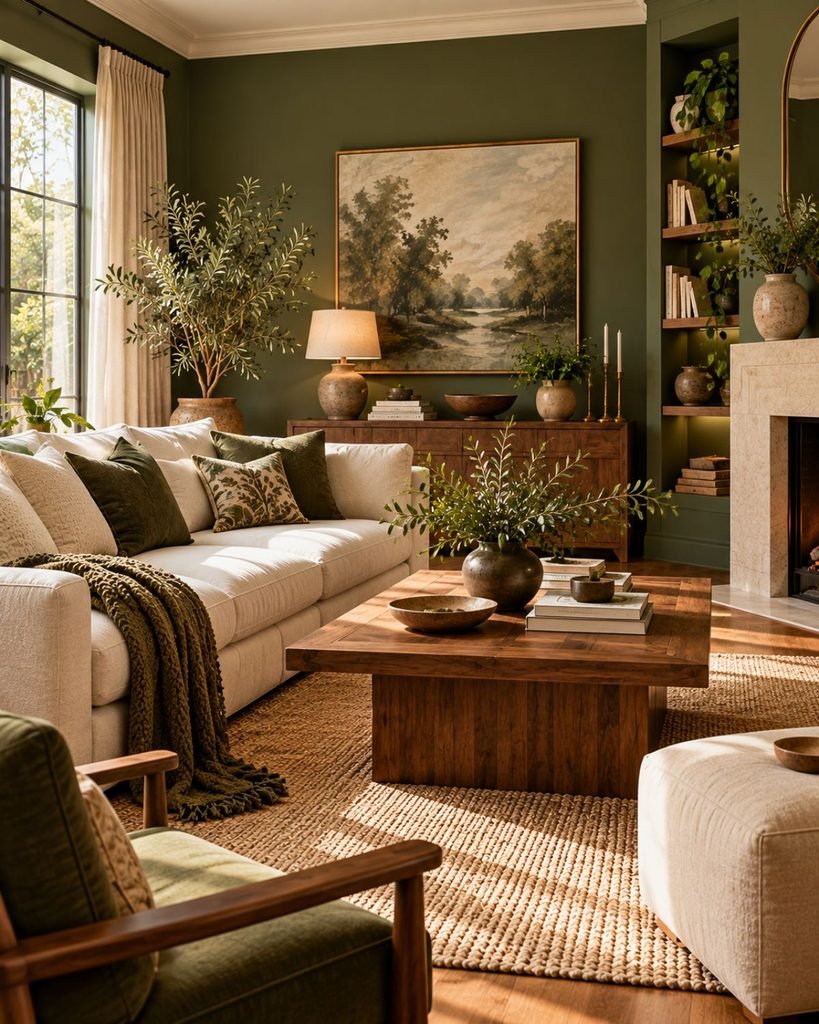
Forest green with warm neutrals
Role: Envelope
Forest green creates considerably more visual weight.
Use it where you actually want the walls to be noticed, then give the room substantial lighter surfaces: cream upholstery, pale curtains, a light rug or warm off-white architectural details.
Deep green doesn’t automatically require a large room. What matters is whether the darker surface has enough contrast around it to remain intentional.
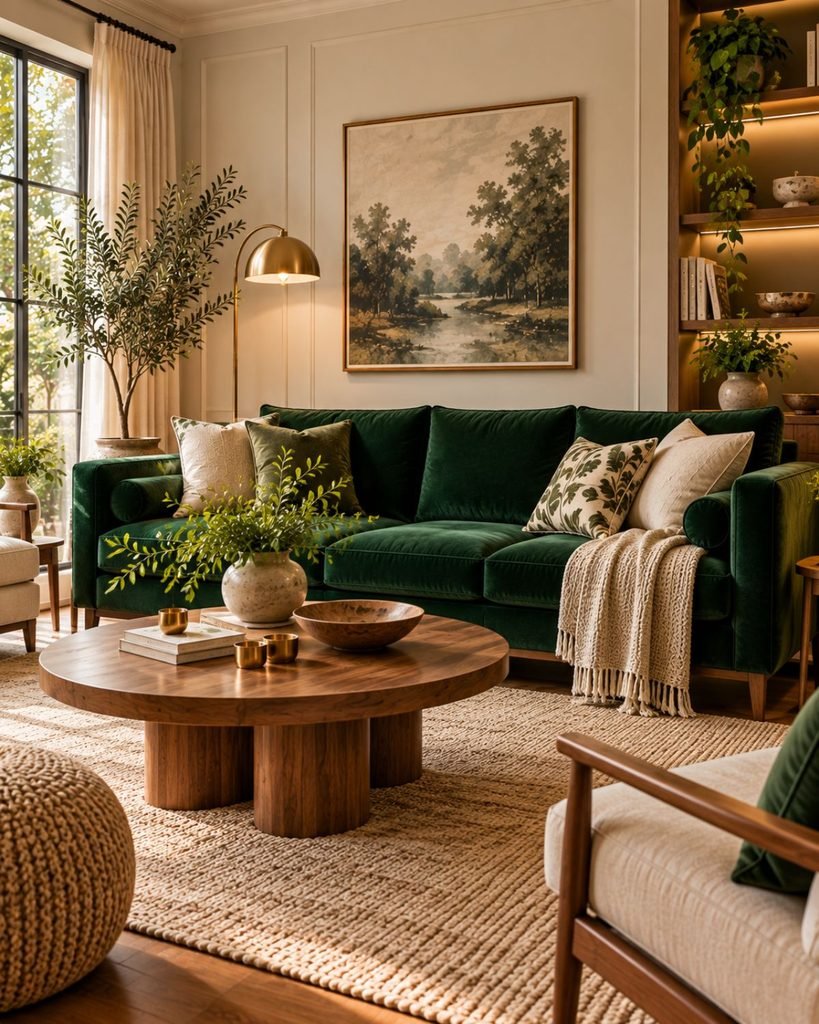
Emerald sofa against a quieter room
Role: Anchor
If you’re attracted to saturated green but don’t want green walls, move the color into the furniture.
An emerald sofa has enough visual strength to establish the palette almost by itself. Keeping the walls and largest surrounding surfaces quieter allows that saturation to become the focal point rather than one strong color competing with several others.
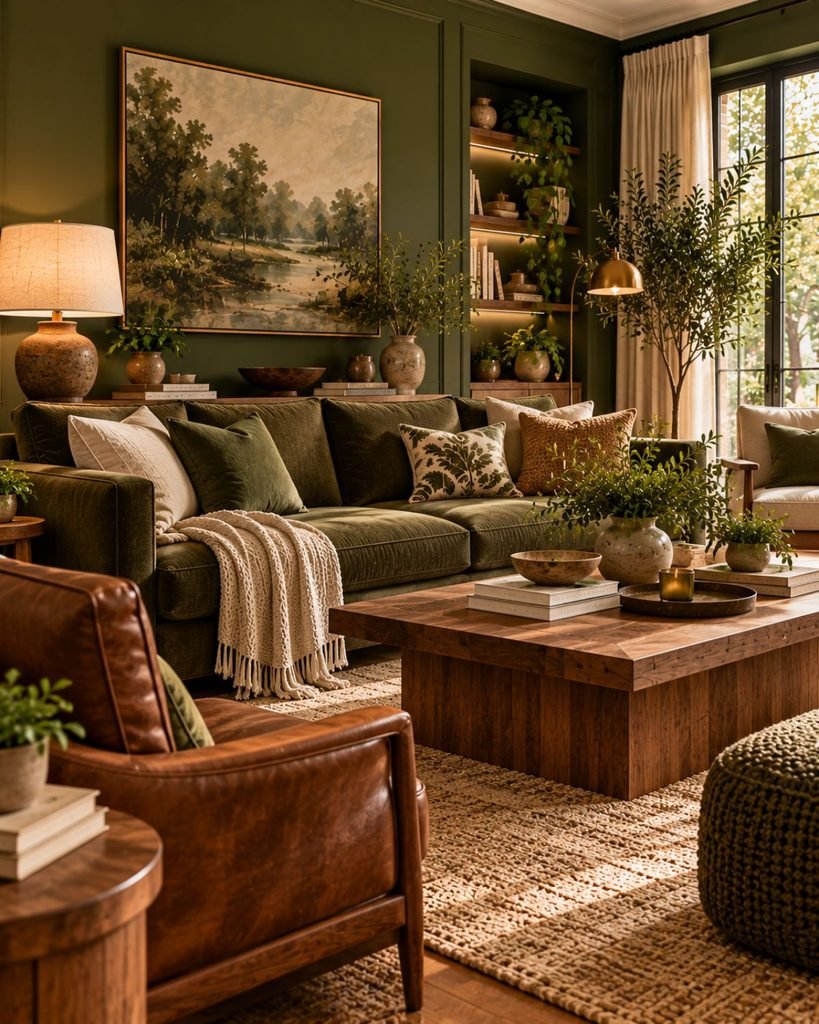
Moss green with brown and natural wood
Role: Anchor + restrained thread
Moss and earthy green tones work naturally beside brown because both can occupy a relatively muted part of the palette.
The distinction still matters. If brown enters through a leather chair or walnut table, let those elements support the green rather than turning every large surface into another earth tone.
Our Brown Living Room Ideas guide explains the undertone and depth decisions on the brown side of this combination.
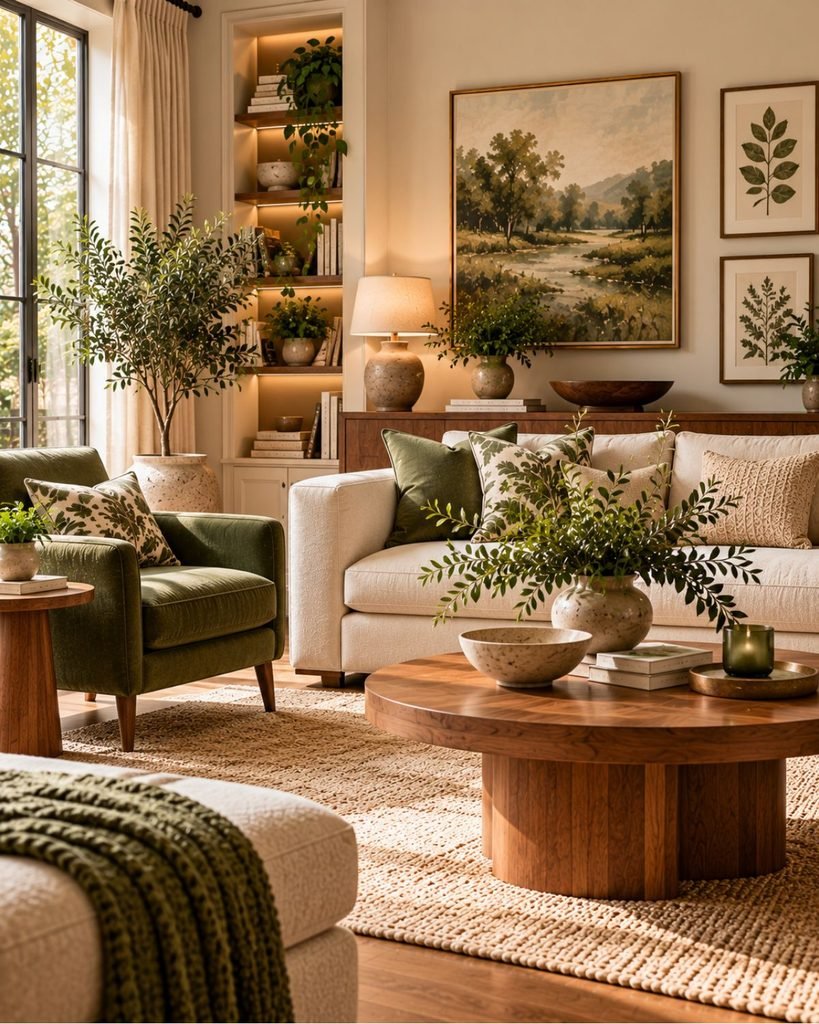
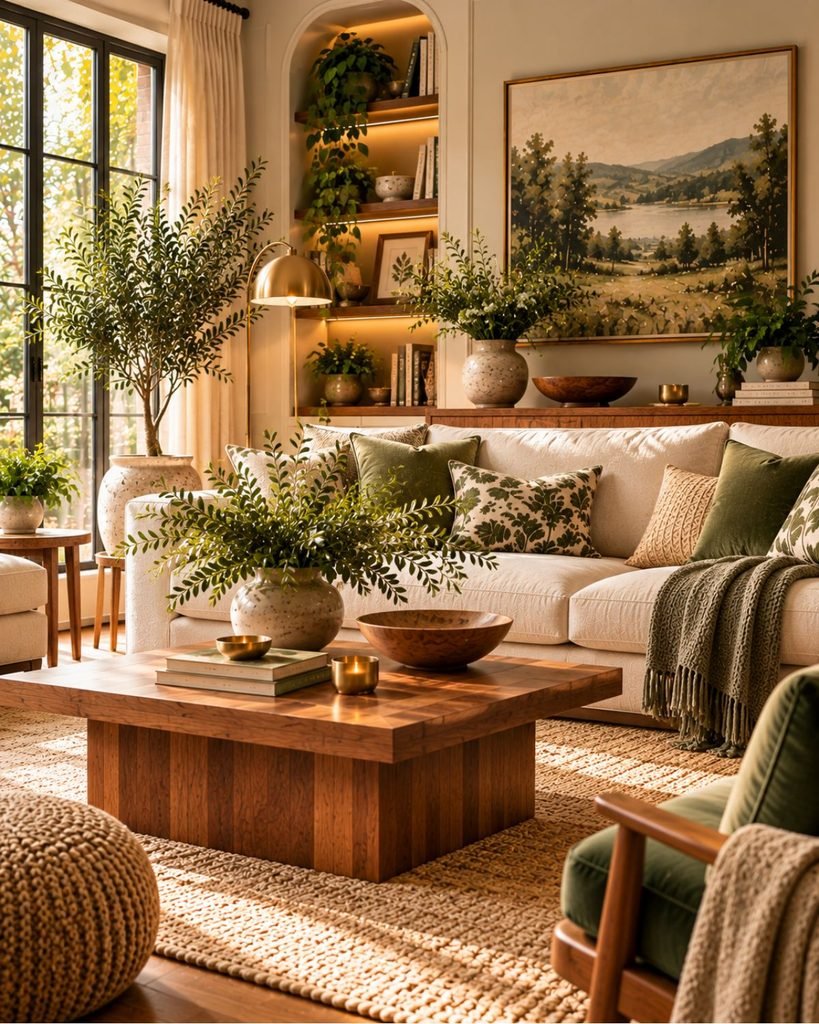
Green accents in a neutral living room
Role: Thread
Green doesn’t need to occupy a wall or sofa.
A restrained room can carry green through an occasional chair, artwork, patterned textile and a small number of accessories. Repeating related greens at different heights helps the color feel deliberate rather than accidental.
The advantage is flexibility. Changing a textile or piece of art alters the palette without requiring you to repaint or replace the main seating.
What colors work with green in a living room?
There isn’t one universal companion for green because different greens carry different amounts of yellow, blue, gray and saturation.
Cream and warm white create useful separation beside many medium and deep greens without introducing another strong hue.
Brown and natural wood can make olive, moss and other earthy greens feel more grounded. Brown Living Room Ideas goes deeper into choosing the brown side of that relationship.
Black can sharpen a muted green palette when used selectively through lighting, frames or furniture details.
Blue can sit naturally beside cooler greens, but using two saturated colors at similar visual strength requires more control than pairing green with a neutral.
Rust and terracotta can create a warmer complementary tension with green, particularly when the green itself is muted rather than intensely saturated.
The goal isn’t to find every color that technically coordinates with green. It is to identify what the green already contributes and add what the room is missing.
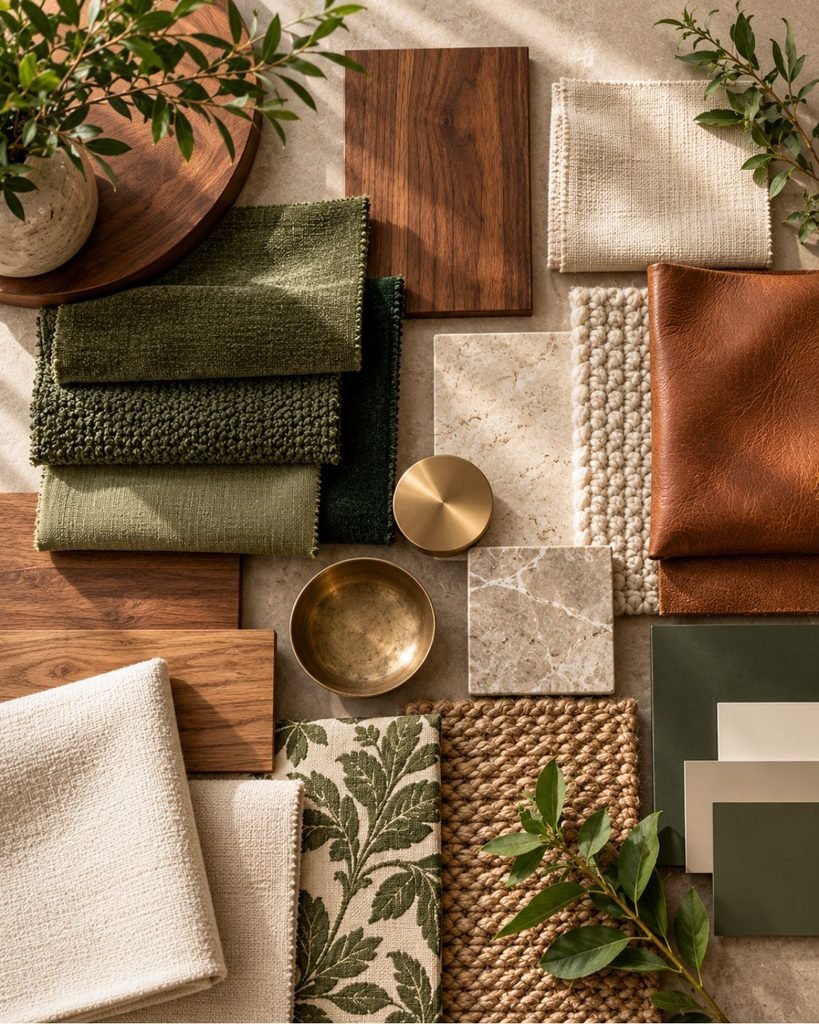
Green and natural materials
Green is frequently paired with wood, leather, linen, wool, stone and woven fibers. Current design coverage repeatedly uses these combinations, particularly around olive and deeper earthy greens. Good Housekeeping
But “natural” doesn’t mean every material needs to be brown.
Pale oak creates a very different relationship with forest green than dark walnut does. Tan leather introduces another warm, visually substantial surface. Pale stone can provide relief when both the green and wood are relatively dark.
Think in terms of separation rather than simply collecting natural materials.
Do plants count as part of a green color palette?
Sometimes.
One plant in the corner is usually better understood as a natural object than as a deliberate color block. A room containing several large plants, green walls and green upholstery is different: the foliage becomes substantial enough to reinforce the palette.
This distinction helps avoid the “indoor jungle” problem.
If green already surrounds the room through paint or dominates through a sofa, plants don’t also need to fill every empty corner. Use them where their shape and scale improve the composition rather than simply because the room is green.
Light can change which green you see
Green should be evaluated in the room where it will actually be used.
Benjamin Moore advises considering lighting, furnishings and surrounding colors when selecting green, noting that it can shift warmer or cooler under natural and artificial light. It also recommends viewing samples throughout the day. Benjamin Moore
That matters particularly with greens near the boundaries between color families. A muted green can reveal more gray under one condition, while a yellow-leaning green may appear warmer elsewhere.
For painted walls, test the actual candidate in the room rather than making the final decision from an online image.
Our Interior Color Ideas guide covers the broader relationship between color and room conditions.
Why green living rooms go wrong
A green room usually doesn’t fail simply because the chosen green is “wrong.” More often, the problem is the relationship between the color and everything competing with it.
Everything is trying to be the green feature
Green walls, sofa, curtains, rug, cushions and multiple plants can leave no visual hierarchy.
Return to the Green Anchor Principle. Decide whether green is primarily the envelope, anchor or thread, then make the remaining green elements quieter.
Deep green has no relief
Forest and other deep greens can become visually heavy when the walls, furniture and flooring are all dark.
Introduce a substantial lighter surface rather than relying on several tiny pale accessories.
The green feels institutional
Some cooler or cleaner greens can feel harder when surrounded by similarly cool gray, white and metal surfaces.
The answer doesn’t have to be a warmer green. Warm wood, tactile upholstery or another material with visible variation may provide enough counterweight.
The room becomes botanical rather than designed
Green paint plus botanical wallpaper plus green upholstery plus many plants can turn a color palette into a theme.
You don’t need to remove nature from the room. Give some surfaces permission to be non-green.
Too many greens have equal strength
Tone-on-tone green can work, but not every green needs equal saturation and visual weight.
One leading green with quieter supporting greens is generally easier to control than several unrelated greens competing at once.
Green in a small living room
A small room doesn’t automatically require pale green.
The more useful question is how much visual territory the green occupies.
A deep forest wall can work in a compact room when lighter furniture or architectural surfaces create separation. Conversely, a medium green applied to the walls, sofa, curtains and rug can make even a larger room feel visually dense.
If you’re uncertain about committing a compact room to green walls, the anchor approach is useful: keep the architecture comparatively light and introduce green through one meaningful piece of furniture.
Our Small Living Room Ideas guide covers the furniture scale and circulation decisions that need to work alongside the palette.
Where this leaves you
The first decision in a green living room shouldn’t necessarily be olive versus forest versus emerald.
Decide what you want green to do.
Let it become the envelope when you want the architecture itself to carry the color. Make it the anchor when one substantial piece should command attention. Use it as a thread when you want green to connect an otherwise neutral room without dominating it.
Then choose the particular green according to the room’s light, existing materials and surrounding colors.
A green room becomes easier to control once one green element is clearly allowed to lead.
Green living room ideas FAQs
What shade of green is best for a living room?
There isn’t one universally best green. Olive and moss tend to work naturally with warm wood and earthy materials, while forest and emerald create greater visual weight and saturation. Muted gray-greens create a quieter effect. Test painted greens in the actual room because lighting can change how warm or cool they appear. Benjamin Moore
What colors go well with a green living room?
Cream, warm white, natural wood and brown are useful partners for many greens. Black can sharpen a muted palette, while blue creates a cooler relationship and rust or terracotta introduces warmer contrast. The best combination depends on the particular green and how much of the room it occupies.
Should I choose green walls or a green sofa?
Choose green walls when you want the color to define the room itself. Choose a green sofa when you want a strong focal point without committing the architecture to green. If you want less commitment, repeat green through smaller textiles, art and accessories instead.
Can I mix different shades of green?
Yes, but give them different levels of visual importance. One dominant green supported by quieter greens is easier to control than several saturated greens competing equally across walls, furniture and textiles.
Do plants work in a green living room?
Yes, but plants don’t need to occupy every available corner. When a room already contains substantial green paint or upholstery, greenery becomes another repetition of the palette. Consider the plants’ scale and placement rather than adding them simply because the room is green.
Can dark green work in a small living room?
Yes. Dark green can work in a compact room when substantial lighter surfaces provide separation. Furniture scale, circulation and the amount of dark color matter more than a rule that small rooms must always use pale colors.
References
- Benjamin Moore. Green Living Room Ideas. https://www.benjaminmoore.com/en-us/paint-colors/green-living-room
- Good Housekeeping. Green Living Room Design Ideas. https://www.goodhousekeeping.com/home/decorating-ideas/g73522036/green-living-room-design-ideas/
About the author
Emma Carter writes about interior color, home décor, and practical styling for Wallsaide. She focuses on helping readers combine colors, materials, textiles, and decorative elements into rooms that feel balanced and cohesive.